Timex 25 mg
Clomipramine Hydrochloride
Category: Tablet
Manufacturer: Orion Pharma Ltd.

Allopathic
MFG. Licence No. Biological
46
MFG. Licence No. Non-Biological
179
Address
D/28/2, Sumilpara, Siddhirganj, Narayanganj-1431
Price: 9.0 ৳
1 x 2 in Alu. Alu. Blister Pack
30's pack
10's Strip

Medicine Selling service is not available yet.
Related Medicines

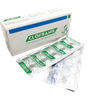

Uses of Timex:
- Obsessive-compulsive disorder
Depression, Panic disorder, Obsessive compulsive disorder, Cataplexy, Narcolepsy, Phobias, Premature ejaculation, Enuresis, Trichotillomania
Hypersensitivity. Concomitant use of MAOIs; recovery phase following MI, heartblock or other arrhythmias; mania; childn.
Tricyclic & related anti-depressant drugs
Clomipramine hydrochloride belongs to a group of medicines called "tricyclic antidepressants". This is thought to work either by increasing the amount of chemical "messengers" in the brain or by making their effects last longer. Clomipramine is a potent inhibitor of serotonin re-uptake in the brain. Significant antagonism at cholinergic and α1-receptors. Weak antagonism at dopamine receptors. It has also antidepressant, sedative and anticholinergic effects.
How to use
Clomipramine Hydrochloride:
Take this medicine in the dose and duration as advised by your doctor. Swallow it as a whole. Do not chew, crush or break it.
Clomipramine Hydrochloride is to be taken with food.
Administration:
Should be taken with food.
Adult Dose:
Oral
Adjunct for cataplexy associated with narcolepsy
Adult: Initially, 10 mg daily gradually increased to 10-75 mg daily.
Elderly: Dose reduction may be needed.
Obsessive compulsive disorder; Panic disorder; Phobias
Adult: Initially, 25 mg daily, gradually increased to 100-150 mg daily over 2 wk. Max: 250 mg daily.
Elderly: Initially, 10 mg daily.
Depression
Adult: Initially, 10 mg daily; may increase gradually to 30-150 mg daily if needed. Up to 250 mg daily or more may be required in more severe cases.
Elderly: Initially, 10 mg daily; may increase gradually over 10 days to 30-75 mg daily.
Max Dosage: 100-150 mg daily.
Child Dose:
Obsessive-Compulsive Disorder
<10 years: Safety and efficacy not established
>10 years: 25 mg PO qDay initially
Gradually increase to maximum 3 mg/kg/day or 100 mg/day, whichever is less
May further increase to maximum 3 mg/kg/day or 200 mg/day, whichever is less; may give as single dose qHS once tolerated
Barbiturates increase metabolism of tricyclic antidepressants; conversely cimetidine, guanethidine, haloperidol and phenothiazines block the tricyclic metabolism. CNS effects of alcohol enhanced.
Potentially Fatal: If clomipramine is to be substituted for MAOIs, at least 3 wk should elapse after discontinuing MAOIs. Risk of hypertension and arrhythmias if co-administered with adrenaline and noradrenaline.
Hypersensitivity. Concomitant use of MAOIs; recovery phase following MI, heartblock or other arrhythmias; mania; childn.
Common
- Altered libido
- Constipation
- Dryness in mouth
- Ejaculation disorder
- Sleepiness
- Difficulty in urination
>10%
Xerostomia (84%),Headache (50-55%),Constipation (47%),Ejaculation failure (42%),Fatigue (35-40%),Nausea (30-35%),Impotence (20-25%),Weight gain (18%)
1-10%
Weight loss (5%),Hepatotoxicity (1-3%)
Frequency Not Defined
Common, Dizziness, mainia, somnolence, tremor, Dyspepsia, Blurred vision, Urinary retention, Orgasm incapacity, libido change
Potentially Fatal: Death, rare (except in patients with preexisting significant heart block and patients on MAOI therapy). Induction of mania in individuals with underlying manic-depressive illness or worsening of psychoses in already psychotic individuals.
Pregnancy category C. As clomipramine passes into human milk, babies should be weaned or clomipramine gradually withdrawn.
Precaution:
Cardiovascular insufficiency; narrow-angle glaucoma; urinary retention; history of epilepsy; renal or hepatic dysfunction; electroconvulsive therapy; hypotension; hyperthyroidism or concomitant treatment with thyroid preparations; suicidal tendencies; surgery; pregnancy and lactation; tasks requiring mental alertness; elderly; avoid abrupt withdrawal.
Lactation: distributed in breast milk, do not nurse (AAP states effect on nursing infants is unknown but may be of concern)
Keep out of the reach and sight of children. The capsules should be protected from heat and moisture.
Tricyclic & related anti-depressant drugs
Clomipramine is a potent inhibitor of serotonin re-uptake in the brain. Significant antagonism at cholinergic and ?1-receptors. Weak antagonism at dopamine receptors. It has also antidepressant, sedative and anticholinergic effects.
Pregnancy Category: C
Lactation: distributed in breast milk, do not nurse (AAP states effect on nursing infants is unknown but may be of concern)

Samm Care