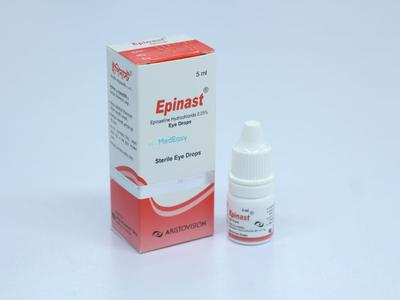
Epinastine sterile ophthalmic solution is indicated for the treatment of signs and symptoms of allergic conditions of the anterior segment of the eye.
Ophthalmic Non-Steroid drugs
Epinastine is a topically active antihistamine that antagonizes both histamine H1 and H2 receptors. Moreover, it has mast cell stabilizing activity and prevents the release of inflammatory mediators from blood vessel. Epinastine does not penetrate the blood-brain barrier and therefore is not expected to induce side effects of the central nervous system.
The recommended dosage is one drop in each eye twice a day. Treatment should be continued throughout the period of exposure (i.e., until the pollen season is over or until exposure to the offending allergen is terminated), even when symptoms are absent.
Contraindicated in patients who are hypersensitive to Epinastine or to any of the components of this preparation.
The most frequently reported side effects are mild burning sensation, folliculosis, hyperemia, pruritus, cold symptoms and upper respiratory infections.
Use in pregnancy: There are no adequate and well-controlled studies in pregnant women. Epinastine should be used during pregnancy only if the potential benefit justifies the potential risk to the fetus. Use in lactation: It is not known whether Epinastine is excreted in human milk. Caution should be exercised when Epinastine is administered to a nursing mother.
For ophthalmic use only. Patients should be advised not to wear contact lenses if their eye is red.
Store in a cool & dry place, protect from light. Do not use longer than one month after the first opening. Keep out of the reach of children.
Ophthalmic Non-Steroid drugs
Epinastine is a topically active antihistamine that antagonizes both histamine H1 and H2 receptors. Moreover, it has mast cell stabilizing activity and prevents the release of inflammatory mediators from the blood vessel. Epinastine does not penetrate the blood-brain barrier and therefore is not expected to induce side effects on the central nervous system.
There are no adequate and well-controlled studies on pregnant women. Epinastine should be used during pregnancy only if the potential benefit justifies the potential risk to the fetus. It is not known whether Epinastine is excreted in human milk. Caution should be exercised when Epinastine is administered to a nursing mother.