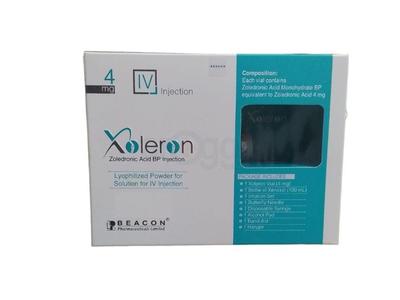
Indications
Zoledronic Acid is indicated in:
Hypercalcaemia of malignancy,
Bone metastases associated with solid tumours, Osteolytic lesions associated with multiple myeloma,
Corticosteroid-induced osteoporosis, Increase bone mass in men with osteoporosis, Osteoporosis in postmenopausal women
Paget's disease of bone
Prophylaxis of postmenopausal osteoporosis
Therapeutic Class
Bisphosphonate preparations
Pharmacology
Zoledronic acid belongs to the class of nitrogen-containing bisphosphonates and acts primarily on bone. It is an inhibitor of osteoclast-mediated bone resorption. The action of bisphosphonates on bone is based on their high affinity for mineralized bone. Intravenously administered Zoledronic acid is rapidly distributed to bone. The main molecular target of Zoledronic acid in the osteoclast is the enzyme farnesyl pyrophosphate synthase, but this does not exclude other mechanisms. Clinical studies in tumour-induced hypercalcemia demonstrated that the effect of Zoledronic acid is characterized by decreases in serum calcium and urinary calcium excretion. In addition to its inhibitory activity against bone resorption, Zoledronic acid also possesses anti-tumour activity, anti-angiogenic activity, anti-pain activity, cytostatic and pro-apoptotic activity on tumour cells and synergistic cytostatic effect with other anti-cancer drugs. There was no accumulation of the active substance in plasma after multiple doses given every 28 days. Zoledronic acid is not metabolized and is excreted unchanged via the kidney.
Interaction
In clinical studies, Zoledronic acid has been administered concomitantly with commonly used anticancer agents, diuretics, antibiotics and analgesics without interactions. Caution is advised when Zoledronic acid are administered with aminoglycosides, since these agents may have an additive effect to lower serum calcium level for prolonged periods. In multiple myeloma patients, the risk of renal dysfunction may be increased when Zoledronic acid is used in combination with thalidomide. Concomitant use of loop diuretics with Zoledronic acid increases the risk of hypocalcemia. Caution is indicated when Zoledronic acid is used with other potentially nephrotoxic drugs.
Contraindications
The drug is contraindicated if patients have hypersensitivity to the active substance or to any of the excipients or to any bisphosphonates; severe renal impairment (Creatinine clearance <30 ml/min); pregnancy and lactation.
Side Effects
The post-dose side-effects are headache, nausea, anorexia, fatigue, osteonecrosis of jaw, anemia, bone pain, constipation, fever, vomiting, flu-like syndrome, hypocalcemia, myalgia, arthralgia and hypophosphataemia.
Pregnancy And Lactation
Zoledronic acid is contraindicated during pregnancy and in breast-feeding women. It is also not recommended for use in children and adolescents below 18 years of age.
Precautions And Warnings
Patients must be appropriately hydrated prior to administration of Zoledronic Acid. This is especially important in the elderly and for patients receiving diuretic therapy. Adequate hydration can be achieved by the patient drinking two glasses of fluid (such as water) before and after the infusion. Serum levels of calcium, phosphate, magnesium and potassium, as well as serum creatinine should be carefully monitored after initiating Zoledronic Acid therapy. If hypocalcemia, hypophosphatemia or hypomagnesemia occurs, short-term supplemental therapy may be necessary. Moreover, careful renal function monitoring should be considered.
Overdose Effects
Clinical experience with acute over dosage is limited. Over dosage may cause hypocalcemia, hypophosphatemia, and hypomagnesemia. In such case, reduction in serum levels of calcium, phosphorus, and magnesium should be corrected by intravenous administration of calcium gluconate, potassium or sodium phosphate and magnesium sulfate respectively.
Storage Conditions
Store below 30° C prior to opening. Protect from moisture and light. Zoledronic Acid must be kept out of the reach and sight of children.