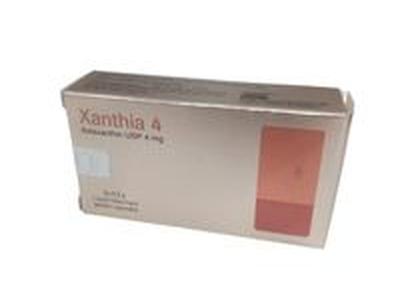
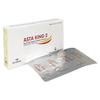
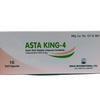
XANTHIA 4 4mg
Generic: Astaxanthin
Category: Capsule
Manufacturer: Ziska Pharmaceuticals Ltd.

Allopathic
MFG. Licence No. Biological
183
MFG. Licence No. Non-Biological
424
Address
Karol Surichala, Shafipur, Kaliakoir, Gazipur
Price: 199.83 ৳
Strip
Box
Capsule

Medicine Selling service is not available yet.
Alternative Brands & Related Medicines

Indications
The recommended daily dosage is fairly standardized at a 2-4 mg per day.
4 mg daily: As a strong antioxidant, improves cardiovascular health (Atherosclerosis, reduce cholesterol), improves immune function;
4-8 mg daily: Improves condition of skin, protects skin from sun damage (Reduce wrinkles, pimples and other signs of aging), improves recovery from central nervous system injuries and protects eyes from cataracta and macular degeneration;
8-12 mg daily: Reduces inflammation (Arthritis);
16 mg daily: reduces risk of infertility.
Therapeutic Class
Supplements & adjuvant therapy
Pharmacology
Astaxanthin acts as an antioxidant by dual mode of action. It suppresses singlet oxygen and also inhibits lipid peroxidation. By these actions it reduces the harmful free radicals. Therefore acts as a very strong antioxidant. Astaxanthin is absorbed by passive diffusion into the intestinal epithelium alongside fatty acids. Then it is incorporated into lipoproteins, transported to the liver, via lymph and blood and partly resecreted with lipoproteins. More than 70% of the Astaxanthin is contained in high density lipoprotein part of plasma. Highest concentration of Astaxanthin is in the small intestine, followed by subcutaneous fat, spleen, liver, heart, kidney and skin and lowest in the muscles.
Dosage and Administration
Adult Dose:
Pregnant women and nursing mothers should avoid Astaxanthin containing supplements.
Renal Dose:
Astaxanthin is a xanthophyll carotenoid. It is an antioxidant with anti-inflammatory properties and as such has potential as a therapeutic agent in atherosclerotic cardiovascular disease. Similar in structure to beta-carotene, this antioxidant also helps living organisms to quench, scavenge and trap free radicals inside its structure. Not only can it trap these harmful toxins effectively, it also has the ability to trap more types of radicals, such as singlet and triplet oxygen. Typically, a substance will lose an electron (a process that destabilizes the substance), when going through a metabolic process. Instead of sacrificing an electron, astaxanthin stabilizes these metabolic toxins radicals by simply adding them to its own double-bonded chain.
It also aids in preventing lipid peroxidation, as well as enhances the protective capacities of other antioxidants in the body. Astaxanthin has the ability to stop and reverse oxidative damage to both the totality of a cell’s structures, as well as healthy forms of cholesterol.
Interaction
Astaxanthin is contraindicated in those hypersensitive to any component of an Astaxanthin containing supplement.
Contraindications
Contraindicated for those with known allergies to Astaxanthin.
Side Effects
No severe side effects have been reported yet.
Pregnancy And Lactation
Both pregnant women and lactating mothers should avoid Astaxanthin supplements as no data on safety has been found yet
Precautions And Warnings
Precaution:
Food supplement, Protects eyes from cataract and age-related macular degeneration (AMD), Improves recovery from central nervous system injuries, Protects from Parkinson's disease, Dementia and Alzheimer's disease, Improving recovery after stroke, Protecting against cancer, Improves Cardiovascular health (Atherosclerosis, reduce cholesterol), Reducing skin damage from ultraviolet (UV) light, Reduces wrinkles, pimples and other signs of aging, Strength and endurance & immune system, Reduce risk of infertility, Stabilize blood sugar.
Overdose Effects
No case of overdose has occurred with Astaxanthin.
Storage Conditions
Store in cool and dry place, away from direct light. Keep out of reach of children.
Drug Classes
Supplements & adjuvant therapy
Mode of Action
Astaxanthin acts as an antioxidant by dual mode of action. It suppresses singlet oxygen and also inhibits lipid peroxidation. By these actions it reduces the harmful free radicals. Therefore acts as a very strong antioxidant. Astaxanthin is absorbed by passive diffusion into the intestinal epithelium alongside fatty acids. Then it is incorporated into lipoproteins, transported to the liver, via lymph and blood and partly resecreted with lipoproteins. More than 70% of the Astaxanthin is contained in high-density lipoprotein part of plasma. Highest concentration of Astaxanthin is in the small intestine, followed by subcutaneous fat, abdominal fat, spleen, liver, heart, kidney and skin and lowest in the muscles.
Pregnancy Category
Astaxanthin is safe when it is consumed in amounts found in food. The safety of using astaxanthin supplements and astaxanthin in skin products is unknown.


Samm Care