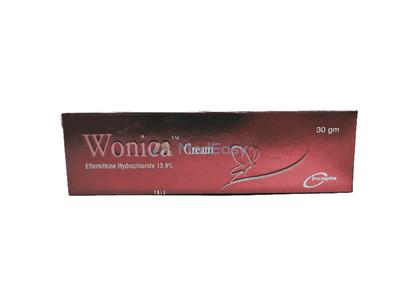
Wonica 13.9%
Generic: Eflornithine Hydrochloride
Category: Cream
Manufacturer: Incepta Pharmaceuticals Ltd.
Unclassified — prescription required · Upload a prescription at checkout. Pharmacist approval is required before preparation.
Currently unavailable to order.

Allopathic
MFG. Licence No. Biological
193
MFG. Licence No. Non-Biological
108
Address
Zirabo, Savar, Dhaka Dewan Idris Road, Bara Rangamatia

Alternative Brands & Related Medicines
Indications
Wonica cream, 13.9% is indicated for the reduction of unwanted facial hair in women. Wonica has only been studied on the face and adjacent involved areas under the chin of affected individuals. Usage should be limited to these areas of involvement.
Therapeutic Class
Hair Growth Inhibitor
Pharmacology
Eflornithine prevents hair growth by inhibiting the anagen phase of hair production. This occurs by eflornithine irreversibly binding (also called suicide inhibition) to ornithine decarboxylase (ODC) and physically preventing the natural substrate ornithine from accessing the active site.
Dosage and Administration
Adults: Apply a thin layer of Eflornithine cream, 13.9% to affected areas of the face and adjacent involved areas under the chin and rub in thoroughly. Do not wash treated area for at least 4 hours. Use twice daily at least 8 hours apart or as directed by a physician. The patient should continue to use hair removal techniques as needed in conjunction with Eflornithine (Wonica should be applied at least 5 minutes after hair removal). Cosmetics or sunscreens may be applied over treated areas after cream has dried. Elderly: No apparent differences in safety were observed between older patients and younger patients. Children: The safety and effectiveness of this product have not been established in pediatric patients less than 12 years of age.
Interaction
It is not known whether Eflornithine has any interaction with other topically applied drug products.
Contraindications
Eflornithine is contraindicated in patients with a history of sensitivity to any components of the preparation.
Side Effects
Adverse events were primarily mild in intensity and generally resolved without medical treatment or discontinuation of Eflornithine. Side effects can include acne, barbae, pseudofolliculitis, stinging skin, headache, burning skin, dry skin, erythema (redness), pruritus (itching), tingling skin, dyspepsia, skin irritation, rash, alopecia, dizziness, folliculitis, hair ingrown, facial edema, anorexia, nausea, asthenia, vertigo
Pregnancy And Lactation
Pregnancy Category C. It is not known whether or not Eflornithine Hydrochloride is excreted in human milk. Caution should be exercised when Eflornithine is administered to a nursing woman.
Precautions And Warnings
For external use only. Transient stinging or burning may occur when applied to abraded or broken skin.
Overdose Effects
Overdosage information with Eflornithine is unavailable. However, if very high topical doses (e.g., multiple tubes per day) or oral ingestion has been encountered (a 30 gm tube contains 4.2 gm of Eflornithine Hydrochloride), the patient should be monitored, and appropriate supportive measures should be administered as necessary.
Storage Conditions
Store at 25°C, excursions permitted to 15°C-30°C. Do not freeze.
Drug Classes
Hair Growth Inhibitor
Mode of Action
Eflornithine prevents hair growth by inhibiting the anagen phase of hair production. This occurs by eflornithine irreversibly binding (also called suicide inhibition) to ornithine decarboxylase (ODC) and physically preventing the natural substrate ornithine from accessing the active site.
Pregnancy Category
Pregnancy Category C. It is not known whether or not Eflornithine Hydrochloride is excreted in human milk. Caution should be exercised when Eflornithine is administered to a nursing woman.


Samm Care