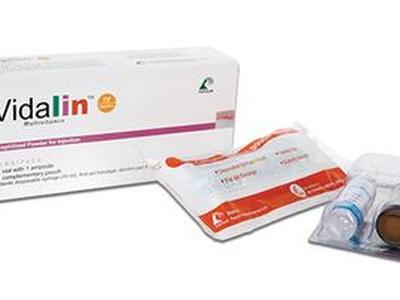
Vidalin IV
Generic: Vitamin B complex + Vitamin C
Category: Injection
Manufacturer: Popular Pharmaceuticals Ltd.
Unclassified — prescription required · Upload a prescription at checkout. Pharmacist approval is required before preparation.
Currently unavailable to order.


Alternative Brands & Related Medicines


Indications
Adults:
Injection
One vial (10 ml) daily.
Oral
1-2 Capsule daily.
Oral
Children age 11 years and above:
1-2 Capsule daily.
Injection
Children age 11 years and above: One vial (10 ml) daily.
Children below 11 years of age: Children weighing less than 10 kg should be given 1 ml of the dissolved mixture per kg body weight /day.
Children weighing 10 kg or more should be given 10 ml (one vial) of the dissolved mixture /day.
Therapeutic Class
Specific combined vitamin preparations
Pharmacology
Vitamin-B complex & Vitamin C act as coenzymes of vital enzymes associated with crucial physiological processes, energy metabolism, cell growth and replenishment especially in brain and nerve cells and gives better synergistic action. Vitamin C acts as an antioxidant and helps in collagen formation. Intravenous administration of this combination gives prompt action with fine pharmacological properties in body in terms of efficacy and tolerability.
Dosage and Administration
Administration:
Decreased GI tract absorption with neomycin, aminosalicylic acid, H2-blockers and colchicine. Reduced serum concentrations with oral contraceptives. Reduced effects in anaemia with parenteral chloramphenicol.
Adult Dose:
Folic acid may mask the symptoms of pernicious anemia in that hematologic remission may occur while neurologic manifestations remain progressive. Administering folic acid may obscure pernicious anemia. Recommended doses are insufficient to correct severe vitamin deficiency states and may be insufficient in patients with markedly increased vitamin requirements. In patients receiving total parenteral nutrition (TPN), routine supplementation with both fat-soluble and water-soluble vitamins is recommended to prevent deficiency states and to obviate the need to speculate on individual vitamin status. Daily vitamin requirements must be calculated to avoid over dosage and toxic effects, especially with regards to vitamins A & D and particularly in pediatric patients.
In patients for whom total parenteral nutrition is continued for prolonged periods (months or years), periodic monitoring of blood vitamin levels should be considered. To prevent excessive excretion of water-soluble vitamins and for reasons of safety, daily dosage should be administered over a number of hours.
Renal Dose:
Vitamin B: Plays a role in the synthesis and maintenance of coenzyme A. Necessary for lipid metabolism, carbohydrate metabolism, tissue respiration, glycogenolysis, inhibition of very low-density lipoprotein (VLDL) synthesis. May increaase chylomicron triglyceride removal from plasma. Vitamin B12 (cyanocobalamin): Required for the maintenance of normal erthropoiesis, nucleprotein and myelin synthesis, cell reproduction and normal growth; intrinsic factor, a glycoprotein secreted by the gastric mucosa, is required for active absorption of Vitamin B12 from the GI tract. Necessary for normal tissue respiration; plays a role in activation of pyridoxine and conversion of tryptophan to niacin.
Vitamin C is necessary for collagen formation and tissue repair; plays a role in oxidation/reduction reactions as well as other metabolic pathways including synthesis of catecholamines, carnitine, and steroids; also plays a role in conversion of folic acid to folinic acid.
Interaction
Hypersensitivity to any of the ingredients of the preparation.
Contraindications
Oral
Children age 11 years and above:
1-2 Capsule daily.
Injection
Children age 11 years and above: One vial (10 ml) daily.
Children below 11 years of age: Children weighing less than 10 kg should be given 1 ml of the dissolved mixture per kg body weight /day.
Children weighing 10 kg or more should be given 10 ml (one vial) of the dissolved mixture /day.
Side Effects
Hypersensitivity reactions have been reported with thiamine and folic acid, although these are rare.
Pregnancy And Lactation
Animal reproduction studies or clinical investigations during pregnancy have not been carried out with this preparation. However, there are published reports on safe administration of water soluble vitamins in this patient group.
Precautions And Warnings
Precaution:
Supplement for intravenous nutrition in order to meet the daily requirements of the water-soluble vitamins in infants, adults and children.
Storage Conditions
Store in a cool and dry place, away from light and children.
Drug Classes
Specific combined vitamin preparations
Mode of Action
Vitamin B-Complex and Vitamin C function as cofactors of various enzymes which regulate carbohydrate, protein and fat metabolism. Thiamine (B.,) acts as a cofactor in the decarboxylation of keto acids such as pyruvic acid.Riboflavin (B2) plays a vital role in cellular respiratory reactions in conjunction with nicotinamide.Pyridoxine (B6) takes part in decarboxylation and interconversion of amino acids. It is also required for normal antibody-mediated and cell-mediated immune responses.Vitamin B12 (cyanocobalamin) is required for synthesis of DNA (deoxyribo-nucleic acid) and maturation of RBCs (red blood cells). Nicotinamide (niacinamide) plays a vital role in cellular respiration in conjunction with riboflavin.Calcium Pantothenate functions as a cofactor for enzymes involved in transfer of acetyl groups. It is also required for normal antibody response in conjunction with pyridoxine.Folic acid, after conversion in the body to folinic acid, takes part in reactions involved in the synthesis of nucleotides and maturation of RBCs in conjunction with vitamin B12. It also plays an important role in lymphocyte-mediated immune response.Ascorbic acid (Vitamin C) takes part in biochemical reactions involving oxidation, as in collagen synthesis, and in conversion of folic acid to folinic acid. It is also necessary for normal phagocytic function ofWBCs (white blood cells).Thus an adequate supply of these water-soluble vitamins is required for the optimum function of various cells and tissues.Except for Vitamin B12, these water-soluble vitamins are not stored in the body to any significant extent, the excess quantities being excreted in the urine. Therefore, a regular and adequate intake of them is necessary to meet the metabolic requirements. Deficiencies of water-soluble vitamins often co-exist because of their overlapping dietary sources and metabolic interdependence. Initially the deficiency of these vitamins may be subclinical and demonstrable only by means of biochemical tests. If not corrected at this stage, it may become manifest as various symptoms, including impaired wound healing and increased susceptibility to infection. Classical deficiency diseases such as beri beri, pellagra and scurvy are rare, whereas mild and subclinical deficiencies are probably more common, even among apparently healthy individuals.
Pregnancy Category
The unwanted effects of nutrient solutions are a rise in the body temperature, shivering, chills and nausea and vomiting. Adverse reactions that may be expected based on experience with other water-soluble vitamin compounds administered intravenously include: allergic reactions, including anaphylaxis; dermatological reactions including flushing, erythema and pruritus and CNS reactions including headache, dizziness and agitation etc.


Samm Care