
Victoza 6.0 mg
Generic: Liraglutide
Category: Solution
Manufacturer: Novo Nordisk A/S


Medicine Selling service is not available yet.
Alternative Brands & Related Medicines
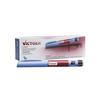
Victoza 6 mg/ml
Liraglutide
৳ 4960.0

340-4526(v)-10 05.00ml+08.00ml
Benzalkonium chloride +Glutaraldehyde 50%
366-5214-016 0.01mg
Desmopressin Acetate
Acimec 1 gm/100 gm
Ivermectin
Acimec (Vet) 0.5%Oral Solution 500 mg/100 ml
Ivermectin
৳ 1500.0
Acivet-Cipro Oral Solution 10 gm/100 ml
Ciprofloxacin
৳ 260.0
Indications
Uses of Victoza:
- Type 2 diabetes mellitus
Type 2 diabetes
Do not use in patients with a prior serious hypersensitivity reaction to any of the product components. Type 1 DM, diabetic ketoacidosis. Severe renal impairment & end-stage renal disease. Pregnancy & lactation. Contraindicated in patients with personal or family history of medullary thyroid carcinoma (MTC) or in patients with multiple endocrine neoplasia syndrome type 2 (MEN 2)
Therapeutic Class
GLP-1 receptor agonists
Pharmacology
Liraglutide is an acylated analog of human glucagon-like peptide 1 (GLP-1), an endogenous incretin hormone and acts as a GLP-1 receptor agonist. Activation of GLP-1 receptor stimulates insulin secretion and suppression of glucagon secretion in a glucose-dependent manner. It also delays gastric emptying thus reduces the rate of postprandial glucose present in the circulation. It has lowering effects of fasting, premeal and postprandial glucose; with a decrease in HbA1c by approx 1%.
Dosage and Administration
How to use
Liraglutide:
Your doctor or nurse will guide you how to use this medicine.
Administration:
It can be administered once daily at any time of day, independently of meals, and can be injected subcutaneously in the abdomen, thigh or upper arm. The injection site and timing can be changed without dose adjustment.
If dose missed, resume the once-daily regimen with the next scheduled dose; do not give an extra dose or a higher dose; if missed dose more than 3 days, initiate therapy at 0.6 mg/day to avoid GI symptoms
Adult Dose:
Subcutaneous
Adjunct to Type 2 diabetes mellitus
Adult: Initially, 0.6 mg/day may increase to 1.2 mg/day after 1 wk; and a further increase to 1.8 mg/day after 1 wk if glycaemic control is not optimal.
Initial dose of 0.6 mg SC qDay is only to decrease GI adverse effects and does not provide glycemic control. When initiating , consider reducing the dose of concomitantly administered insulin secretagogues (such as sulfonylureas) to reduce the risk of hypoglycemia
Hepatic Impairment: No dosage adjustment needed.
Child Dose:
<18 years: Safety and efficacy not established
Renal Dose:
Renal Impairment
No dosage adjustment needed.
Interaction
Oral Contraceptives: Liraglutide lowered ethinyloestradiol and levonorgestrel Cmax by 12% and 13%, respectively, following administration of a single dose of an oral contraceptive product. Tmax was delayed by 1.5 hrs with liraglutide for both compounds. There was no clinically relevant effect on the overall exposure of either ethinyloestradiol or levonorgestrel. The contraceptive effect is therefore anticipated to be unaffected when co-administered with liraglutide.
Increased risk of hypoglycaemia when used w/ insulin secretagogues (e.g. sulfonylurea, meglitinide). May affect absorption of concomitantly administered oral drugs due to slow gastric emptying.
Insulin: Combination of Liraglutide with insulin has not been evaluated.
Contraindications
Do not use in patients with a prior serious hypersensitivity reaction to any of the product components. Type 1 DM, diabetic ketoacidosis. Severe renal impairment & end-stage renal disease. Pregnancy & lactation. Contraindicated in patients with personal or family history of medullary thyroid carcinoma (MTC) or in patients with multiple endocrine neoplasia syndrome type 2 (MEN 2)
Side Effects
Common
- Constipation
- Decreased appetite
- Diarrhea
- Nausea
- Vomiting
- Hypoglycemia (low blood glucose level)
>10%
Nausea (26%),Diarrhea (17%),Vomiting (11%)
1-10%
Constipation (10%),Headache (9%),Antiliraglutide antibodies (7%),Injection-site reactions (2%)
<1% (Victoza)
Urticaria,Upper respiratory tract infection,UTI,Dizziness,Sinusitis,Nasopharyngitis,Back pain,Hypertension,Hypoglycemia (mostly in combination therapy),Pancreatitis,Papillary thyroid carcinoma,Thyroid C-cell hyperplasia
Pregnancy And Lactation
Pregnancy category C. Either studies in animals have revealed adverse effects on the foetus (teratogenic or embryocidal or other) and there are no controlled studies in women or studies in women and animals are not available. Drugs should be given only if the potential benefit justifies the potential risk to the foetus.
Precautions And Warnings
Precaution:
CHF, inflammatory bowel disease, diabetic gastroparesis, preexisting thyroid disease. Increased risk of hypoglycaemia w/ sulfonylurea. Hepatic impairment. Do not administer via IV or IM. May affect ability to drive or operate machinery. Childn <18 yr. Acute pancreatitis, including fatal and non-fatal hemorrhagic or necrotizing pancreatitis, has been observed in patients treated with liraglutide. Not for use in patients with type 1 diabetes mellitus or for treatment of diabetic ketoacidosis. Resting heart rate may increase by 2 to 3 bpm; up to 10-20 bpm increases also reported. Not a substitute for insulin.
Lactation: Unknown if excreted in human milk; either discontinue drug or nursing
Overdose Effects
Overdoses have been reported in clinical trials and post-marketing use of liraglutide. Effects have included severe nausea, severe vomiting and severe hypoglycemia. In the event of overdosage, appropriate supportive treatment should be initiated according to the patient’s clinical signs and symptoms.
Storage Conditions
Store between 2-8°C. Do not freeze. After initial use, it can be stored between 15-30°C for 30 days. Protect from heat and light.
Drug Classes
GLP-1 receptor agonists
Mode of Action
Incretin mimetic; analogue of human glucagonlike peptide-1 (GLP-1); acts as GLP-1 receptor agonist to increase insulin secretion in the presence of elevated blood glucose; delays gastric emptying to decrease postprandial glucose; also decreases glucagon secretion.
Pregnancy Category
Liraglutide is contraindicated during pregnancy because weight loss offers no potential benefit to a pregnant woman and may result in fetal harm. There are no available data with liraglutide in pregnant women to inform a drug-associated risk for major birth defects and miscarriage. Liraglutide should not be used during pregnancy. If a patient wishes to become pregnant, or pregnancy occurs, treatment with Liraglutide should be discontinued.There are no data on the presence of liraglutide in human milk, the effects on the breastfed infant, or effects on milk production. Liraglutide was present in the milk of lactating rats. The developmental and health benefits of breastfeeding should be considered along with the mother’s clinical need for Liraglutide and any potential adverse effects on the breastfed infant from Liraglutide or from the underlying maternal condition.


Samm Care