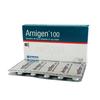
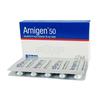
Uses of Valmor:
- Heart failure
Heart Failure,
Hypersensitivity to any component
History of angioedema related to previous ACE inhibitor or ARB therapy
Coadministration of neprilysin inhibitors (eg, sacubitril) with ACE inhibitors may increase angioedema risk; do not administer ACE inhibitors within 36 hr of switching to or from sacubitril/valsartan
Concomitant use with aliskiren in patients with diabetes
Combined antihypertensive preparations
Sacubitril's active metabolite, LBQ657 inhibits neprilysin, a neutral endopeptidase that would typically cleave natiuretic peptides, which includes: atrial natriuretic peptide (ANP), brain natriuretic peptide (BNP), and c-type natriuretic peptide (CNP). ANP and BNP are released under atrial and ventricle stress, which activate downstream receptors leading to vasodilation, natriuresis and diuresis. Under normal conditions, neprilysin breaks down other vasodilating peptides and also vasoconstrictors such as angiotensin I and II, endothelin-1 and peptide amyloid beta-protein. Therefore, the inhibition of neprilysin leads to reduced breakdown and increased concentration of endogenous natriuretic peptides in addition to increased levels of vasoconstricting hormones such as angiotensin II. (However, when combined with valsartan, would result in blocking of angiotensin II to its receptor, preventing the vasoconstrictive effects and resulting in a decrease in vascular resistance and blood pressure.) Cardiovascular and renal effects of sacubitril is a result of the increased levels of peptides that are normally degraded by neprilysin.Valsartan is an oral medication that belongs to a class of drugs called angiotensin receptor blockers (ARBs). It is orally active and specific angiotensin II antagonist acting on the AT1 subtype. Angiotensin's attachment to the receptors cause the blood vessels to narrow (vasoconstrict) which leads to an increase in blood pressure (hypertension). Valsartan blocks the angiotensin II receptor. By blocking the action of angiotensin, Valsartan dilates blood vessels and reduces blood pressure without affecting pulse rate. Valsartan has much greater affinity (about 20,000-fold) for the AT1 receptor than for the AT2 receptor. It does not bind or block other hormone receptors or ion channels known to be important in cardiovascular regulation.
How to use
Sacubitril + Valsartan:
Take this medicine in the dose and duration as advised by your doctor. Swallow it as a whole. Do not chew, crush or break it.
Sacubitril + Valsartan may be taken with or without food, but it is better to take it at a fixed time.
Administration:
May take with or without food
Adult Dose:
Heart Failure
Indicated to reduce the risk of cardiovascular death and hospitalization for heart failure (HF) in patients with chronic heart failure (CHF) (NYHA class II-IV) and reduced ejection fraction
Recommended starting dose: 49 mg/51 mg PO BID
Target maintenance dose: After 2-4 weeks, double the dose to the target maintenance dose of 97 mg/103 mg PO BID as tolerated
Hepatic impairment
Mild (Child-Pugh A): No starting dose adjustment required
Moderate (Child-Pugh B): Reduce starting dose to 24 mg/26 mg BID; double the dose every 2-4 weeks to target maintenance dose of 97 mg/103 mg BID as tolerated
Severe (Child-Pugh C): Not recommended
Renal Dose:
Renal impairment
Mild-to-moderate (eGFR ?30 mL/min/1.73 m²): No starting dose adjustment required
Severe (eGFR <30 mL/min/1.73 m²): Reduce starting dose to 24 mg/26 mg BID; double the dose every 2-4 weeks to target maintenance dose of 97 mg/103 mg BID as tolerated
Dual Blockade of the Renin-Angiotensin-Aldosterone System: Should not be used with an ACEi, aliskiren in patients with diabetes, and use with an ARB should be avoided.Potassium-sparing Diuretics: Serum potassium level may be increased.NSAIDs: Risk of renal impairment may be increased.Lithium: Increased risk of lithium toxicity.
Hypersensitivity to any component
History of angioedema related to previous ACE inhibitor or ARB therapy
Coadministration of neprilysin inhibitors (eg, sacubitril) with ACE inhibitors may increase angioedema risk; do not administer ACE inhibitors within 36 hr of switching to or from sacubitril/valsartan
Concomitant use with aliskiren in patients with diabetes
Common
- Cough
- Dizziness
- Orthostatic hypotension (sudden lowering of blood pressure on standing)
- Altered levels of potassium in blood
- Decreased red blood cell count
- Decreased blood pressure
- Hypoglycemia (low blood glucose level)
- Diarrhea
- Fainting
- Headache
- Nausea
- Stomach pain
- Vertigo
- Weakness
>10%
Hypotension (18%)
Hyperkalemia (12%)
1-10%
Cough (9%)
Dizziness (6%)
Orthostasis (2.1%)
Falls (1.9%)
<1%
Angioedema, all patients (0.5%); in black patients (2.4%)
Pregnancy: Advise female patients of childbearing age about the consequences of exposure to this combination during pregnancy. Discuss treatment options with women planning to become pregnant. Ask patients to report pregnancies to their physicians as soon as possibleLactation: There is no information regarding the presence of sacubitril/valsartan in human milk, the effects on the breastfed infant, or the effects on milk production. Sacubitril/valsartan is present in rat milk. Because of the potential for serious adverse reactions in breastfed infants from exposure to sacubitril/valsartan, advise a nursing woman that breastfeeding is not recommended during treatment with sacubitril/valsartan.
Precaution:
Can cause fetal harm when administered to a pregnant woman; use of drugs that act on the renin-angiotensin system during the second and third trimesters of pregnancy reduces fetal renal function and increases fetal and neonatal morbidity and death (see Black Box Warnings)
Observe for signs and symptoms of angioedema; if angioedema occurs, discontinue drug immediately, provide appropriate therapy, and monitor for airway compromise
Sacubitril/valsartan lowers blood pressure and may cause symptomatic hypotension; patients who are volume-depleted or salt-depleted, or those taking diuretics, are at greater risk
Monitor renal function and potassium levels in susceptible patients (eg, diabetes, hypoaldosteronism, high-potassium diet, renal artery stenosis); dosage reduction or interruption may be required
Limited data are available with regard to overdosage in human subjects with this tablet. In healthy volunteers, a single dose of this tablet 583 mg sacubitril/617 mg valsartan, and multiple doses of 437 mg sacubitril/463 mg valsartan (14 days) have been studied and were well tolerated. Hypotension is the most likely result of overdosage due to the blood-pressure-lowering effects of this tablet. Symptomatic treatment should be provided. This tablet is unlikely to be removed by hemodialysis because of high protein binding.
Keep in a dry place and store below 30°C. Protect from moisture and keep out of the reach of children.
Combination is an angiotensin receptor-neprilysin inhibitor (ARNi)
Sacubitril: Neprilysin inhibitor; neprilysin is responsible for degradation of atrial and brain natriuretic peptide; the cardiovascular and renal effects of sacubitril’s active metabolite (LBQ657) in heart failure are attributed to the increased levels of peptides that are degraded by neprilysin (eg, natriuretic peptide); administration results in increased natriuresis, increased urine cGMP, and decreased plasma MR-proANP and NT-proBNP
Valsartan: Angiotensin II receptor type I inhibitor; decreases blood pressure and blocks vasoconstrictor and aldosterone-secreting effects of angiotensin II
Pediatric Use: Safety and effectiveness have not been established in pediatric patients less than 1 year of age.Geriatric Use: No relevant pharmacokinetic differences have been observed in elderly (>65 years) or very elderly (>75 years) patients compared to the overall population. Hepatic Impairment: No dose adjustment is required when administering this tablet to patients with mild hepatic impairment (Child-Pugh A classification). This tablet is not recommended in patients with severe hepatic impairment, as no studies have been conducted in these patients.Renal Impairment: No dose adjustment is required in patients with mild (eGFR 60 to 90 ml/min/1.73 m2) to moderate (eGFR 30 to 60 ml/min/1.73 m2) renal impairment. The recommended starting dose in patients with severe renal impairment (eGFR <30 ml/min/1.73 m2) is 24/26 mg twice daily.