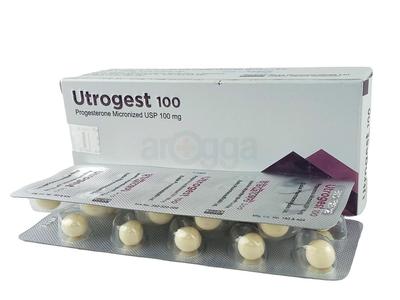
Utrogest 100 100 mg
Progesterone
Category: Soft Gelatin Capsule
Manufacturer: Ziska Pharmaceuticals Ltd.

Allopathic
MFG. Licence No. Biological
183
MFG. Licence No. Non-Biological
424
Address
Karol Surichala, Shafipur, Kaliakoir, Gazipur
Price: 135.66 ৳
Box

Medicine Selling service is not available yet.
Related Medicines



Uses of Utrogest 100:
- Hormone replacement therapy
- Female infertility
Premenstrual syndrome, Contraception, Menopausal HRT, Amenorrhoea, Recurrent miscarriage
Hypersensitivity; thrombophloebitis; cerebral apoplexy; severe hepatic impairment; undiagnosed vag bleeding, incomplete abortion, hormone-dependent carcinoma, as a diagnostic test for pregnancy; pregnancy. History or current high risk of arterial disease.
Drugs for Infertility
How to use
Progesterone:
Take this medicine in the dose and duration as advised by your doctor. Swallow it as a whole. Do not chew, crush or break it.
Progesterone is to be taken with food.
Adult Dose:
Oral
Progestogen component of menopausal hormonal replacement therapy. Adult: 200 mg daily as a single daily dose at night for 12-14 days of each mth.
Amenorrhoea
Adult: 400 mg daily for 10 days.
Dysfunctional uterine bleeding.
Adult: 400 mg daily for 10 days.
Prevention of Endometrial Hyperplasia.
Adult: 200 mg PO at night for 12 days sequentially per 28-day cycle
Vaginal Gel
Dysfunctional uterine bleeding.
Adult: 45 mg every other day from the 15th-25th day of the cycle. May increase dose to 90 mg in non-responders.
Amenorrhoea.
Adult: 45 mg every other day from the 15th-25th day of the cycle. May increase dose to 90 mg in non-responders.
Do not use Progesterone at the same time as any other medicines that are inserted into your vagina.
Hypersensitivity; thrombophloebitis; cerebral apoplexy; severe hepatic impairment; undiagnosed vag bleeding, incomplete abortion, hormone-dependent carcinoma, as a diagnostic test for pregnancy; pregnancy. History or current high risk of arterial disease.
Common
- Fatigue
- Sleepiness
- Headache
- Abdominal pain
>10%
Headache (10-31%),Breast tenderness (16-27%),Dizziness (15-24%),Abdominal pain (10-20%),Depression (19%),Breast pain (6-16%),Viral disease (7-12%)
1-10%
Vaginal discharge (10%),Fatigue (8-9%),Nausea (8%),Mood swings (6%)
Frequency Not Defined
Dementia, probable(postmenopausal women >65 years of age, possible association),Anorexia,Weakness,Weight change (less common than with synthetic progestins),Vomiting,Edema,DVT (postmenopausal women 50-79 years of age),Thrombophlebitis,Myocardial infarction (postmenopausal women 50-79 years of age),Stroke (postmenopausal women 50-79 years of age),Pulmonary emboli (postmenopausal women 50-79 years of age),Amenorrhea (less common than with synthetic progestins),Breakthrough bleeding (less common than with synthetic progestins),Change in menstrual flow(less common than with synthetic progestins),Spotting (less common than with synthetic progestins),Breast changes (less common than with synthetic progestins),Invasive breast cancer(postmenopausal women 50-79 years of age),Cholestatic jaundice,Vaginal candidiasis,General pruritus,Ectopic pregnancy
Progesterone is not normally used during pregnancy. However, if you used Progesterone to help you get pregnant, you may be asked to continue using it to support your new pregnancy. The use of Progesterone during breast-feeding is not recommended.
Precaution:
Family history of breast cancer and or DVT/PE, current/history of depression, endometriosis, DM, HTN, bone mineral density changes, renal/hepatic impairment, bone metabolic disease, SLE; conditions exacerbated by fluid retention (eg, migraine, asthma, epilepsy).
Discontinue if the following develop jaundice, visual problems (may cause contact lens intolerance), any signs of VTE, migraine with unusual severity, significang blood pressure increase, severe depression, increased risk of thromboembolic complications after surgery.
Discontinue 4 week before major surgery or prolonged immobilization. Patients on warfarin, oral anticoagulants (increase in anticoagulant dose may be warranted). Some studies link OCP use with increased risk of breast cancer, whereas other studies have not shown a change in risk.
Increased risk of cervical cancer with OCP use, however HPV remains as main risk factor for this cancer. Evidence suggests long-term use of OCPs, 5 or more years, may be associated with increased risk. Increased risk of liver cancer with OCP use; risk increases with longer duration of OCP use.
May cause dizziness; use caution when driving a motor vehicle or operating machinery
Increased risk of developing probable dementia in postmenopausal women >65 years of age reported
Use with caution in patients with history of depression
Use with caution in patients with diseases that could become exacerbated by fluid retention including epilepsy, migraine, renal dysfunction, diabetes, or asthma
Keep this medicine out of the sight and reach of children. Do not store above 25°C. Use each applicator only once. Any gel left in the applicator must be thrown away. Do not throw away any medicines via wastewater or household waste. Ask your pharmacist how to throw away medicines you no longer use. These measures will help protect the environment.
Progesterone is the main hormone secreted by corpus luteum. It induces secretory changes in the endometrium, promotes mammary gland development, relaxes uterus, blocks follicular maturation and ovulation, and maintains pregnancy.


Samm Care