
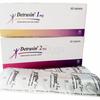
Urigen 1 mg
Tolterodine Tartrate
Category: Tablet
Manufacturer: Orion Pharma Ltd.

Allopathic
MFG. Licence No. Biological
46
MFG. Licence No. Non-Biological
179
Address
D/28/2, Sumilpara, Siddhirganj, Narayanganj-1431

Medicine Selling service is not available yet.
Related Medicines


Uses of Urigen:
- Overactive bladder (OAB) symptoms
Overactive bladder
Severe ulcerative colitis, toxic megacolon, urinary retention, gastric retention, myasthenia gravis, uncontrolled narrow-angle glaucoma, pregnancy.
BPH/ Urinary retention/ Urinary incontinence
Tolterodine is a competitive, specific muscarinic receptor antagonist which exhibits a selectivity for the urinary bladder over salivary glands, which have been demonstrated in non clinical pharmacological in vivo studies. Tolterodine has a high specificity for muscarinic receptors. A major active metabolite (5-hydroxymethyl derivative) of tolterodine exhibits a pharmacological profile which is similar to that of the parent compound. In extensive metabolisers this metabolite contributes significantly to the therapeutic effect of tolterodine. The effect of treatment can be expected within 4 weeks.
How to use
Tolterodine Tartrate:
Take this medicine in the dose and duration as advised by your doctor. Swallow it as a whole. Do not chew, crush or break it.
Tolterodine Tartrate may be taken with or without food, but it is better to take it at a fixed time.
Adult Dose:
Oral
Overactive Bladder, Urge Incontinence
Immediate release: 2 mg PO q12hr. Reduce to 1 mg bid if needed to reduce side effects.
Extended release: 2-4 mg PO once daily
Hepatic impairment
Mild to moderate (Child-Pugh class A or B): Not to exceed 1 mg PO q12hr (immediate release) or 2 mg PO once daily (extended release)
Severe (Child-Pugh class C): Not recommended
Child Dose:
Child < 18 years: Not recommended
Renal Dose:
Renal impairment
CrCl 10-30 mL/min: Not to exceed 1 mg PO q12hr (immediate release) or 2 mg PO once daily (extended release)
CrCl <10 mL/min: Not recommended
Increased risk of overdosage with potent CYP3A4 inhibitors e.g. macrolide antibiotics (erythromycin and clarithromycin), azole antifungals (e.g. ketoconazole and itraconazole), protease inhibitors, ciclosporin or vinblastine. Increased risk of torsade de pointes with drugs that prolong the QT interval (e.g. class Ia and class III antiarrhythmics). Increased risk of 'cholinergic neurogenic hypersensitivity' with centrally acting anticholinesterases (e.g. donepezil, rivastigmine). Increased risk of antimuscarinic side effects with antimuscarinic drugs.
Severe ulcerative colitis, toxic megacolon, urinary retention, gastric retention, myasthenia gravis, uncontrolled narrow-angle glaucoma, pregnancy.
Common
- Dryness in mouth
- Constipation
- Headache
- Dizziness
- Sleepiness
- Blurred vision
- Dry skin
>10%
Dry mouth (40%)
1-10%
Blurred vision,Constipation,Dizziness,Drowsiness,Dyspepsia,Headache,Xerophthalmia
There are no studies in pregnant women. Therefore, tolterodine should be used during pregnancy only if the potential benefit justifies the potential risk to the fetus.Use of tolterodine during lactation should be avoided since no data on excretion of the drug into breast milk in humans is available.
Precaution:
Bladder flow obstruction, GI obstructive disorders, renal or hepatic impairment, autonomic neuropathy, hiatus hernia, risk of decreased GI motility, patients at risk of QT interval prolongation (e.g. electrolyte disturbances, bradycardia, pre-exisiting cardiac disorder).
Lactation: Unknown whether drug is distributed in breast milk; do not nurse
Overdosage with Tolterodine Tartrate capsules can potentially result in severe central anticholinergic effects and should be treated accordingly. ECG monitoring is recommended in the event of overdosage.
Store in a cool and dry place. Protect from light. Keep out of the reach of children.
BPH/ Urinary retention/ Urinary incontinence
Tolterodine is a competitive muscarinic receptor antagonist with actions similar to atropine. It is used in the management of urge urinary incontinence, urgency and frequency.
There are no studies in pregnant women. Therefore, tolterodine should be used during pregnancy only if the potential benefit justifies the potential risk to the fetus.Use of tolterodine during lactation should be avoided since no data on excretion of the drug into breast milk in humans is available.

Samm Care