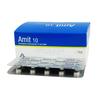
Uses of Tripsina-10:
- Depression
- Neuropathic pain
- Migraine
Adult: PO Depression Initial:50-75 mg/day; up to 150 mg/day if needed. Max: 300 mg/day in severe cases.
Neuropathic pain Initial: 10-25 mg/day at night, up to 75 mg/day if needed.
Migraine prophylaxis Initial: 10 mg/day at night. Maintenance: 50-75 mg/day at night.
Elderly: Initially, 25-50 mg/day as a single dose (at bedtime) or in divided doses.
PO Depression
Child: Adolescent: Initially, 25-50 mg/day as a single dose (at bedtime) or in divided doses.
Nocturnal enuresis
Child: 6-10 yr 10-20 mg/day; 11-16 yr 25-50 mg/day. All doses to be given at bedtime. Max duration: 3 mth.
Tricyclic Anti-depressant
Amitriptyline HCl is an antidepressant with sedative effects. Its mechanism of action in man is not known. It is not a monoamine oxidase inhibitor and it does not act primarily by stimulation of the central nervous system.Amitriptyline inhibits the membrane pump mechanism responsible for uptake of norepinephrine and serotonin in adrenergic and serotonergic neurons. Pharmacologically, this action may potentiate or prolong neuronal activity since reuptake of these biogenic amines is important physiologically in terminating transmitting activity. This interference with reuptake of norepinephrine and/or serotonin is believed by some to underlie the antidepressant activity of Amitriptyline.
How to use Amitriptyline hydrochloride:
Take this medicine in the dose and duration as advised by your doctor. Swallow it as a whole. Do not chew, crush or break it. Amitriptyline hydrochloride may be taken with or without food, but it is better to take it at a fixed time.
Administration:
Increased risk of serotonin syndrome w/ SSRIs, TCAs, triptans, fentanyl, lithium, tramadol. May reduce plasma levels w/ barbiturates, rifampicin and other anticonvulsants. May increase plasma levels w/ methylphenidate, cimetidine, antipsychotics, Ca channel blockers. May precipitate cardiac arrhythmias w/ thyroid hormones. May reduce antihypertensive effects of debrisoquine, guanethidine and clonidine. May increase pressor effect of epinephrine and norepinephrine. May increase the risk of ventricular arrhythmias w/ antiarrhythmics (e.g. amiodarone or quinidine), antihistamines astemizole, terfenadine, some antipsychotics (pimozide, sertindole, and thioridazine), sotalol, cisapride and halofantrine.
Potentially Fatal: Increased risk of serotonin syndrome w/ MAOIs, linezolid and methylene blue.
Adult Dose:
Bipolar illness, pregnancy, lactation elderly, CVS disease, renal or liver impairment, epilepsy, thyroid dysfunction, DM. Avoid abrupt withdrawal; urinary retention, prostatic hyperplasia; chronic constipation; angle-closure glaucoma; phaeochromocytoma. Monitor for signs of clinical worsening, suicidality or behavioural changes. May increase risks associated with electro-convulsive therapy. May affect ability to drive or operate machinery.
Lactation: Distributed in breast milk; do not nurse (AAP states effect on nursing infants is unknown but may be of concern)
Renal Dose:
Amitriptyline is a dibenzocycloheptadiene tricyclic antidepressant. It increases synaptic concentration of serotonin and/or norepinephrine in the CNS by blocking the neuronal reuptake of norepinephrine and serotonin.
Hypersensitivity, use of MAO inhibitors within the last 14 days; acute recovery phase post-MI. Concurrent usage with cisapride.
PO Depression
Child: Adolescent: Initially, 25-50 mg/day as a single dose (at bedtime) or in divided doses.
Nocturnal enuresis
Child: 6-10 yr 10-20 mg/day; 11-16 yr 25-50 mg/day. All doses to be given at bedtime. Max duration: 3 mth.
Common
- Constipation
- Difficulty in urination
- Dryness in mouth
- Increased heart rate
- Orthostatic hypotension (sudden lowering of blood pressure on standing)
- Weight gain
- Aggressive behavior
- Agitation
- Nasal congestion (stuffy nose)
Pregnancy Category C. Amitriptyline hydrochloride is not recommended during pregnancy, especially during the first and third trimester because the safety of Amitriptyline has not been established yet. Amitriptyline is detectable in breast milk. Because of the serious adverse reactions in infants from Amitriptyline, a decision should be made whether to continue breast feeding or discontinue the drug