
Tofu 5 mg
Tofacitinib
Category: Tablet
Manufacturer: Chemist Laboratories Ltd.

Allopathic
MFG. Licence No. Biological
063
MFG. Licence No. Non-Biological
135
Address
College Road, Barisal
Price: 48.0 ৳
10 x 3 in box

Medicine Selling service is not available yet.
Related Medicines

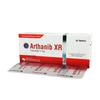



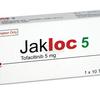
Uses of Tofu:
- Rheumatoid arthritis
Rheumatoid Arthritis,
Tofu is indicated for the treatment of adult patients with moderately to severely active rheumatoid arthritis who have had an inadequate response or intolerance to methotrexate. It may be used as monotherapy or in combination with methotrexate or other nonbiologic disease-modifying antirheumatic drugs (DMARDs).
Hypersensitivity to the active substance or to any of the excipients.
Immunosuppressant
Rheumatoid arthritis is an autoimmune disease characterized by a dysregulation of pro-inflammatory cytokines including IL7, IL15, IL21, IL6, IFN-alpha, and IFN-beta. (3) Cytokines signalling results in tissue inflammation and joint damage by stimulating the recruitment and activation of immune cells via the janus kinase signalling pathway.Tofacitinib is a partial and reversible janus kinase (JAK) inihibitor that will prevent the body from responding to cytokine signals. By inhibiting JAKs, tofacitinib prevents the phosphorylation and activation of STATs. The JAK-STAT signalling pathway is involved in the transcription of cells involved in hematopoiesis, and immune cell function. Tofacitinib works therapeutically by inhibiting the JAK-STAT pathway to decrease the inflammatory response. However, there is evidence to suggest that it may also achieve efficacy via other pathways as well.
How to use
Tofacitinib:
Take this medicine in the dose and duration as advised by your doctor. Swallow it as a whole. Do not chew, crush or break it.
Tofacitinib may be taken with or without food, but it is better to take it at a fixed time.
Administration:
May be taken with or without food.
Adult Dose:
Rheumatoid Arthritis
Indicated as second-line treatment for moderate-to-severe active rheumatoid arthritis in patients with an inadequate response or intolerance to methotrexate; may be used as monotherapy or in combination with methotrexate or other nonbiologic DMARDs
Adult: Recommended Dose: 5 mg twice daily.
Hepatic impairment
Mild: No dosage adjustment required
Moderate: Not to exceed 5 mg qDay
Severe: Not recommended
Child Dose:
Safety and efficacy not established
Renal Dose:
Renal impairment
Mild: No dosage adjustment required
Moderate-to-severe: Not to exceed 5 mg qDay
Increased exposure w/ potent CYP3A4 inhibitors (eg, ketoconazole), moderate CYP3A4 inhibitors & potent CYP2C19 inhibitors (eg, fluconazole). Decreased exposure w/ potent CYP inducers (eg, rifampin). Increased AUC & decreased Cmax w/ tacrolimus & cyclosporine. Decreased AUC & Cmax of MTX.
Hypersensitivity to the active substance or to any of the excipients.
Common
- Diarrhea
- Headache
- High blood pressure
- Nasal congestion (stuffy nose)
- Runny nose
- Sore throat
- Upper respiratory tract infection
>10%
Overall infections (20-22%)
1-10%
URTI (4.5%),Headache (4.3%),Diarrhea (4%),Nasopharyngitis (3.8%),UTI (2%),Hypertension (1.6%)
<1%
ANC <500/mm³ (0.07%),Lymphocytes <500/mm³ (0.04%)
Frequency Not Defined
Serious infections: 1.7 events per 100 patient-years
Malignancies: 0.3 events per 100 patient-years
Pregnancy Category C. There are no adequate and well controlled studies in pregnant women. Tofacitinib should be used during pregnancy only if the potential benefit justifies the potential risk to the fetus.It is not known whether Tofacitinib is excreted in human milk. Because many drugs are excreted in human milk and because of the potential for serious adverse reactions in nursing infants from Tofacitinib, a decision should be made whether to discontinue nursing or to discontinue the drug, taking into account the importance of the drug for the mother
Precaution:
Serious Infections – Do not administer Tofacitinib during an active infection, including localized infections. If a serious infection develops, interrupt Tofacitinib until the infection is controlled.
Lymphomas and other malignancies have been reported in patients treated with Tofacitinib
Gastrointestinal Perforations – Use with caution in patients that may be at increased risk.
Laboratory monitoring –Recommended due to potential changes in lymphocytes, neutrophils, hemoglobin, liver enzymes and lipids.
Immunizations –Live vaccines should not be given concurrently with Tofacitinib
Do not initiate therapy in patients w/ an active infection including localized infections, chronic or recurrent infections, or those who have been exposed to TB, history of a serious or an opportunistic infection, resided or travelled in areas of endemic TB or endemic mycoses; underlying conditions that may predispose to infection.
Evaluate & test patients for latent or active infection prior to administration. Monitor for signs & symptoms of TB. Perform screening for viral hepatitis before starting therapy. Malignancy & lymphoproliferative disorder excluding nonmelanoma skin cancer. Periodic skin exam for patients who are at increased risk of skin cancer. Patients who may be at increased risk for GI perforation (eg, history of diverticulitis).
Monitor lymphocyte at baseline & every 3 mth thereafter; neutrophils & Hb at baseline & after 4-8 wk of treatment & every 3 mth thereafter. Discontinue if Hb levels <8>2 g/dL while on treatment. Assess lipid parameters approx 4-8 wk following initiation of therapy. Not recommended to be given w/ concurrent live vaccines.
Moderate or severe renal impairment. Severe hepatic impairment. Avoid use in RA patients in combination w/ biological DMARDs.
Pregnancy & lactation. Childn <18 yr. Elderly ≥65 yr.
Store below 30°C. Protect from light & moisture. Keep all medicines out of the reach of children.
Immunosuppressant
Janus kinases (JAKs) pathways inhibitor; JAK consists of a group of intracellular tyrosine kinases that transmit signals from cytokine or growth factor-receptor interactions on the cellular membrane to influence cellular processes of hematopoieses and immune cell function.
Within the signaling pathway, JAKs phosphorylate and activate signal transducers and activators of transcription (STATs) which modulate intracellular activity including gene expression; tofacitinib modulates the signaling pathway at the point of JAKs, preventing the phosphorylation and activation of STATs.
These signals are essential in maintaining the inflammatory condition in rheumatoid arthritis (RA); inhibition of JAKs reduces production of and modulates proinflammatory cytokines central to RA.
Pregnancy
There is a pregnancy exposure registry that monitors pregnancy outcomes in women during pregnancy; patients can call the toll free number 1-877-311-8972
There are no adequate and well-controlled studies therapy in pregnant women
In the tofacitinib clinical development programs, birth defects and miscarriages were reported
Animal data
Based on animal studies, tofacitinib has the potential to affect a developing fetus
Based on findings in rats, females of reproductive potential taking tofacitinib may result in reduced fertility
Contraception
Advise females of reproductive potential to use effective contraception during treatment and for >4 weeks after the last dose
Advise females to inform their healthcare provider if they become pregnant, or if pregnancy is suspected, during treatment
Lactation
It is not known whether the drug is excreted in human milk
There are no data to assess effects of drug on breastfed child; drug is excreted in rat milk at concentrations higher than in maternal serum
Women should not breastfeed while treated; a decision should be made whether to discontinue breastfeeding or to discontinue therapy

Samm Care