
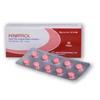
Tizabate 200 mg
Fenofibrate
Category: Capsule
Manufacturer: Advanced Chemical Industries Limited

Advanced Chemical Industries Limited
Allopathic
MFG. Licence No. Biological
051
MFG. Licence No. Non-Biological
213
Address
Godnail, Narayangonj 7, Haziganj Road
Price: 7.02 ৳
1 x 10 in Alu. Alu. Blister Pack

Medicine Selling service is not available yet.
Related Medicines



Uses of Tizabate:
- High triglycerides
- High cholesterol
Hyperlipidemia, Hypercholesterolaemia, Hypertriglyceridaemia
Hypersensitivity; severe hepatic and renal impairment. Unexplained persistent liver function abnormality and primary biliary cirrhosis; preexisting gall bladder disease. Pregnancy, lactation.
Fibrates
Fenofibrate is a fibric acid derivative, a prodrug comprising fenofibric acid linked to an isopropyl ester. Fenofibrate is rapidly hydrolyzed after oral ingestion to its pharmacologically active form, fenofibric acid. The effects of fenofibric acid seen in clinical practice have been explained in vivo in transgenic mice and in vitro in human hepatocyte cultures by the activation of peroxisome proliferator activated receptor α (PPARα)It lowers lipid levels by activating peroxisome proliferator-activated receptor alpha (PPARα). PPARα activates lipoprotein lipase and reduces apoprotein CIII (an inhibitor of lipoprotein lipase activity), which increases lipolysis and elimination of triglyceride-rich particles from plasma. The resulting fall in triglycerides produces an alteration in the size and composition of LDL from small, dense particles (which are thought to be atherogenic due to their susceptibility to oxidation), to large buoyant particles. These larger particles have a greater affinity for cholesterol receptors and are catabolized rapidlyPPARα also increases apoproteins AI and AII, reduces VLDL- and LDL-containing apoprotein B, and increases HDL-containing apoprotein AI and AII. Fenofibrate also reduces serum uric acid levels in hyperuricemic and normal individuals by increasing the urinary excretion of uric acid.
How to use
Fenofibrate:
Take this medicine in the dose and duration as advised by your doctor. Swallow it as a whole. Do not chew, crush or break it.
Fenofibrate is to be taken empty stomach.
Administration:
Should be taken with food.
Adult Dose:
Oral
Hypercholesterolemia, Mixed dyslipidemia, Hypertriglyceridemia
Tablet: 40-160mg once daily.
Capsule: 200mg once daily.
Hepatic impairment: Contraindicated.
Child Dose:
Safety and efficacy not established
Renal Dose:
Renal impairment
Mild-Moderate: Initial: lower dose
Severe: contraindicated
Decreased absorption w/ bile acid sequestrants (e.g. colestyramine). May increase risk of ciclosporin-induced nephrotoxicity. Increased risk of muscle toxicity w/ HMG-CoA reductase inhibitors (e.g. simvastatin). May increase risk of bleeding w/ oral anticoagulants.
Hypersensitivity; severe hepatic and renal impairment. Unexplained persistent liver function abnormality and primary biliary cirrhosis; preexisting gall bladder disease. Pregnancy, lactation.
Common
- Increased liver enzymes
- Nausea
- Vomiting
- Flatulence
- Abdominal pain
- Diarrhea
1-10%
Abdominal pain (4.6%),Back pain (3.4%),Increased AST (3.4%),Headache (3.2%),Increased ALT (3%),Increased CPK (3%),Nausea (2.3%),Constipation (2.1%)
Potentially Fatal: Hepatitis, cholecystitis.
Pregnancy Category C. Fenofibrate should be used during pregnancy only if the potential benefit justifies the potential risk to the fetus.Nursing mothers: Fenofibrate should not be used in nursing mothers. Because of the potential for tumorigenicity seen in animal studies, a decision should be made whether to discontinue nursing or to discontinue the drug.
Precaution:
Renal or hepatic impairment. Monitor LFTs and blood counts regularly. Increased risk of cholelithiasis, pancreatitis, skeletal muscle effects. Withdraw treatment if no adequate response after 2 mth of treatment at max recommended dose.
Lactation: Unknown if excreted in breast milk; not recommended
There is no specific treatment for overdose with Fenofibrate. General supportive care of the patients is indicated, including monitoring of vital signs and observation of clinical status, should an overdose occur. Because Fenofibrate is highly bound to plasma proteins, hemodialysis should not be considered.
Do not store above 30°C. Keep away from light and out of the reach of children.
Fibrates
Fenofibrate, a fibric acid derivative, lowers plasma triglyceride by activating lipoprotein lipase thus increasing catabolism of VLDL w/ consequent increase in HDL levels.
Pregnancy
Limited available data with fenofibrate use in pregnant women are insufficient to determine a drug-associated risk of major birth defects, miscarriage or adverse maternal or fetal outcomes
Animal data
In animal reproduction studies, no evidence of embryo-fetal toxicity was observed with oral administration in rats and rabbits during organogenesis at doses less than or equivalent to the maximum recommended clinical dose of 120 mg daily, based on body surface area (mg/m2)
Adverse reproductive outcomes occurred at higher doses in presence of maternal toxicity; drug should be used during pregnancy only if potential benefit justifies potential risk to fetus
Lactation
There is no available information on presence of drug in human milk, effects on the breastfed infant, or on milk production; drug is present in milk of rats, and likely to be present in human milk; because of potential for serious adverse reactions in breastfed infants, such as disruption of infant lipid metabolism, women should not breastfeed during treatment and for 5 days after final dose


Samm Care