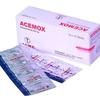
Theramox 250 mg
Acetazolamide
Category: Tablet
Manufacturer: Theraputics (BD) Ltd.

Allopathic
MFG. Licence No. Biological
098
MFG. Licence No. Non-Biological
241
Address
Kalurghat, BSCIC I/A, Chittagong

Medicine Selling service is not available yet.
Related Medicines

Uses of Theramox:
- Glaucoma
Adult: PO Diuresis 250-375 mg/day.
Glaucoma; Epilepsy 250-1,000 mg/day.
Prophylaxis of high altitude sickness 500-1,000 mg/day.
Epilepsy
>12 years
Tablet: 8-30 mg/kg/day PO qDay or divided q6-12 hr; not to exceed 30 mg/kg/day or 1 g/day
Acute Altitude Sickness >12 years
Immediate release: 500-1000 mg/day PO divided q8-12hr
Hepatic impairment: Contraindicated in marked hepatic impairment.
<12 years: Safety and efficacy is not established
Carbonic anhydrase inhibitor
Acetazolamide is a carbonic anhydrase inhibitor. This enzyme catalyzes the reversible reaction involving the hydration of carbon-di-oxide and the dehydration of carbonic acid. In the eye, this inhibitory action of Acetazolamide decreases the secretion of aqueous humor and results in a drop in intraocular pressure, a reaction considered desirable in case of glaucoma. Inhibition of carbonic anhydrase in the central nervous system appears to retard abnormal paroxysmal and excessive discharge from central nervous system neurons. So, Acetazolamide is also used as an adjuvant in the treatment of epilepsy.
How to use Acetazolamide:
Take this medicine in the dose and duration as advised by your doctor. Swallow it as a whole. Do not chew, crush or break it. Acetazolamide may be taken with or without food, but it is better to take it at a fixed time.
Administration:
Concomitant use w/ high-dose aspirin may cause anorexia, tachypnoea, lethargy, metabolic acidosis, coma and death. May increase serum levels of phenytoin, resulting to increased risk of osteomalacia. May decrease serum concentrations of primidone. Additive effects w/ other carbonic anhydrase inhibitors. May increase the effects of folic acid antagonists. May decrease urinary excretion of amphetamine and quinidine. May prevent the urinary antiseptic effect of methenamine. May increase lithium excretion. Increased risk of renal calculus formation w/ Na bicarbonate. May increase ciclosporin levels.
Adult Dose:
Potassium supplements may be required. Impaired hepatic or renal function; diabetes. Monitor plasma electrolytes and blood count regularly. IM route is not recommended. Caution when driving or operating machinery. Elderly.
Lactation: Enters breast milk; not recommended
Renal Dose:
Acetazolamide specifically inhibits the enzyme carbonic anhydrase which catalyses the reversible reaction involving the hydration of CO2 and dehydration of carbonic acid. It increases the excretion of HCO3 ions and as well as Na and K leading to alkaline diuresis. Carbonic anhydrase is also inhibited in the CNS to retard abnormal and excessive discharge from neurons.
Hypersensitivity to sulphonamides; sodium or potassium depletion, hepatic insufficiency; hepatic cirrhosis; hyperchloraemic acidosis; severe renal impairment; severe pulmonary obstruction; chronic noncongestive angle-closure glaucoma; adrenocortical insufficiency. Pregnancy, lactation.
<12 years: Safety and efficacy is not established
Common
- Headache
- Dizziness
- Tiredness
- Frequent urge to urinate
- Tingling sensation of extremity
- Numbness of extremity
- Loss of appetite
- Excitement
- Feeling sick
- Diarrhea
- Taste change
- Flushing (sense of warmth in the face, ears, neck and trunk)
Renal impairment: Contraindicated in marked renal impairment.
There are no adequate and well controlled studies in pregnant women and neonates. So, Acetazolamide should be used with care in those physiological conditions.
Precaution:
Glaucoma, Epilepsy, Idiopathic intracranial hypertension, Altitude sickness
Keep below 30°C temperature, away from light & moisture. Keep out of the reach of children.
Carbonic anhydrase inhibitor
Should be taken with food.
Drowsiness, paraesthesia, ataxia, dizziness, thirst, anorexia, headache; confusion, malaise, depression; GI distress, metabolic acidosis, polyuria, hyperuricaemia, renal calculi, nephrotoxicity, hepatic dysfunction.
Potentially Fatal: Rarely, skin reactions or blood dyscrasias.

Samm Care