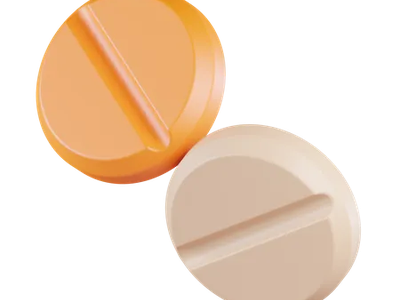
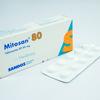
Teltab-40 40 mg
Telmisartan
Category: Tablet
Manufacturer: Ibn Sina Pharmaceutical Ind. Ltd.

Ibn Sina Pharmaceutical Ind. Ltd.
Allopathic
MFG. Licence No. Biological
150
MFG. Licence No. Non-Biological
405
Address
Kaliakair, Gazipur

Medicine Selling service is not available yet.
Related Medicines
Uses of Teltab-40:
- Hypertension (high blood pressure)
- Prevention of heart attack and stroke
- Heart failure
Hypertension in adults, Reduction of cardiovascular morbidity in adults with atherothrombotic cardiovascular disease, (history of coronary heart disease, stroke, or peripheral arterial disease), Type 2 diabetes mellitus, with documented target organ damage.
Severe hepatic impairment, biliary obstructive disorders. Pregnancy. Lactation.
Angiotensin-ll receptor blocker
Angiotensin II is formed from angiotensin I in a reaction catalyzed by angiotensin-converting enzyme (ACE, kininase II). Angiotensin II is the principal pressor agent of the renin-angiotensin system, with effects that include vasoconstriction, stimulation of synthesis and release of aldosterone, cardiac stimulation, and renal reabsorption of sodium. Telmisartan blocks the vasoconstrictor and aldosterone-secreting effects of angiotensin II by selectively blocking the binding of angiotensin II to the AT1 receptor in many tissues, such as vascular smooth muscle and the adrenal gland. Its action is therefore independent of the pathways for angiotensin II synthesis.There is also an AT2 receptor found in many tissues, but AT2 is not known to be associated with cardiovascular homeostasis. Telmisartan has a much greater affinity ( > 3,000 fold) for the AT1 receptor than for the AT2 receptor.Blockade of the renin-angiotensin system with ACE inhibitors, which inhibit the biosynthesis of angiotensin II from angiotensin I, is widely used in the treatment of hypertension. ACE inhibitors also inhibit the degradation of bradykinin, a reaction also catalyzed by ACE. Because telmisartan does not inhibit ACE (kininase II), it does not affect the response to bradykinin. Whether this difference has clinical relevance is not yet known. Telmisartan does not bind to or block other hormone receptors or ion channels known to be important in cardiovascular regulation.Blockade of the angiotensin II receptor inhibits the negative regulatory feedback of angiotensin II on renin secretion, but the resulting increased plasma renin activity and angiotensin II circulating levels do not overcome the effect of telmisartan on blood pressure.
How to use
Telmisartan:
Take this medicine in the dose and duration as advised by your doctor. Swallow it as a whole. Do not chew, crush or break it.
Telmisartan may be taken with or without food, but it is better to take it at a fixed time.
Administration:
May be taken with or without food.
Adult Dose:
Oral
Hypertension
Adult: Dosage must be individualized.
The usual starting dose of Telmisartan tablets is 40 mg once a day.
Blood pressure response is dose-related over the range of 20 to 80 mg.
Most of the anti hypertensive effect is apparent within 2 weeks and maximal reduction is generally attained after 4 weeks.
When additional blood pressure reduction beyond that achieved with 80 mg Telmisartans is required, may switch to combination, a diuretic may be added.
Telmisartan tablets may be administered with other antihypertensive agents.
Initial therapy with Telmisartan is not recommended in patients >75 years old or with hepatic impairment
Elderly: No initial dosage adjustment is necessary for elderly patients.
Cardiovascular risk reduction
Adult:The recommended dose of telmisartan tablets is 80 mg once a day.
It is not known whether doses lower than 80 mg of telmisartan are effective in reducing the risk of cardiovascular morbidity and mortality.
When initiating telmisartan therapy for cardiovascular risk reduction, monitoring of blood pressure is recommended, and if appropriate, adjustment of medications that lower blood pressure may be necessary.
Hepatic impairment: Initial therapy with telmisartan is not recommended in patients ?75 years old or with hepatic impairment.
Child Dose:
<18 years old: Safety and efficacy not established
Renal Dose:
Renal impairment:
No initial dosage adjustment is required for patients with mild to moderate renal impairment. Titrate slowly in patients with severe renal impairment.
Patients on dialysis may develop orthostatic hypotension; their blood pressure should be closely monitored.
May increase plasma levels of digoxin. May increase serum lithium levels and toxicity. May reduce plasma levels of warfarin. Increased risk of hyperkalaemia w/ K-sparing diuretics, K supplements or K-containing salt substitutes. May antagonise hypotensive effect and increase risk of renal impairment w/ NSAIDs.
Potentially Fatal: May increase nephrotoxic, hyperkalaemic and hypotensive effect w/ aliskiren in patients w/ diabetes and renal impairment (GFR <60 mL/min).
Severe hepatic impairment, biliary obstructive disorders. Pregnancy. Lactation.
Common
- Back pain
- Diarrhea
- Nasal congestion (stuffy nose)
- Sinus pain
1-10%
Upper respiratory tract infection (URTI) (7%),Back pain (3%),Diarrhea (3%),Myalgia (3%),Sinusitis (3%),Chest pain (1%),Hypertension (1%),Headache (1%),Dizziness (1%),Pharyngitis (1%)
<1%
Abnormal ECG,Anemia,Angina,Angioedema,Bradycardia,Eczema,Epistaxis,Gout,Hypercholesterolemia,Hyperkalemia,Hypoglycemia,Otitis media
Potentially Fatal: Rarely angioedema, rash, pruritus and urticaria.
Telmisartan has been assigned to pregnancy categories C (use during first trimester) by the FDA. When pregnancy is detected or expected, Telmisartan should be discontinued as soon as possible. The use of drugs that act directly on the RAA system during the second and third trimesters has been associated with fetal and neonatal injury, including hypotension, neonatal skull hypoplasia, anuria, reversible or irreversible renal failure and death. There are no data on the excretion of Telmisartan into human milk, due to the potential for serious adverse effects in the nursing infant, a decision should be made to discontinue nursing or discontinue the drug.
Precaution:
Avoid fetal or neonatal exposure, Hypotension, Monitor carefully in patients with impaired hepatic or renal function, Avoid concomitant use of an ACE inhibitor and angiotensin receptor blocker.
Hepatic insufficiency, biliary obstruction, renal impairment, renaly artery stenosis. Correct volume depletion before initiating treatment. Monitor serum potassium levels regularly, especially in elderly and renally-impaired patients.
The most likely manifestation of overdosage with Telmisartan tablets would be hypotension, dizziness and tachycardia; bradycardia, increase in serum creatinine and acute renal failure could occur from parasympathetic (vagal) stimulation.
Do not store above 30°C. Protect from light and high humidity. Keep out of the reach of children.
Angiotensin-ll receptor blocker
Telmisartan blocks the vasoconstrictor and aldosterone-secreting effects of angiotensin II by selectively blocking the binding of angiotensin II to the AT1 receptor in many tissues, such as vascular smooth muscle and the adrenal gland. Its action is therefore independent of the pathways for angiotensin II synthesis.
Pregnancy category: 1st trimester, C; 2nd and 3rd trimesters, D

Samm Care