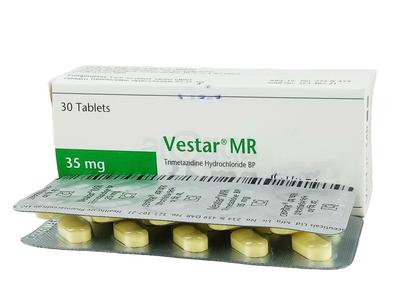
Uses of Vestar MR:
- Angina (heart-related chest pain)
Ischaemic heart disease, Angina pectoris, Coronary heart disease
Hypersensitivity to Vestar MR.
Other Anti-anginal & Anti-ischaemic drugs
Trimetazidine Dihydrochloride is the first 3- keto acyl CoA thiolase inhibitor (KAT), a metabolic anti-ischemic agent with proven benefits for all coronary patients. Trimetazidine Dihydrochloride inhibits fatty acid pathway by inhibiting 3-keto acyl CoA thiolase enzyme and transfers oxygen to glucose pathway. Since glucose pathway is more efficient in producing energy, the same oxygen produces more energy and makes the heart more active. Moreover, the aerobic oxidation of glucose stops production of lactic acid, which prevents angina pectoris.
How to use Trimetazidine Dihydrochloride:
Take this medicine in the dose and duration as advised by your doctor. Swallow it as a whole. Do not chew, crush or break it. Trimetazidine Dihydrochloride may be taken with or without food, but it is better to take it at a fixed time.
Administration:
Should be taken with food.
Adult Dose:
Oral
Angina pectoris
Adult: 40-60 mg daily in 2-3 divided doses.
Modified-release tab: 35 mg bid.
Renal Dose:
Renal impairment:
CrCl (ml/min) Dosage Recommendation
<30 Contraindicated.
30-60 20 mg bid. Modified-release: 35 mg once daily.
MAOIs, nifedipine. May potentiate the effects of other antianginals.
Hypersensitivity to Trimetazidine Dihydrochloride.
There is no data on the use of Trimetazidine in pregnant women. Animal studies do not indicate direct or indirect harmful effects with respect to reproductive toxicity. As a precautionary measure, it is preferable to avoid the use of Trimetazidine during pregnancy. It is unknown whether Trimetazidine is excreted in human milk. A risk to the newborns/infants cannot be excluded. Trimetazidine should not be used during breast-feeding.
Precaution:
Moderate renal impairment (CrCl 30-60 mL/min). Pregnancy. Patient Counselling May cause dizziness and drowsiness, if affected, do not drive or operate machinery. Although teratological studies have not shown any drug related adverse effects on the course and outcome of pregnancy, the use in pregnant women is not recommended.
It is not known whetherTrimetazidine passes into breast milk or not. This medication should be used while breast feeding only if the potential benefits outweigh risks to the nursing infants.
Keep in a dry place away from light and heat. Keep out of the reach of children.
Other Anti-anginal & Anti-ischaemic drugs
Trimetazidine is a cellular acting anti-ischaemic agent. It has 3 main properties by which it acts as a cytoprotective agent. It inhibits the anaerobic glycolysis and fatty acid metabolism, thus allowing only aerobic glycolysis. This action helps to restore the energy balance in the cell. It inhibits acidosis and free radical accumulation in the cell. All these action help the cell to restore the normal ionic and metabolic balance.
There is no data on the use of Trimetazidine in pregnant women. Animal studies do not indicate direct or indirect harmful effects with respect to reproductive toxicity. As a precautionary measure, it is preferable to avoid the use of Trimetazidine during pregnancy. It is unknown whether Trimetazidine is excreted in human milk. A risk to the newborns/infants cannot be excluded. Trimetazidine should not be used during breast-feeding.