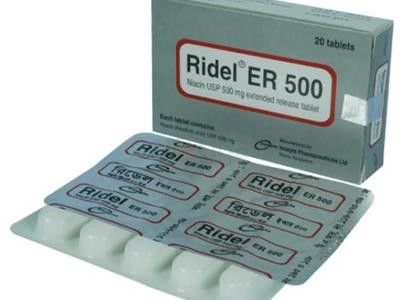
Uses of Ridel ER:
- High triglycerides
Hyperlipidaemias, Nicotinic acid deficiency, Ischaemic events
Niacin is contraindicated in patients with a known hypersensitivity to Niacin or any component of this medication, significant or unexplained hepatic dysfunction, active peptic ulcer disease or arterial bleeding.
Vitamin-B preparations
Niacin is a preparation of Nicotinic acid. It is proven effective at lowering VLDL, LDL, total cholesterol and triglyceride levels while raising HDL levels. So Niacin has been prescriped for the treatment of cardiovascular disease particularly the hyperlipidemias.
How to use Niacin [Nicotinic Acid]:
Take this medicine in the dose and duration as advised by your doctor. Swallow it as a whole. Do not chew, crush or break it. Niacin [Nicotinic Acid] may be taken with or without food, but it is better to take it at a fixed time.
Administration:
Should be taken with food. Take at bedtime after a low-fat snack.
Adult Dose:
Oral
Treatment and prophylaxis of nicotinic acid deficiency
Adult: For treatment of pellagra: 300-500 mg daily in divided doses. For management of Hartnup disease: 50-200 mg daily.
Hyperlipidaemias
Adult: Initially, 250 mg once daily in the evening. Increase dose every 4-7 days until desired LDL cholesterol and/or triglyceride level is achieved or dose of 1.5-2 g/day is reached. If hyperlipidaemia is not adequately controlled after 2 mth w/ this dose, it can be increased at 2- to 4-wk intervals to 1 g tid. Max: 6 g daily.
As extended-release tab: Initially, 500 mg/day PO at bedtime initially; dose adjusted every 4 weeks on basis of effect and tolerance to therapeutic dose of 1-2 g once daily; not to exceed 1-2 g/day
Vasodilation
Adult: 100-150 mg 3-5 times daily. As extended-release tab: 300-400 mg 12 hrly.
Child Dose:
Oral
Treatment and prophylaxis of nicotinic acid deficiency
Child: For treatment of pellagra: 100-300 mg daily in divided doses.
Increased risk of myopathy and rhabdomyolysis w/ concomitant HMG-CoA reductase inhibitors. Reduced bioavailability w/ colestyramine or colestipol. Decreased metabolic clearance w/ aspirin. May potentiate effects of ganglionic blocking agents and vasoactive drugs resulting in postural hypotension.
Niacin is contraindicated in patients with a known hypersensitivity to Niacin or any component of this medication, significant or unexplained hepatic dysfunction, active peptic ulcer disease or arterial bleeding.
Common
- Itching
- Flushing (sense of warmth in the face, ears, neck and trunk)
- Erythema (skin redness)
- Tingling
Flushing, sensation of heat, faintness, pounding in the head, tingling, itching, headache, dizziness, tachycardia, palpitations, dyspnoea, sweating, chills, oedema; dryness of skin, pruritus, hyperpigmentation, rash, cramps, cough, diarrhoea, nausea and vomiting, anorexia, activation of peptic ulcer, eye disorders including cystoid macular oedema and toxic amblyopia; decreased glucose tolerance, hyperglycaemia, hyperuricaemia; abnormal LFTs, jaundice; hypophosphataemia, reduced platelet counts, prolonged prothrombin time, arrhythmias, hypersensitivity reactions including angioedema; insomnia, myalgia and hypotension.
Niacin cannot be used in pregnancy and lactation because of a lack of information.
Precaution:
Patient w/ unstable angina, acute MI, CHD, DM, gout, history of peptic ulceration. Patient who consume large amount of alcohol. Patient undergoing surgery. Renal or hepatic impairment. Pregnancy and lactation. Monitoring Parameters Monitor LFTs and blood glucose frequently.
Supportive measures should be undertaken in the event of an overdosage. Symptoms may include nausea, dizziness, itching, vomiting, upset stomach, and flushing
Nicotinic acid is a derivative of vitamin B3 and is incorporated into coenzymes nicotinamide adenine dinucleotide (NAD) and nicotinamide adenine dinucleotide phosphate (NADP), which are involved in multiple cellular metabolic pathways. Nicotinic acid also reduces total serum cholesterol, LDL, VLDL, and triglycerides, and increases HDL cholesterol. It appears to decrease hepatic synthesis of VLDL, however, the exact mechanisms of nicotinic acid's antilipemic effects are unknown and are unrelated to its role as a vitamin.