
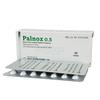
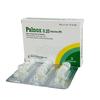
Palnox 0.5 5 mg
Palonosetron
Category: Tablet
Manufacturer: Drug International Ltd.

Allopathic
MFG. Licence No. Biological
398
MFG. Licence No. Non-Biological
127
Address
Tongi I/A, Gazipur
Price: 10.0 ৳
3 x 10 in Blister Pack

Medicine Selling service is not available yet.
Related Medicines


Uses of Palnox 0.5:
- Nausea
- Vomiting
Chemotherapy-induced nausea and vomiting, Postoperative nausea and vomiting
History of hypersensitivity.
Anti-emetic drugs
Nausea and Vomiting is usually produced by chemotherapeutic agents by releasing serotonin from the enterochromaffin cells of the small intestine.The released serotonin (5-HT) then activates 5-HT3 receptors located on vagal afferents to initiate the vomiting reflex. Postoperative nausea and vomiting is influenced by multiple patient, surgical and anesthesia related factors and is triggered by release of serotonin (5-HT) in a cascade of neuronal events involving both the central nervous system and the gastrointestinal tract. The 5-HT3 receptor has been demonstrated to selectively participate in the emetic response. Palonosetron is a 5-HT3 receptor antagonist with a strong binding affinity for this receptor and little or no affinity for other receptors. So by binding with this receptor palonosetron inhibits binding of serotonine to this receptor and also inhibits vomiting reflux.
How to use
Palonosetron:
Take this medicine in the dose and duration as advised by your doctor. Do not handle the tablets with wet hands. Put it in your mouth but do not swallow it.
Palonosetron may be taken with or without food, but it is better to take it at a fixed time.
Administration:
Reconstitution: Physically and chemically stable at concentrations of 5 and 30 mcg/ml in glucose 5%, sodium chloride 0.9%, glucose 5% in lactated Ringer's for at least 48 hr at room temperature, exposed to light and for 14 days under refridgeration.
IV Administration
Flush IV line with NS before and after administration
CINV: give IVP evenly over 30 sec (adults) or 15 min (children)
PONV: IVP over 10 sec
Adult Dose:
Prevention of Chemotherapy-induced Nausea & Vomiting
Intravenous
Adult: 0.25 mg IV as a single dose. To be given over 30 sec and 30 minutes before chemotherapy. Do not repeat within 7 days.
Oral
Alternatively 0.5 mg tablet/capsule approximately 1 hour before the start of chemotherapy. Then 0.5 mg tablet once daily.
Prevention of Postoperative Nausea & Vomiting
Adult: 0.075 mg IV as a single dose immediately before induction of anaesthesia.
Hepatic impairment: Dose adjustment not necessary
Child Dose:
Prevention of Postoperative Nausea & Vomiting
<18 years: Safety and efficacy not established
Prevention of Chemotherapy-induced Nausea & Vomiting
<1 month: Safety and efficacy not established
1 month to 17 years: 20 mcg/kg IV infused over 15 minutes x1, beginning 30 minutes before chemotherapy; not to exceed 1.5 mg/dose
Renal Dose:
Renal impairment: Dose adjustment not necessary
May have additive effect on prolonging QT with drugs e.g. moxifloxacin, erythromycin, antipsychotics and TCAs.
History of hypersensitivity.
Common
- Headache
- Constipation
1-10%
Prolonged QT interval (up to 5% ),Anxiety,Dizziness,Headache,Weakness,Constipation,Diarrhea,Prutitus,Hyperkalemia,LFT's increased
<1%
First degree atrioventricular block,Second degree atrioventricular block
Frequency Not Defined
Immune hypersensitivity reaction (very rare),Seizure
US FDA Pregnancy category B. It is not known whether Paloxiron is excreted in human milk.
Precaution:
Patients with intestinal obstruction or ileus. Rapid inj may lead to temporary visual changes e.g. blurred vision. Patients who have or may develop prolonged QT intervals. Safety and efficacy not established in children <18 yr. Counsel patients who handle skilled tasks e.g. driving may be impaired.
Lactation: unknown, discontinue drug or do not nurse
There is no known antidote to Palonosetron. Overdose should be managed with supportive care.
Store in a cool & dry place, protected from light.
Anti-emetic drugs
Palonosetron is a selective 5-HT3 antagonist that is used in the prevention of acute and delayed emesis in emetogenic cancer chemotherapy regimens.
Pregnancy category 'B'. It is not known whether Palonosetron is excreted in breast milk.


Samm Care