
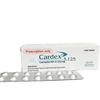
Carvipress 25 mg
Carvedilol
Category: Tablet
Manufacturer: ACME Laboratories Ltd.

Price: 8.07 ৳
3 x 10 in Blister Pack
30's pack
piece

Medicine Selling service is not available yet.
Related Medicines

Uses of Carvipress:
- Hypertension (high blood pressure)
- Angina (heart-related chest pain)
- Heart failure
Hypertension, Congestive heart failure, Myocardial infarction, Left ventricular dysfunction, Angina pectoris
Hypersensitivity; severe chronic heart failure, bronchial asthma or related bronchospastic conditions; severe hepatic impairment. Patients with NYHA class IV cardiac failure, 2nd or 3rd ° AV block, sick sinus syndrome (unless a permanent pacemaker is in place), cardiogenic shock or severe bradycardia. Lactation.
Alpha adrenoceptor blocking drugs, Beta-adrenoceptor blocking drugs, Beta-blockers
Carvedilol is a non selective β-adrenergic blocking agent which causes vasodilation by blocking the activity α-1 receptors. It exerts antihypertensive effect partly by reducing total peripheral resistance and vasodilation.
How to use
Carvedilol:
Take this medicine in the dose and duration as advised by your doctor. Swallow it as a whole. Do not chew, crush or break it.
Carvedilol is to be taken with food.
Administration:
Should be taken with food.
Adult Dose:
Congestive Heart Failure
Immediate release
3.125 mg PO q12hr for 2 weeks, then increased every 2 weeks as tolerated to 6.25 mg, 12.5 mg, or 25 mg PO twice daily
Maximum recommended dosage (mild-to-moderate heart failure): <85 kg, 25 mg PO q12hr; >85 kg: 50 mg PO twice daily
Maximum recommended dosage (severe heart failure): 25 mg PO twice daily
Extended release
10 mg/day PO; maintained for 1-2 weeks if tolerated; may be increased to 20 mg/day, 40 mg/day, or 80 mg/day PO if necessary
Hypertension
Immediate release: 6.25 mg PO twice daily initially; after 7-14 days, increased as tolerated, first to 12.5 mg PO twice daily and then to 25 mg PO twice daily
Extended release: 20 mg/day PO; maintained for 1-2 weeks if tolerated; may be increased to 40 mg/day PO if necessary; not to exceed 80 mg/day PO
Left Ventricular Dysfunction Following Myocardial Infarction
Immediate release: 3.125-6.25 mg PO q12hr initially; after 3-10 days, increased as tolerated, first to 12.5 mg PO q12hr and then to 25 mg PO q12hr (target dosage)
Extended release: 10-20 mg/day PO; increased every 3-10 days as tolerated up to 80 mg/day PO (target dosage)
Angina pectoris
25-50 mg PO twice daily
Hepatic impairment: Contraindicated in severe liver impairment
Child Dose:
Safety and efficacy not established
Renal Dose:
Renal impairment: No dosage adjustments necessary
Decreased serum levels w/ rifampicin. Combination w/ Ca channel blockers (e.g. verapamil and diltiazem) can lead to bradycardia and myocardial depression. Potentiates insulin-induced hypoglycaemic action. May increase hypoglycaemic effects of antidiabetic agents. Increased risk of bradycardia w/ digoxin. Increased risk of hypotension and bradycardia w/ reserpine, MAOIs, clonidine. May increase ciclosporin concentrations. Concurrent use w/ ether, cyclopropane, trichloroethylene may increase the risk of hypotension and heart failure.
Hypersensitivity; severe chronic heart failure, bronchial asthma or related bronchospastic conditions; severe hepatic impairment. Patients with NYHA class IV cardiac failure, 2nd or 3rd ° AV block, sick sinus syndrome (unless a permanent pacemaker is in place), cardiogenic shock or severe bradycardia. Lactation.
Common
- Decreased blood pressure
- Headache
- Fatigue
- Dizziness
>10%
Dizziness (2-32%),Fatigue (4-24%),Hypotension (9-20%),Weight gain (10-12%),Hyperglycemia (5-12%),Diarrhea (1-12%)
1-10%
Bradycardia (2-10%),Nausea (2-9%),Cough (5-8%),Headache (5-8%),Atrioventricular block, edema (1-7%),Angina (1-6%),Hpercholesterolemia (1-4%),Hypertriglyceredemia (1%),Vomiting (1-6%),Dyspnea (>3%),Syncope (3%),Rhinitis (2%)
Frequency Not Defined
Hypertension,Palpitations,Insomnia,Somnolence,Skin rash,Hepatotoxicity,Impotence,Bronchospasm,Rales,Depression,Decreased exercise tolerance,Raynaud phenomenon,Increased triglyceride levels and insulin resistance with decreased high-density lipoprotein (HDL) levels
Carvedilol should not be used during pregnancy as no studies have been performed in this group. Carvedilol and its metabolites are excreted in breast milk. Therefore, breastfeeding is not recommended during administration of Carvedilol.
Precaution:
Avoid abrupt withdrawal as it may precipitate thyroid storm or exacerbate hyperthyroidism. Liver injury; vascular disease, renal failures, suspected phaeochromocytoma and prinzmetal's variable angina; worsening cardiac failure or fluid retention during increase in dosage of carvedilol; diabetic patients. Pregnancy.
Lactation: Unknown whether drug is excreted in milk; not recommended
Symptoms: Severe hypotension, bradycardia, heart failure, cardiogenic shock and cardiac arrest. Resp problems, bronchospasms, vomiting, lapses of consciousness and generalised seizures. Management: Symptomatic and supportive treatment. Consider use of atropine for excessive bradycardia, IV glucagon or sympathomimetics to support ventricular function. Consider using norfenephrine or noradrenaline if vasodilation dominates the intoxication profile and IV inj of diazepam or clonazepam for seizures.
Keep below 30°C temperature, away from light & moisture. Keep out of the reach of children.
Alpha adrenoceptor blocking drugs, Beta-adrenoceptor blocking drugs, Beta-blockers
Carvedilol is a nonselective beta-adrenoreceptor and alpha-adrenergic blocking activity. It exerts antihypertensive effect partly by reducing total peripheral resistance and vasodilation.
Pregnancy
Available data in pregnant women are insufficient to determine whether there are drug-associated risks of adverse developmental outcomes; there are risks to mother and fetus associated with poorly controlled hypertension in pregnancy; the use of beta blockers during third trimester of pregnancy may increase risk of hypotension, bradycardia, hypoglycemia, and respiratory depression in neonates; in animal reproduction studies, there was no evidence of adverse developmental outcomes at clinically relevant doses; observe newborns for symptoms of hypotension, bradycardia, hypoglycemia, and respiratory depression and manage accordingly
Hypertension in pregnancy increases maternal risk for pre-eclampsia, gestational diabetes, premature delivery, and delivery complications (e.g., need for cesarean section and post-partum hemorrhage); hypertension increases fetal risk for intrauterine growth restriction and intrauterine death; pregnant women with hypertension should be carefully monitored and managed accordingly
Lactation
There are no data on presence of carvedilol in human milk, effects on breastfed infant, or on milk production; drug is present in the milk of lactating rats; developmental and health benefits of breastfeeding should be considered along with mother’s clinical need for therapy and any potential adverse effects on breastfed infant from treatment or from underlying maternal condition


Samm Care