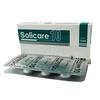
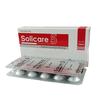
Solider 10 10 mg
Solifenacin Succinate
Category: Tablet
Manufacturer: Square Lifesciences Limited, Pabna

Square Lifesciences Limited, Pabna
Allopathic
MFG. Licence No. Biological
330
MFG. Licence No. Non-Biological
535
Address
Patikabari, Hemayatpur, Pabna
Price: 30.0 ৳
10 in Blister Pack

Medicine Selling service is not available yet.
Related Medicines

Uses of Solider 10:
- Overactive bladder (OAB) symptoms
Overactive bladder
Uncontrolled narrow-angle glaucoma, urinary retention, gastric retention.
Anticholinergics (antimuscarinics)/ Anti-spasmodics, BPH/ Urinary retention/ Urinary incontinence
Solifenacin is a competitive muscarinic receptor antagonist. It has the highest affinity for M3, M1, and M2 muscarinic receptors. 80% of the muscarinic receptors in the bladder are M2, while 20% are M3. Solifenacin's antagonism of the M3 receptor prevents contraction of the detrusor muscle, while antagonism of the M2 receptor may prevent contraction of smooth muscle in the bladder.
How to use
Solifenacin Succinate:
Take this medicine in the dose and duration as advised by your doctor. Swallow it as a whole. Do not chew, crush or break it.
Solifenacin Succinate may be taken with or without food, but it is better to take it at a fixed time.
Administration:
May be taken with or without food. Swallow whole, do not chew/crush.
Adult Dose:
Oral
Overactive bladder
Adult: 5 mg once daily. If well tolerated, may increase to 10 mg once daily if needed. For patients who are concurrently taking CYP3A4 inhibitors (e.g. ketoconazole, ritonavir): Max dose: 5 mg once daily.
Hepatic impairment: Child-pugh class B: Max: 5 mg daily; Child-pugh class C: Use is not recommended.
Renal Dose:
Renal impairment:
CrCl (ml/min) Dosage Recommendation
<30 Max: 5 mg daily.
May interfere with the prokinetic effects of cisapride and metoclopramide.
Potentially Fatal: May reduce the stimulatory effect of secretin. Concurrent use with biperiden, orphenadrine, procyclidine or trihexyphenidyl may cause anticholinergic effects such as confusion and loss of bladder control; a washout period of 1 wk between using these drugs is recommended. May increase the ulcerogenic effect of potassium chloride.
Strong CYP3A4 inhibitors (e.g. ketoconazole, fluconazole, itraconazole, erythromycin, telithromycin, clarithromycin, ritonavir, indinavir, nelfinavir, nefazodone, aprepitant, verapamil) may reduce the metabolism of solifenacin, thus increasing its plasma levels.
Uncontrolled narrow-angle glaucoma, urinary retention, gastric retention.
Common
- Dryness in mouth
- Constipation
- Blurred vision
- Nausea
- Upset stomach
- Urinary tract infection
Constipation, dyspepsia, nausea, upper abdominal pain, xerostomia, hypertension, oedema, headache, depression, fatigue, urinary tract infection, blurred vision, cough, influenza.
No clinical data are available from women who became pregnant while taking Solifenacin. Animal studies do not indicate direct harmful effects on fertility, embryonal / foetal development or parturition. The potential risk for humans is unknown. Caution should be exercised when prescribing to pregnant women. No data on the excretion of Solifenacin in human milk are available. In mice, Solifenacin and/or its metabolites was excreted in milk, and caused a dose dependent failure to thrive in neonatal mice. The use of Solifenacin should therefore be avoided during breast-feeding.
Precaution:
Increased risk of urinary retention in patients with bladder outflow obstruction. Caution in patients with decreased GI motility, GI obstructive diseases, controlled narrow-angle glaucoma, liver or kidney impairment, patients with known history of QT prolongation or other risk factors for QT prolongation. May cause drowsiness and/or blurred vision. Monitor serum creatinine clearance and liver function. Maintain adequate hydration. Increased susceptibility to heat prostration due to reduced ability to sweat. Pregnancy, lactation.
Over dosage with Solifenacin Succinate can potentially result in severe anticholinergic effects. The highest dose of Solifenacin Succinate accidentally given to a single patient was 280 mg in a 5 hour period, resulting in mental status changes not requiring hospitalization. In the event of overdose with Solifenacin Succinate, the patient should be treated with activated charcoal. Gastric lavage is useful if performed within 1 hour, but vomiting should not be induced. As for other anticholinergics, symptoms can be treated as follows:
Severe central anticholinergic effects such as hallucinations or pronounced excitation: treat with physostigmine or carbachol.
Convulsions or pronounced excitation: treat with benzodiazepines.
Respiratory insufficiency: treat with artificial respiration.
Tachycardia: treat with beta-blockers.
Urinary retention: treat with catheterisation.
Mydriasis: treat with pilocarpine eye drops and/or place patient in a dark room.
As with other antimuscarinics, in case of overdosing, specific attention should be paid to patients with known risk for QT-prolongation (i.e. hypokalaemia, bradycardia and concurrent administration of medicinal products known to prolong QT interval) and relevant pre-existing cardiac diseases (i.e. myocardial ischaemia, arrhythmia, congestive heart failure).
Store in a cool and dry place, protected from light.
Anticholinergics (antimuscarinics)/ Anti-spasmodics, BPH/ Urinary retention/ Urinary incontinence
Solifenacin is a selective M3 antimuscarinic that inhibits muscarinic receptors resulting in decreased urinary bladder contraction, increased residual urine volume and decreased detrusor muscle pressure.
No clinical data are available from women who became pregnant while taking Solifenacin. Animal studies do not indicate direct harmful effects on fertility, embryonal / foetal development or parturition. The potential risk for humans is unknown. Caution should be exercised when prescribing to pregnant women. No data on the excretion of Solifenacin in human milk are available. In mice, Solifenacin and/or its metabolites was excreted in milk, and caused a dose dependent failure to thrive in neonatal mice. The use of Solifenacin should therefore be avoided during breast-feeding.

Samm Care