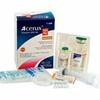
Simplovir 250 mg/vial
Acyclovir
Category: Injection
Manufacturer: Incepta Pharmaceuticals Ltd.

Allopathic
MFG. Licence No. Biological
193
MFG. Licence No. Non-Biological
108
Address
Zirabo, Savar, Dhaka Dewan Idris Road, Bara Rangamatia
Price: 360.0 ৳
250mg Vial

Medicine Selling service is not available yet.
Related Medicines
Uses of Simplovir:
- Herpes simplex virus infections
- Chickenpox
- Herpes labialis
- Shingles
- Genital herpes infection
Oral
Primary herpes simplex infections
Adult: 200 mg 5 times daily every 4 hr for 5-10 days; for severely immuno compromised patients and those with impaired absorption: 400 mg 5 times daily for 5 days.
Suppression of recurrent herpes simplex
Adult: 800 mg daily in 2-4 divided doses. May reduce to 400-600 mg daily if necessary. Reassess the condition every 6-12 mth. For mild or infrequent recurrences: Episodic treatment may be used: 200 mg 5 times daily for 5 days, preferably begun during the prodromal period.
Prophylaxis of herpes simplex in immunocompromised patients
Adult: 200-400 mg 4 times daily.
Varicella zoster 800 mg 5 times/day for 5-7 days.
Herpes zoster 800 mg 5 times/day for 7-10 days.
Child: PO 900 mg/m2/day q8h
60–80 mg/kg/day (max 4 g/day) q6–8h
Varicella Zoster (Chickenpox)
>2 years and <40 kg: 20 mg/kg/dose PO q6hr for 5 days; not to exceed 800 mg/dose
>10 mL/min/1.73 m²: 200 mg q4hr (five times daily)
400 mg every 12 hr
0-10 mL/min/1.73 m²: 200 mg q12hr
>10 mL/min/1.73 m²: 400 mg q12hr
800 mg every 4 hr
0-10 mL/min/1.73 m²: 800 mg q12hr
10-25 mL/min/1.73 m²: 800 mg q8hr
>25 mL/min/1.73 m²: 800 mg q4hr (five times daily)
Topical Antiviral preparations
Acyclovir is an antiviral drug active against herpes simplex virus. Acyclovir is a synthetic purine nucleoside analogue with cell culture and in vivo inhibitory activity against HSV types 1 (HSV-1) and 2 (HSV-2). The inhibitory activity of acyclovir is highly selective due to its affinity for the enzyme thymidine kinase (TK) encoded by HSV. This viral enzyme converts acyclovir into acyclovir monophosphate, a nucleotide analogue. The monophosphate is further converted into diphosphate by cellular guanylate kinase and into triphosphate by a number of cellular enzymes. In cell culture, acyclovir triphosphate stops replication of herpes viral DNA. This inhibition is accomplished in 3 ways: 1) competitive inhibition of viral DNA polymerase, 2) incorporation into and termination of the growing viral DNA chain, and 3) inactivation of the viral DNA polymerase.
How to use Acyclovir:
Take this medicine in the dose and duration as advised by your doctor. Swallow it as a whole. Do not chew, crush or break it. Acyclovir may be taken with or without food, but it is better to take it at a fixed time.
Administration:
Probenecid, cimetidine and mycophenolate mofetil may increase the plasma concentration of aciclovir. Increased nephrotoxic effects w/ drugs that affect renal physiology (e.g. ciclosporin, tacrolimus).
Adult Dose:
Renal impairment. Pregnancy, lactation. Neurological abnormalities with significant hypoxia, serious hepatic or electrolyte abnormalities. Maintain adequate hydration.
Lactation: Drug enters breast milk; use with caution.
Renal Dose:
Activity against HSV types I and II and varicella-zoster virus is due to intracellular conversion of aciclovir to the monophosphate by viral thymidine kinase with subsequent conversion to the diphosphate and active triphosphate by cellular enzymes. This active form inhibits viral DNA synthesis and replication by interfering with viral DNA polymerase enzyme and being incorporated into viral DNA.
Hypersensitivity.
Child: PO 900 mg/m2/day q8h
60–80 mg/kg/day (max 4 g/day) q6–8h
Varicella Zoster (Chickenpox)
>2 years and <40 kg: 20 mg/kg/dose PO q6hr for 5 days; not to exceed 800 mg/dose
>10 mL/min/1.73 m²: 200 mg q4hr (five times daily)
400 mg every 12 hr
0-10 mL/min/1.73 m²: 200 mg q12hr
>10 mL/min/1.73 m²: 400 mg q12hr
800 mg every 4 hr
0-10 mL/min/1.73 m²: 800 mg q12hr
10-25 mL/min/1.73 m²: 800 mg q8hr
>25 mL/min/1.73 m²: 800 mg q4hr (five times daily)
Common
- Headache
- Dizziness
- Vomiting
- Nausea
- Fatigue
- Fever
- Stomach pain
- Diarrhea
- Skin rash
- Photophobia
Pregnancy Category B. There are no adequate and well-controlled studies of acyclovir cream in pregnant women. Acyclovir cream should be used during pregnancy only if the potential benefit justifies the potential risk to the fetus. It is not known whether topically applied acyclovir is excreted in breast milk. Systemic exposure following topical administration is minimal.
Precaution:
Herpes simplex infections, Varicella zoster (chickenpox), Herpes zoster (shingles), Genital herpes
Store Acyclovir cream at room temperature between 20°C to 25°C
May be taken with or without food. May be taken w/ meals to reduce GI discomfort.
Reconstitution: Add 10 mL or 20 mL of sterile water for inj to a vial labeled as containing 500 mg or 1,000 mg of aciclovir, respectively, to provide a soln containing 50 mg/mL. The appropriate dose of reconstituted soln should then be withdrawn from the vial and diluted w/ 50-125 mL of a compatible IV infusion soln.
>10%
Oral
Malaise (<12%)
1-10%
Parenteral
Inflammation or phlebitis at injection site (9%),Nausea (7%),Vomiting (7%),Rash or hives (2%),Elevated transaminase levels (1-2%)
Oral
Nausea (2-5%),Vomiting (<3%),Diarrhea (2-3%),Headache (2%)
<1%
Abdominal pain,Aggression/confusion,Agitation,Alopecia,Anaphylaxis,Anemia,Angioedema,Anorexia,Ataxia,Coma,Disseminated intravascular coagulation (DIC),Dizziness,Fatigue
Potentially Fatal: Occasionally neurotoxicity after IV use: Lethargy, confusion, agitation, tremors, seizures, coma.

Samm Care