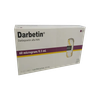
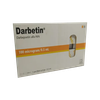
Darboren 40 mcg/0.4 ml
Darbepoetin alfa
Category: SC Injection
Manufacturer: Square Pharmaceuticals Ltd.

Price: 4500.0 ৳
40 mcg per-filled syringe

Medicine Selling service is not available yet.
Related Medicines
Uses of Darboren:
- Anemia due to chronic kidney disease
- Anemia due to cancer chemotherapy
Anaemia of chronic renal failure, Anaemia in chemotherapy patients
Hypersensitivity, uncontrolled hypertension.
Haematopoietic Agents
Darbepoetin alfa stimulates erythropoiesis by the same mechanism as endogenous erythropoietin. Erythropoietin interacts with progenitor stem cells to increase red cell production. Binding of erythropoietin to the erythropoietin receptor leads to receptor dimerization, which facilitates activation of JAK-STAT signaling pathways within the cytosol. Activated STAT (signal transducers and activators of transcription) proteins are then translocated to the nucleus where they serve as transcription factors which regulate the activation of specific genes involved in cell division or differentiation.
How to use
Darbepoetin alfa:
Your doctor or nurse will give you this medicine. Kindly do not self administer.
Adult Dose:
Chronic Kidney Disease-Associated Anemia
CKD not on dialysis
Recommended starting dose: 0.45 mcg/kg IV/SC q4weeks
Consider initiating ESA treatment only when the hemoglobin level is <10 g/dL
If the hemoglobin level exceeds 10 g/dL, reduce or interrupt ESA dose and use the lowest dose sufficient to reduce the need for red blood cell transfusions
CKD on dialysis
Initiate ESA treatment when the hemoglobin level is <10 g/dL
If the hemoglobin level approaches or exceeds 11 g/dL, reduce or interrupt the dose of ESA
Recommended starting dose: 0.45 mcg/kg IV or SC qWeek or 0.75 mcg/kg q2weeks; the IV route is recommended for patietns on hemodialysis
Intravenous route recommended for patients on hemodialysis
Chemotherapy-Related Anemia with Nonmyeloid Malignancies
2.25 mcg/kg SC qWeek OR 500 mcg SC q3Weeks
If Hgb increases <1 g/dL after 6 weeks, may increase dose no more than 4.5 mcg/kg
Reduce dose by 40% if rapid increase in Hgb (eg, >1 g/dL in 2-week period)
Discontinue if no response after 8 weeks
Child Dose:
Chronic Kidney Disease-Associated Anemia
Initiate treatment when the hemoglobin level is <10 g/dL
If the hemoglobin level approaches or exceeds 12 g/dL, reduce or interrupt the dose
Recommended starting dose for pediatric patients (<18 yr) is 0.45 mcg/kg SC or IV qWeek
Patients not receiving dialysis may also be initiated at a dose of 0.75 mcg/kg q2Week
Chemotherapy-related Anemia
Safety and efficacy not established
Renal Dose:
Chronic Kidney Disease-Associated Anemia
CKD not on dialysis
Recommended starting dose: 0.45 mcg/kg IV/SC q4weeks
Consider initiating ESA treatment only when the hemoglobin level is <10 g/dL
If the hemoglobin level exceeds 10 g/dL, reduce or interrupt ESA dose and use the lowest dose sufficient to reduce the need for red blood cell transfusions
CKD on dialysis
Initiate ESA treatment when the hemoglobin level is <10 g/dL
If the hemoglobin level approaches or exceeds 11 g/dL, reduce or interrupt the dose of ESA
Recommended starting dose: 0.45 mcg/kg IV or SC qWeek or 0.75 mcg/kg q2weeks; the IV route is recommended for patietns on hemodialysis
Intravenous route recommended for patients on hemodialysis
Antagonism of hypotensive effect and increased risk of hyperkalemia with ACE inhibitors and angiotensin II receptor antagonists. Ethanol.
Hypersensitivity, uncontrolled hypertension.
Common
- High blood pressure
- Hypersensitivity
>10%
Cancer patients
Fatigue (33%),Diarrhea (22%),Edema (21%),Fever (19%),Dizziness (14%),Arthralgia (13%),Headache (12%),Death (10%)
Chronic renal failure patients
Infectious disease (24%),Hyper/Hypotension (20%),Spasm (17%),Upper respiratory infection, Headache (15%),Diarrhea, Vomiting (14%),Nausea (11%),Peripheral edema, Dyspnea (10%),Abdominal pain (10%)
1-10%
Cancer patients
Myalgia (8%),Hypertension (3.7%),Pneumonia (3%),Dyspnea (2%),Vomiting (2%),Pulmonary embolism (1.3%)
Chronic renal failure patients
Arthralgia, Cough, Fatigue (9%),Limb pain (8%),Dizziness, Fever (7%),Death (6%),Edema (6%),Anemia, DVT, red cell aplasia (5.6%),Cardiac arrest, Cardiac dysrhythmia, Congestive heart failure (5%),Myocardial infarction, CVA(2%)
<1%
Cancer patients
Hypertensive encephalopathy (0.6%),Seizure (0.6%),Chronic renal failure patients,Hypertensive encephalopathy (<1%),Seizure (<1%),Transient ischemic attack (<1% )
Frequency Not Defined
Tumor progression,Venous thromboembolism,Immune hypersensitivity reaction (rare ),Injection site thrombosis
Pregnancy Category C. It is not known whether Darbepoetin Alfa is excreted in human milk. Because many drugs are excreted in human milk, caution should be exercised when Darbepoetin Alfa is administered to a nursing woman.
Precaution:
Hypertension; history of seizures; hepatic impairment; sickle cell anaemia; sudden stabing migraine-like pain (warning sign of hypotensive crisis); exclude other causes of anaemia; ischaemic vascular disease; thrombocytosis; epilepsy; malignant disease; increase in heparin dose may be needed; increased risk of thrombosis when used for anaemia before orthopedic surgery; CV disease including recent MI/cerebrovascular accident. Monitor haemoglobin, BP and electrolytes; platelet count for 1st 8 wk.
Lactation: not known if excreted in breast milk, use caution
Darbepoetin overdosage can cause hemoglobin levels above the desired level, which should be managed with discontinuation or reduction of Darbepoetin dosage and/or with phlebotomy, as clinically indicated. Cases of severe hypertension have been observed following overdose with ESAs
Store at 2°C to 8°C. Do not freeze. Do not shake. Protect from light; store Darbepoetin Alfa in the carton until use. Do not use Darbepoetin Alfa that has been shaken or frozen.
Haematopoietic Agents
Darbepoetin alfa is a biosynthetic form of erythropoietin. Recombinant human erythropoietin with sialic acid additions to enhance stability; stimulates erythropoiesis via division & differentation of progenitor cells in bone marrow to induce the release of reticulocytes from the bone marrow into the bloodstream to become erythrocytes.
Pregnancy
Limited available data on pregnant women are insufficient to determine a drug-associated risk of major birth defects or miscarriage; in animal reproductive and developmental toxicity studies, drug increased early post-implantation loss at doses approximating clinical recommended starting doses; consider benefits and risks for the mother and possible risks to fetus when prescribing to a pregnant woman
Lactation
There is no information regarding presence of drug in human milk, effects on breastfed child, or on milk production; the developmental and health benefits of breastfeeding should be considered along with the mother’s clinical need for therapy and any potential adverse effects on breastfed child from drug or from underlying maternal condition


Samm Care