
Ruxonib 250 mg
Generic: Gefitinib
Category: Tablet
Manufacturer: Ziska Pharmaceuticals Ltd.

Allopathic
MFG. Licence No. Biological
183
MFG. Licence No. Non-Biological
424
Address
Karol Surichala, Shafipur, Kaliakoir, Gazipur
Price: 240.0 ৳
2 x 7 in Blister Pack

Medicine Selling service is not available yet.
Alternative Brands & Related Medicines
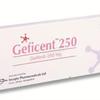

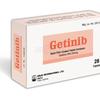
Indications
Uses of Ruxonib:
- Non-small cell lung cancer
Non-small Cell Lung Cancer
Hypersensitivity. Lactation.
Therapeutic Class
Targeted Cancer Therapy
Pharmacology
Gefitinib inhibits the epidermal growth factor receptor (EGFR) tyrosine kinase by binding to the adenosine triphosphate (ATP)-binding site of the enzyme. Thus the function of the EGFR tyrosine kinase in activating the Ras signal transduction cascade is inhibited; and malignant cells are inhibited. Gefitinib is the first selective inhibitor of the EGFR tyrosine kinase which is also referred to as Her1 or ErbB-1. EGFR is overexpressed in the cells of certain types of human carcinomas - for example in lung and breast cancers. Overexpression leads to inappropriate activation of the apoptotic Ras signal transduction cascade, eventually leading to uncontrolled cell proliferation.
Dosage and Administration
How to use
Gefitinib:
Take this medicine in the dose and duration as advised by your doctor. Swallow it as a whole. Do not chew, crush or break it.
Gefitinib may be taken with or without food, but it is better to take it at a fixed time.
Administration:
Film-coated tab: May be taken with or without food. May also be dispersed in ½ glass of plain, non-carbonated water. No other liqd should be used. Drop the tab in water & stir w/o crushing until it disperses (approx 10 min). Drink immediately. Rinse glass w/ another ½ glass of water & drink. Dispersed liqd may also be administered via NG tube.
Adult Dose:
Oral
Locally advanced or metastatic non-small cell lung carcinoma
Adult: 250 mg once daily until disease progression or unacceptable toxicity
Interaction
Concomitant use w/ CYP3A4 inducers (e.g. rifampicin, phenytoin, carbamazepine, barbiturates) may reduce serum gefitinib levels. Plasma concentrations may be increased w/ potent CYP3A4 inhibitors (e.g. itraconazole, ketoconazole). Increased INR or bleeding events w/ warfarin. May increase plasma levels of metoprolol. May exacerbate vinorelbine-induced neutropenia. Decreased plasma levels and potential reduction in efficacy w/ drugs that affect gastric pH (e.g. PPIs, H2-receptor antagonists).
Contraindications
Hypersensitivity. Lactation.
Side Effects
Common
- Diarrhea
- Dry skin
- Loss of appetite
- Nausea
- Rash
- Stomatitis (Inflammation of the mouth)
- Vomiting
- Weakness
>10%
Skin reactions, all grades (47%),Diarrhea, all grades (29%),Decreased appetite, all grades (17%),Vomiting, all grades (14%),Increased ALT, all grades (11.4%)
1-10%
Increased AST, all grades (7.9%),Stomatitis, all grades (7%),Conjunctivitis, blepharitis, and dry eye (6.7%),Conjunctivitis/blepharitis/dry eye (6%),Increased ALT, grades 3-4 (5.1%),Nail disorders, all grades (5%),Diarrhea, grades 3-4 (3%),Increased AST, grades 3-4 (3%),Increased bilirubin, all grades (2.7%),Decreased appetite, grades 2-3 (2.3%),Skin reactions, grades 3-4 (2%),Interstitial lung disease, all grades (1.3%),Vomiting, grades 3-4 (1.2%)
<1%
Interstitial lung disease, grades 3-4 (0.7%),Increased bilirubin, grades 3-4 (0.7%),Stomatitis, all grades (0.3%),Corneal erosion and aberrant eyelash growth (0.2%),Nail disorders, grades 3-4 (0.1%),Gastrointestinal perforation (0.1%),Ocular keratitis (0.1%),Erythema multiforme and dermatitis bullous (0.08%),Fatal hepatoxicity (0.04%)
Pregnancy And Lactation
Pregnancy category D. There is positive evidence of human foetal risk, but the benefits from use in pregnant women may be acceptable despite the risk (e.g., if the drug is needed in a life-threatening situation or for a serious disease for which safer drugs cannot be used or are ineffective).
Precautions And Warnings
Precaution:
Patients w/ concurrent idiopathic pulmonary fibrosis, acute onset or worsening pulmonary or eye symptoms. Renal and hepatic impairment. Pregnancy. Monitoring Parameters Monitor liver function, prothrombin time or INR frequently.
Lactation
Unknown if distributed in human breast milk; not recommended
Storage Conditions
Store between 20-25° C.
Mode of Action
Gefitinib is a synthetic anilinoquinazoline which inhibits the intracellular phosphorylation of numerous tyrosine kinases associated w/ transmembrane cell surface receptors found on both normal and cancer cells, including epidermal growth factor receptor (EGFR) tyrosine kinase. Tyrosine kinase activity appears to be essentially important to cell proliferation and survival.


Samm Care