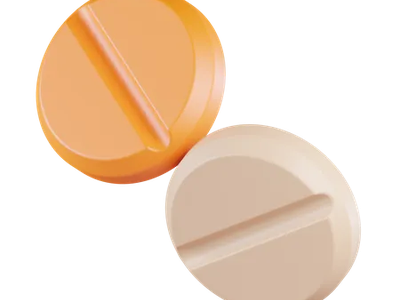
Risponex 2 2 mg
Risperidone
Category: Tablet
Manufacturer: Goodman Pharmaceuticals Ltd.

Price: 4.0 ৳
3 x 10 in Alu. Alu. Blister Pack

Medicine Selling service is not available yet.
Related Medicines
Uses of Risponex 2:
- Schizophrenia
- Mania
Acute and chronic psychoses, Mania, Schizophrenia, Bipolar disorder.
Risponex 2 is contraindicated in patients with a known hypersensitivity to the product.
Atypical neuroleptic drugs
Risperidone is a selective monoaminergic antagonist having a high affinity for serotoninergic 5-HT2 and dopaminergic D2 receptors. Risperidone binds also to alpha1 adrenergic receptors and with lower affinity, to H1 histamine and alpha2 adrenergic receptors. Risperidone has no affinity for cholinergic receptors. Risperidone, as a potent D2 antagonist, improves the positive symptoms of schizophrenia but causes less depression of motor activity. Balanced central serotonin and dopamine antagonism may reduce extrapyramidal side effect liability and extend the therapeutic activity to the negative and affective symptoms of schizophrenia.
How to use
Risperidone:
Take this medicine in the dose and duration as advised by your doctor. Do not handle the strips/film with wet hands. Keep it in your mouth but do not swallow it.
Risperidone may be taken with or without food, but it is better to take it at a fixed time.
Administration:
May be taken with or without food.
Adult Dose:
Oral
Schizophrenia
2 mg/day initially; may be increased in increments of 1-2 mg/day at intervals >24 hours
Recommended target dosage: 2-8 mg/day once daily or divided q12hr (efficacy follows bell-shaped curve; 4-8 mg/day more effective than 12-16 mg/day)
Bipolar Mania
2-3 mg/day initially; may be increased if necessary in increments of 1 mg/day at intervals of 24 hours to 6 mg/day; dosage recommendations not available for treatment duration >3 weeks
Tourette Syndrome
0.5-1 mg/day PO; may be increased or decreased in increments of 0.5 mg q12hr at intervals >3 days; not to exceed 6 mg/day
Posttraumatic Stress Disorder
0.5-8 mg/day PO
Elderly: Initially, 0.5 mg bid gradually increased in increments of 0.5 mg bid. Maintenance: 1-2 mg bid.
Hepatic impairment: Initially, 0.5 mg bid, may increase in steps of 0.5 mg bid, up to 1-2 mg bid.
Dose increments above 1.5 mg bid should be made at intervals of at least 1 wk.
Child Dose:
Oral
Schizophrenia
<13 years: Safety and efficacy not established
>13 years: 0.5 mg/day PO in morning or evening initially; may be increased in increments of 0.5-1 mg/day at intervals >24 hr to recommended dosage of 3 mg/day; dosage range: 1-6 mg/day (dosages >3 mg/day have not been proved more effective and are associated with increased incidence of adverse effects)
If persistent somnolence occurs, daily dose may be divided q12hr
Bipolar Mania
<10 years: Safety and efficacy not established
>10 years: 0.5 mg/day PO in morning or evening initially; may be increased in increments of 0.5-1 mg/day at intervals >24 hr to recommended dosage of 2.5 mg/day; dosage range: 0.5-6 mg/day (dosages >2.5 mg/day have not been proved more effective and are associated with increased incidence of adverse effects)
If persistent somnolence occurs, daily dose may be divided q12hr
Autism
Irritability associated with autistic disorder in children aged 5-16 years
<5 years: Safety and efficacy not established
5-16 years (<20 kg): 0.25 mg/day PO initially; may be increased after >4 days to recommended dosage of 0.5 mg/day
5-16 years (>20 kg): 0.5 mg/day PO initially; may be increased after >4 days to recommended dosage of 1 mg/day
Renal Dose:
Renal impairment: Initially, 0.5 mg bid, may increase in steps of 0.5 mg bid, up to 1-2 mg bid.
Dose increments above 1.5 mg bid should be made at intervals of at least 1 wk.
May antagonise the effects of levodopa and dopamine agonists. May increase serum levels of clozapine when used together. Increased serum levels of carbamazepine when used concurrently. Carbamazepine may also decrease the serum levels of risperidone. Increased risk of neuroleptic malignant syndrome when used with indinavir and ritonavir.
Potentially Fatal: Risperidone may enhance the hypotensive effect of certain antihypertensives.
Risperidone is contraindicated in patients with a known hypersensitivity to the product.
Common
- Dizziness
- Sleepiness
- Orthostatic hypotension (sudden lowering of blood pressure on standing)
- Dryness in mouth
- Weight gain
- Constipation
- Muscle stiffness
- Restlessness
- Tremor
>10%
Somnolence (40-45%),Insomnia (26-30%),Agitation (20-25%),Anxiety (10-15%),Headache (10-15%),Rhinitis (10-15%),Fatigue (18-31%),Parkinsonism (28-62%),Akathisia (5-11%),Increased appetite (4-44%),Vomiting (10-20%),Drooling (<12%),Urinary incontinence (5-22%),Tremor (11-24%),Nasopharyngitis (4-19%),Rhinorrhea (4-12%),Enuresis (1-16%)
1-10%
Constipation (5-10%),Dyspepsia (5-10%),Nausea (5-10%),Abdominal pain (1-5%),Aggressive reaction (1-5%),Facial edema (<4%),QT prolongation (<4%),Dizziness (1-5%),Extrapyramidal symptoms (EPS; 1-5%),Gynecomastia in children (1-5%),Rash (1-5%),Tachycardia (1-5%),Syncope (1-2%),Bradycardia (<4%),Palpitation (<4%),Chest pain (<4%),Agitation (<4%),Postural dizziness (<4%),Pruritus (<4%),Acne (1-2%),Hyperprolactinemia (<4%),Sexual dysfunction (<4%),Xerostomia (7-10%)
<1%
Agranulocytosis,Cholesterol increased,Delirium,Ketoacidosis,Orthostatic hypotension,Seizures
Frequency Not Defined
Diabetes mellitus,Hyperthermia,Hypoglycemia,Hypothermia,Myelosuppression,Neuroleptic malignant syndrome (NMS),Priapism,Prolonged QT interval,Tardive dyskinesia,Thrombotic thrombocytopenic purpura (TTP),Sleep apnea syndrome,Urinary retention
Potentially Fatal: Neuroleptic malignant syndrome may occur rarely; seizures. May cause increased mortality in elderly with dementia-related psychosis.
Pregnancy: Although, in experimental animals, Risperidone did not show direct reproductive toxicity, some indirect, prolactin- and CNS-mediated effects were observed, No teratogenicity effect of Risperidone was noted in any study. The safety of Risperidone for use during human pregnancy has not been established.Lactation: In animal studies, Risperidone and 9-hydroxyrisperidone are excreted in the milk. It has been demonstrated that Risperidone and 9-hydroxyrisperidone are also excreted in human breast milk. Therefore, women receiving Risperidone should not breast feed.
Precaution:
Preexisting CV diseases; discontinue use if signs and symptoms of tardive dyskinesia occur; renal and hepatic impairment, elderly, epilepsy; parkinsonism; pregnancy. May cause drowsiness and orthostatic hypotension. Gradual withdrawal is recommended. Monitor blood glucose in diabetics and patients at risk of developing diabetes.
Lactation: Drug distributed in breast milk; do not nurse
Drowsiness, sedation, tachycardia, hypotension, and extrapyramidal symptoms may occur. In case of severe extrapyramidal symptoms, anticholinergic medication should be administered. Close medical supervision and monitoring should continue until the patient recovers. There is no specific antidote to Risperidone.
Store in a cool and dry place, protected from light.
Risperidone is an atypical antipsychotic. Its activity is mediated through a combination of dopamine (D2) and serotonin (5-HT2) receptor antagonism. It also exhibits affinity to adrenergic (alpha1 and alpha2) and histamine (H1) receptors. It is less likely to cause extrapyramidal effects than conventional antipsychotics.

Samm Care