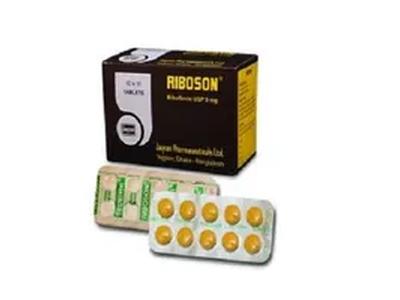
Riboson 5 mg
Generic: Riboflavin
Category: Tablet
Manufacturer: Jayson Pharmaceuticals Ltd.

Allopathic
MFG. Licence No. Biological
003
MFG. Licence No. Non-Biological
082
Address
231, Tejgoan I/A, Dhaka.
Price: 3.0 ৳
Strip
500's pack
10's Strip

Medicine Selling service is not available yet.
Alternative Brands & Related Medicines
Indications
Riboflavin deficiency, Microcytic anaemia
Hypersensitivity
Therapeutic Class
Vitamin-B preparations
Pharmacology
Riboflavin is a B vitamin. It can be found in certain foods such as milk, meat, eggs, nuts, enriched flour, and green vegetables. Riboflavin is frequently used in combination with other B vitamins in vitamin B complex products. Vitamin B complex generally includes vitamin B1 (thiamine), vitamin B2 (riboflavin), vitamin B3 (niacin/niacinamide), vitamin B5 (pantothenic acid), vitamin B6 (pyridoxine), vitamin B12 (cyanocobalamin), and folic acid. However, some products do not contain all of these ingredients and some may include others, such as biotin, para-aminobenzoic acid (PABA), choline bitartrate, and inositol.Riboflavin is used for preventing low levels of riboflavin (riboflavin deficiency), cervical cancer, and migraine headaches. It is also used for treating riboflavin deficiency, acne, muscle cramps, burning feet syndrome, carpal tunnel syndrome, and blood disorders such as congenital methemoglobinemia and red blood cell aplasia. Some people use riboflavin for eye conditions including eye fatigue, cataracts, and glaucoma.Other uses include increasing energy levels; boosting immune system function; maintaining healthy hair, skin, mucous membranes, and nails; slowing aging; boosting athletic performance; promoting healthy reproductive function; canker sores; memory loss, including Alzheimer's disease; ulcers; burns; alcoholism; liver disease; sickle cell anemia; and treating lactic acidosis brought on by treatment with a class of AIDS medications called NRTI drugs.
Dosage and Administration
Administration:
Should be taken with food.
Adult Dose:
Oral
Riboflavin Deficiency
Supplementation is indicated for adults with riboflavin deficiency syndromes
5-30 mg/day PO in divided doses
Child Dose:
Oral
Riboflavin Deficiency
<3 years: Not established
3-12 years: 3-10 mg/day PO in divided doses
>12 years: 5-30 mg/day PO in divided doses
Interaction
Rate and extent of absorption may be affected by propantheline bromide.
Contraindications
Hypersensitivity
Side Effects
Bright yellow disclouration of urine.
Pregnancy And Lactation
Riboflavin is LIKELY SAFE for pregnant or breast-feeding women when taken in the amounts recommended. The recommended amounts are 1.4 mg per day for pregnant women and 1.6 mg per day in breast-feeding women. Riboflavin is POSSIBLY SAFE when taken by mouth in larger doses, short-term. Some research shows that riboflavin is safe when taken at a dose of 15 mg once every 2 weeks for 10 weeks.
Precautions And Warnings
Precaution:
Pregnancy (doses >RDA)
Storage Conditions
Store at a cool and dry place. Protect from light.
Drug Classes
Vitamin-B preparations
Mode of Action
Riboflavin (vitamin B2) is required for energy utilisation from food. It is essential for normal tissue respiration. It is also necessary for the activation of pyridoxine and conversion of tryptophan to nicotinic acid.
Pregnancy Category
Riboflavin is likely safe for pregnant or breastfeeding women when taken in the amounts recommended.


Samm Care