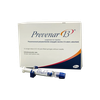
The 0.5 mL dose of vaccine contains 25 micrograms of each of the following 23 pneumococcal polysaccharide serotypes: 1, 2, 3, 4, 5, 6B, 7F, 8, 9N, 9V, 10A, 11A, 12F, 14, 15B, 17F, 18C, 19F, 19A, 20, 22F, 23F, 33F. This vaccine is recommended for active immunization against pneumococcal disease in children aged from 2 years, adolescents and adults.
This vaccine should not be administered to:
Individuals with allergic reactions to any component of the vaccine.
Individuals with fever, acute infection or chronic diseases at the acute stage.
Individuals with uncontrolled epilepsy or other progressive diseases of the nervous system.
If only clearly needed, otherwise revaccination within 03 years is not recommended.
Therapeutic Class
Vaccines, Anti-sera & Immunoglobulin
Pharmacology
The vaccine is prepared from purified pneumococcal capsular polysaccharide antigens derived from the 23 serotypes that account for approximately 90% of invasive pneumococcal disease types. The following pneumococcal capsular polysaccharides are included: 1, 2, 3, 4, 5, 6B, 7F, 8, 9N, 9V, 10A, 11A, 12F, 14, 15B, 17F, 18C, 19F, 19A, 20, 22F, 23F, 33F.
Dosage and Administration
Dosage & Administration:
Primary vaccination:
Adults and children of 2 years of age or older: one single dose of 0.5 milliliter by intramuscular or subcutaneous injection. Prenovax 23 vaccine is not recommended for use in children below 2 years of age as the safety and efficacy of the vaccine have not been established and the antibody response may be poor.
Special dosing:
It is recommended that pneumococcal vaccine should preferably be given at least two weeks before elective splenectomy or the initiation of chemotherapy or other immunosuppressive treatment. Vaccination during chemotherapy or radiation therapy should be avoided.
Following completion of chemotherapy and/or radiation therapy for neoplastic disease, immune responses to vaccination may remain diminished. The vaccine should not be administered any sooner than three months after completion of such therapy. A longer delay may be appropriate for patients who have received intensive or prolonged treatment.
Persons with asymptomatic or symptomatic HIV infection should be vaccinated as soon as possible after their diagnosis is confirmed.
Revaccination:
One single dose of 0.5 milliliter by intramuscular or subcutaneous injection.
The specific timing of, and need for, revaccination should be determined on the basis of available official recommendations.
Revaccination at an interval of less than three years is not recommended because of an increased risk of adverse reactions. The rates of local and, in persons aged ≥65 years, some systemic reactions have been shown to be higher after revaccination than after primary vaccination when three to five years have elapsed between doses.
Adults: Healthy adults should not be revaccinated routinely. Revaccination may be considered for persons at increased risk of serious pneumococcal infection who were given pneumococcal vaccine more than five years earlier or for those known to have a rapid decline in pneumococcal antibody levels. For selected populations (e.g., asplenics) who are known to be at high risk of fatal pneumococcal infections, revaccination at three years may be considered.
Children: Healthy children should not be revaccinated routinely.
Children of 10 years of age and over: May be considered for revaccination according to the adult recommendation.
Children between the ages of 2 and 10 years: Should only be considered for revaccination after 3 years if they are at high risk of pneumococcal infection (e.g., those with nephrotic syndrome, asplenia or sickle cell disease).
Interaction
Pneumococcal vaccine can be administered simultaneously with influenza vaccine as long as different needles and injection sites are used.
Contraindications
This vaccine should not be administered to:
Individuals with allergic reactions to any component of the vaccine.
Individuals with fever, acute infection or chronic diseases at the acute stage.
Individuals with uncontrolled epilepsy or other progressive diseases of the nervous system.
If only clearly needed, otherwise revaccination within 03 years is not recommended.
Side Effects
The most common adverse reactions, reported in >10% of subjects vaccinated with p neumococcal vaccine for the first time in a clinical trial, were: injection-site pain/soreness/tenderness (60.0%), injection-site swelling/ induration (20.3%), headache (17.6%), injection-site erythema (16.4%), asthenia and fatigue (13.2%), and myalgia (11.9%).
Pregnancy And Lactation
Pregnancy & Lactation:
Animal studies are insufficient with respect to effects on reproductive toxicity. The vaccine should not be used during pregnancy unless clearly necessary (the potential benefit must justify any potential risk to the fetus). It is unknown whether this vaccine is excreted in human milk. Caution should be exercised when it is administered to a nursing mother. The vaccine has not been evaluated in fertility studies.
Precautions And Warnings
Precautions & Warnings:
Delay the use of the vaccine in any significant febrile illness, other active infection or when a systemic reaction would pose a significant risk except when this delay may involve even greater risk. This vaccine should never be injected intravascularly, and precautions should be taken to make sure the needle does not enter a blood vessel. Also, the vaccine should not be injected intradermally, as injection by that route is associated with increased local reactions. If the vaccine is administered to patients who are immunosuppressed due to either an underlying condition or medical treatment (e.g., immunosuppressive therapy such as cancer chemotherapy or radiation therapy), the expected serum antibody response may not be obtained after a first or second dose. Accordingly, such patients may not be as well protected against pneumococcal disease as immunocompetent individuals. As with any vaccine, vaccination with this vaccine may not result in complete protection in all recipients. For patients receiving immunosuppressive therapy, the time to recovery of the immune response varies with the illness and the therapy. Significant improvement in antibody response has been observed for some patients during the two years following the completion of chemotherapy or other immunosuppressive therapy (with or without radiation), particularly as the interval between the end of treatment and pneumococcal vaccination increased.
As with any vaccine, adequate treatment provisions including epinephrine (adrenaline) should be available for immediate use should an acute anaphylactic reaction occur. Required prophylactic antibiotic therapy against pneumococcal infection should not be stopped after pneumococcal vaccination. Patients at especially increased risk of serious pneumococcal infection (e.g., asplenics and those who have received immunosuppressive therapy for any reason), should be advised regarding the possible need for early antimicrobial treatment in the event of severe, sudden febrile illness. Pneumococcal vaccine may not be effective in preventing infection resulting from basilar skull fracture or from external communication with cerebrospinal fluid.
Storage Conditions
Store refrigerated at 2° to 8°C. Protect vials from light.
Drug Classes
Vaccines, Anti-sera & Immunoglobulin
Mode of Action
Pneumococcal Vaccine induces type-specific antibodies that enhanced opsonization, phagocytosis, and killing of pneumococci by leukocytes and other phagocytic cells. The levels of antibodies that correlate with protection against pneumococcal disease have not been clearly defined.
Pregnancy Category
Pregnancy: All pregnancies have a background risk of birth defect, loss, or other adverse outcomes. In the U.S. general population, the estimated background risk of major birth defects and miscarriage in clinically recognized pregnancies is 2-4% and 15- 20%, respectively. Available human data from clinical trials of Pneumococcal Vaccine in pregnancy have not established the presence or absence of a vaccine-associated risk. Developmental toxicity studies have not been conducted with Pneumococcal Vaccine in animals.Lactation: It is not known whether Pneumococcal Vaccine is excreted in human milk. Data are not available to assess the effects of Pneumococcal Vaccine on the breastfed infant or on milk production/excretion. The developmental and health benefits of breastfeeding should be considered along with the mother’s clinical need for Pneumococcal Vaccine and any potential adverse effects on the breastfed child from Pneumococcal Vaccine or from the underlying maternal condition. For preventive vaccines, the underlying maternal condition is susceptibility to the disease prevented by the vaccine.