
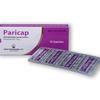
Pericon 1 mcg
Paricalcitol
Category: Capsule
Manufacturer: Beacon Pharmaceuticals Ltd.

Price: 451.4 ৳
10's pack
piece

Medicine Selling service is not available yet.
Related Medicines

Secondary hyperparathyroidism
Hypersensitivity, Hypercalcemia, hypervitaminosis D
Thyroid drugs & hormone
Paricalcitol is a synthetic, biologically active vitamin D analog of calcitriol with modifications to the side chain (D2) and the A (19-nor) ring. Preclinical andin vitro studies have demonstrated that paricalcitol's biological actions are mediated through binding of the VDR, which results in the selective activation of vitamin D responsive pathways. Vitamin D and paricalcitol have been shown to reduce parathyroid hormone levels by inhibiting PTH synthesis and secretion.
Administration:
May be taken with or without food.
Adult Dose:
Oral
Prevention & Treatment of Secondary Hyperparathyroidism
Associated with Chronic Kidney Disease (Stage 3 & 4)
PTH <500 pg/mL: 1 mcg PO qDay OR 2 mcg PO 3 times/week
PTH >500 pg/mL: 2 mcg PO qDay OR 4 mcg PO 3 times/week
Do not administer 3 times/week dosing no more frequently than every other day
Titrate dose based on response.
Monitoring parameters (Stage 3 & 4)
Serum PTH at 2-4 week intervals
PTH same or increased: Increase by 1 mcg/day OR 2 mcg three times/week
PTH decreased <30%: Increase by 1 mcg/day OR 2 mcg three times/week
PTH decreased >30% or <60%: Maintain current dose
PTH decreased >60%: Decrease 1 mcg/day OR 2 mcg three times/week
PTH <60 pg/mL: Decrease 1 mcg/day OR 2 mcg three times/week
Digitalis; ketoconazole & other strong P450 3A inhibitors including atazanavir, clarithromycin, indinavir, itraconazole, nefazodone, nelfinavir, ritonavir, saquinavir, telithromycin, voriconazole. May interfere absorption w/ cholestyramine (cap only). Increased risk of hypercalcemia w/ prescription-based phosphate or vit D-related medicinal products & Ca-containing prep or thiazide diuretics. Mg- & Al-containing prep (eg, antacids, phosphate-binders).
Hypersensitivity, Hypercalcemia, hypervitaminosis D
>10%
Nausea (13%)
1-10%
Vomiting,Edema,Palpitation,Chills,Pneumonia,Lightheadedness,GI bleeding,Flu,Sepsis,Hypokalemia,Hypercalcemia,Increase in blood creatinine
This drug should not be used during pregnancy unless the benefit outweighs the risk to the fetus.
AU TGA pregnancy category: C
US FDA pregnancy category: C
Lactation: Not known if distributed into breast milk, use caution
Precaution:
Monitor serum calcium and phosphorus frequently; reduce dose or stop the drug if calcium (in mg/dL) times phosphorus (in mg/dL) product >75
Patients receiving digitalis; digitalis toxicity is potentiated by hypercalcemia
Strong CYP3A4 inhibitors may increase paricalcitol AUC. May increase serum creatinine in pre-dialysis patients. Hepatic impairment
Lactation: not known if distributed into breast milk, use caution
keep in a dry place away from light and heat. Keep out of the reach of children.
Thyroid drugs & hormone
Synthetic vitamin D analog, reduces parathyroid hormone (PTH).
Limited data with paricalcitol capsules in pregnant women are insufficient to inform a drug- associated risk for major birth defects and miscarriage. There are risks to the mother and fetus associated with chronic kidney disease in pregnancy. In animal reproduction studies, slightly increased embryofetal loss was observed in pregnant rats and rabbits administered paricalcitol intravenously during the period of organogenesis at doses 2 and 0.5 times, respectively, the maximum recommended human dose (MRHD). Adverse reproductive outcomes were observed at doses that caused maternal toxicity. There is no information available on the presence of paricalcitol in human milk, the effects of the drug on the breastfed infant or the effects of the drug on milk production.


Samm Care