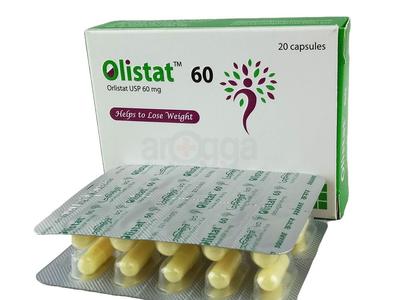
Olistat 60 mg
Generic: Orlistat
Category: Capsule
Manufacturer: Square Pharmaceuticals Ltd.

Price: 540.0 ৳
Box
20's pack
piece

Medicine Selling service is not available yet.
Alternative Brands & Related Medicines


Indications
Uses of Olistat:
- Obesity
Obesity
Chronic malabsorption syndrome. Cholestasis. Lactation
Therapeutic Class
Appetite suppressant drugs/Anti-obesity drugs
Pharmacology
Orlistat is a reversible inhibitor of gastrointestinal lipase. It exerts its therapeutic activity in the lumen of the stomach and small intestine by forming a covalent bond with the active serine residue site of gastric and pancreatic lipase. The inactivated enzymes are thus unavailable to hydrolyze dietary fat in the form of triglycerides into absorbable free fatty acids and monoglycerides. As undigested triglycerides are not absorbed, the resulting caloric deficit may have a positive effect on weight control.
Dosage and Administration
How to use
Orlistat:
Take this medicine in the dose and duration as advised by your doctor. Do not chew, crush or break it.
Orlistat may be taken with or without food, but it is better to take it at a fixed time.
Avoid
Orlistat with high-fat meals such as olive oil, nuts & seeds (Brazil nuts), dark chocolate, butter and meat.
Administration:
Should be taken with food. Take immediately before or during or up to 1 hr after each main meal. If a meal is missed or contains no fat, the dose may be omitted.
Adult Dose:
Oral
Obesity
Adult:
Indicated in patients with pretreatment BMI >30 kg/m², or BMI >27 kg/m² in presence of other risk factors or diseases (eg, HTN, DM, hyperlipidemia)
120 mg tid w/ each main meal.
Patients w/ BMI >28 kg/m2 irrespective of any risk factors: 60 mg tid.
Omit dose if a meal is missed or contains no fat. Discontinue if patient is unable to lose at least 5% of the body wt during the 1st 12 wk of therapy.
Child Dose:
<12 years: Safety and efficacy not established
Interaction
May decrease absorption of oral fat-soluble vitamins, amiodarone, propafenone. May decrease plasma levels of ciclosporin. May alter the effects of warfarin (monitor INR). May elevate plasma levels of pravastatin.
Contraindications
Chronic malabsorption syndrome. Cholestasis. Lactation
Side Effects
Common
- Abdominal pain
- Fat in stool
- Flatus with discharge
- Oily spotting
- Diarrhea
- Abdominal cramp
- Flatulence
- Soft stools
1-10%
Oily spotting (5%)
Frequency Not Defined
Faecal urgency and incontinence, flatulence, fatty stools or discharge, increased defecation; headache, anxiety, fatigue, menstrual irregularities; abdominal pain/discomfort.
Potentially Fatal: Anaphylaxis; angioedema.
Pregnancy And Lactation
Pregnancy Category X. Orlistat is contraindicated during pregnancy, because weight loss offers no potential benefit to a pregnant woman and may result in fetal harm.It is not known whether Orlistat is present in human milk or not. Caution should be exercised when Orlistat is administered to a nursing woman.
Precautions And Warnings
Precaution:
Patient w/ history of hyperoxaluria or Ca oxalate nephrolithiasis. Monitoring Parameters Monitor BMI, diet, LFT, serum glucose (in patient w/ DM), thryroid function (in patient w/ thyroid disease).
Lactation: Not recommended; not known if orlistat is distributed in breast milk
Overdose Effects
Single doses of 800 mg Orlistat and multiple doses of up to 400 mg three times a day for 15 days have been studied in normal weight and obese subjects without significant adverse findings.
Storage Conditions
Store in cool & dry place below 30°C, protect from light & moisture. Keep out of reach of children.
Drug Classes
Appetite suppressant drugs/Anti-obesity drugs
Mode of Action
Orlistat is a reversible gastric and pancreatic lipase inhibitor. It exerts antiobesity effects by limiting the absorption of dietary fats through inhibition of triglyceride hydrolysis. It does not exert appetite suppressant effects.
Pregnancy Category
Use in pregnancy & lactation: No clinical data are available on pregnancy exposed to Orlistat. As it is not known whether Orlistat is excreted in breast milk. Orlistat should not be used during breastfeeding.


Samm Care