
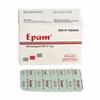
Noctin 5 mg
Nitrazepam
Category: Tablet
Manufacturer: Ambee Pharmaceuticals Ltd.

Allopathic
MFG. Licence No. Biological
383
MFG. Licence No. Non-Biological
124
Address
184/1 Tejgaon I/A, Dhaka
Price: 0.69 ৳
10 x 10 in Blister Pack

Medicine Selling service is not available yet.
Related Medicines

Uses of Noctin:
- Insomnia
Insomnia
Myasthenia gravis, narrow-angle glaucoma, severe respiratory insufficiency, sleep apnoea syndrome, severe hepatic impairment, porphyria.
How to use Nitrazepam:
Take this medicine in the dose and duration as advised by your doctor. Swallow it as a whole. Do not chew, crush or break it. Nitrazepam may be taken with or without food, but it is better to take it at a fixed time.
Administration:
May be taken with or without food.
Adult Dose:
Oral
Short-term management of insomnia
Adult: 5 mg at night; increase to 10 mg if necessary.
Elderly: and debilitated patients: ?normal adult dose.
Child Dose:
Oral
Infantile spasms
Child: Infants: 125 mcg/kg bid; gradually increase to 250-500 mcg/kg bid.
CNS depressant effect increased with alcohol, barbiturates, TCAs, phenothiazines, morphine derivatives. Effects may be antagonised by theophylline. Increased levels/effects with probenecid. Reduced levels/effects with rifampicin. May reduce effects of levodopa.
Myasthenia gravis, narrow-angle glaucoma, severe respiratory insufficiency, sleep apnoea syndrome, severe hepatic impairment, porphyria.
Common
- Dizziness
- Sedation
- Drowsiness
- Unsteadiness
- Impaired coordination
Hypotension, palpitation; agitation, aggressiveness, amnesia, ataxia, confusion, delusions, disorientation, dizziness, fatigue, hallucination, hangover, headache, irritability, nightmares, psychoses, rage, restlessness, sedation; rash; changes in libido; constipation, diarrhoea, excessive salivation, heartburn, nausea, vomiting; granulocytopenia, leukopenia; falling, muscle weakness; blurred or double vision; tinnitus (associated with withdrawal); aspiration, increased bronchial secretion, dyspnoea.
Precaution:
May induce anterograde amnesia; caution patients to have uninterrupted sleep of 7-8 hr after ingestion of dose. May impair ability to drive or operate machinery. Depression, especially if suicidal risk may be present. History of drug abuse or acute alcoholism. Hepatic and renal impairment. Respiratory disease. Debilitated patients. Patients who are at risk of falls. Children, elderly. Pregnancy and lactation.
Nitrazepam is a benzodiazepine with a pronounced sleep-inducing activity. It depresses the reticular-activating system in the brainstem by enhancing the inhibitory effect of GABA on brain cells, thus preventing excessive brain activity.

Samm Care