Moodnor 10 mg
Nortriptyline
Category: Tablet
Manufacturer: Ibn Sina Pharmaceutical Ind. Ltd.

Ibn Sina Pharmaceutical Ind. Ltd.
Allopathic
MFG. Licence No. Biological
150
MFG. Licence No. Non-Biological
405
Address
Kaliakair, Gazipur
Price: 1.0 ৳
50 in Alu. Alu. Blister Pack

Medicine Selling service is not available yet.
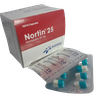
Related Medicines


Uses of Moodnor:
- Depression
- Bed-wetting
Depression, Nocturnal enuresis
Mania, recent MI, arrhythmias (particularly heart block); severe liver disease; children <6 yr.
Tricyclic & related anti-depressant drugs, Tricyclic Anti-depressant
Nortriptyline, a dibenzocycloheptadiene tricyclic antidepressant, is the primary active metabolite of amitriptyline. It increases synaptic concentration of serotonin and/or norepinephrine in the CNS by blocking the neuronal reuptake of norepinephrine and serotonin.
How to use Nortriptyline:
Take this medicine in the dose and duration as advised by your doctor. Swallow it as a whole. Do not chew, crush or break it. Nortriptyline may be taken with or without food, but it is better to take it at a fixed time.
Administration:
May be taken with or without food.
Adult Dose:
Oral
Depression
Adult: 75-100 mg/day in 3 or 4 divided doses. Max: 150 mg/day in severe depression.
Elderly: 30-50 mg/day in divided doses.
Hepatic impairment: Administer lower dose and titrate at a slower rate
Child Dose:
Oral
Depression
Child: Adolescent: 30-50 mg/day in divided doses.
Nocturnal enuresis
Child: 6-7 yr (20-25 kg): 10 mg;
8-11 yr (25-35kg): 10-20 mg;
>11 yr (35-54 kg): 25-35 mg.
All doses are given 30 minutes before bedtime and treatment should continue for not >3 mth.
Increased risk of serotonin syndrome w/ SSRIs, SNRIs, TCAs, triptans, fentanyl, lithium, tramadol, tryptophan, buspirone. May reduce antihypertensive effect of bethanidine, guanethidine, debrisoquine, clonidine. May increase metabolism w/ barbiturates. Increased risk of arrhythmias and hypotension w/ anaesth. Increased plasma level w/ fluoxetine.
Potentially Fatal: Increased risk of serotonin syndrome w/ MAOIs, linezolid and methylene blue.
Mania, recent MI, arrhythmias (particularly heart block); severe liver disease; children <6 yr.
Common
- Increased heart rate
- Weight gain
- Difficulty in urination
- Orthostatic hypotension (sudden lowering of blood pressure on standing)
- Dryness in mouth
- Constipation
Hypotension, HTN, tachycardia, palpitation, MI, arrhythmias, heart block, stroke; confusional states w/ hallucinations, disorientation, delusions; anxiety, restlessness, agitation; insomnia, panic, nightmares; hypomania; exacerbation of psychosis; suicidal ideation and behaviours; numbness, tingling, paraesthesia; incoordination, ataxia, tremors; peripheral neuropathy; extrapyramidal symptoms; seizures; tinnitus, dry mouth, blurred vision, accommodation disturbances, mydriasis; constipation, paralytic ileus; urinary retention, delayed micturition, dilation of the urinary tract.
Rash, itching, urticaria, photosensitisation; oedema (general or of face and tongue); bone-marrow depression including agranulocytosis, aplastic anaemia, eosinophilia, thrombocytopenia. Nausea, vomiting, anorexia, epigastric distress, diarrhoea, peculiar taste, stomatitis, abdominal cramps, malaise, jaundice, hepatitis and liver necrosis. Sweating, flushing, urinary frequency, nocturia, drowsiness, dizziness, weakness, fatigue, headache, parotid swelling, alopecia.
Gynaecomastia, breast enlargement and galactorrhoea; increased or decreased libido, impotence, testicular swelling; elevation or reduction of blood sugar levels; inappropriate secretion of antidiuretic hormone syndrome. Wt gain or loss, altered liver function. Rarely, associated sublingual adenitis or gingivitis.
Potentially Fatal: Rare, blood dyscrasias.
The safety of nortriptyline for use in pregnancy has not been established. Nortriptyline should only be given during pregnancy when there are no alternatives and benefit outweighs risk.
Precaution:
Not intended for treatment of bipolar depression. Avoid abrupt withdrawal. Patient at risk of seizures, w/ DM, narrow angle glaucoma, urinary retention, prostatic hyperplasia, chronic constipation, history of CV disease. Renal and hepatic impairment. Elderly, childn. Pregnancy and lactation. Patient Counselling May impair ability to perform tasks requiring mental and physical alertness (e.g. driving or operating machinery). Monitoring Parameters Monitor BP and pulse rate prior to or during initial therapy, wt. Monitor for emergence of serotonin syndrome. Closely monitor for clinical worsening, suicidality and unusual changes in behaviour.
Lactation: Excreted in breast milk; do not nurse (AAP states effect on nursing infants is unknown but may be of concern)
Symptoms: Severe hypotension, cardiac dysrhythmias, shock, CHF, pulmonary oedema, convulsions, and CNS depression, including coma; changes in ECG. Management: Symptomatic and supportive treatment. Admin IV Na bicarbonate, benzodiazepines. Admin activated charcoal to reduce absorption. Emesis is contraindicated. Initiate cardiac monitoring and observe for signs of CNS or resp depression, hypotension, cardiac dysrhythmias and/or conduction blocks, and seizures.
Store at 15-30° C. Protect from light and moisture.
Tricyclic & related anti-depressant drugs, Tricyclic Anti-depressant
Nortriptyline, a dibenzocycloheptadiene tricyclic antidepressant, is the primary active metabolite of amitriptyline. It increases synaptic concentration of serotonin and/or norepinephrine in the CNS by blocking the neuronal reuptake of norepinephrine and serotonin.
The safety of nortriptyline for use in pregnancy has not been established. Nortriptyline should only be given during pregnancy when there are no alternatives and benefit outweighs risk.

Samm Care