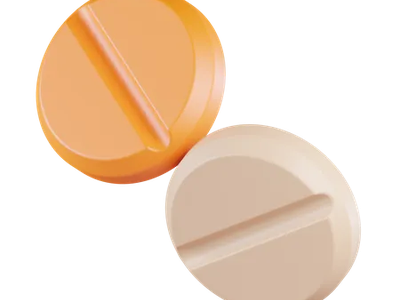
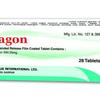
Mirabeg ER 50 mg
Mirabegron
Category: Tablet
Manufacturer: General Pharmaceuticals Ltd.

Allopathic
MFG. Licence No. Biological
162
MFG. Licence No. Non-Biological
406
Address
Kaliakair, Gazipur
Price: 1100.0 ৳
20's pack
10's Strip

Medicine Selling service is not available yet.
Related Medicines
Uses of Mirabeg ER:
- Overactive bladder (OAB) symptoms
Overactive bladder, with symptoms of urge urinary incontinence, urgency, and urinary frequency
Hypersensitivity. Severe uncontrolled HTN.
BPH/ Urinary retention/ Urinary incontinence
Mirabegron is a potent and selective beta 3-adrenoceptor agonist. Mirabegron showed relaxation of bladder smooth muscle in rat and human isolated tissue, increased cyclic adenosine monophosphate (cAMP) concentrations in rat bladder tissue and showed a bladder relaxant effect in rat urinary bladder function models. Mirabegron increased mean voided volume per micturition, and decreased the frequency of non-voiding contractions, without affecting voiding pressure or residual urine in rat models of bladder overactivity. In a monkey model, mirabegron showed decreased voiding frequency. These results indicate that mirabegron enhances urine storage function by stimulating beta 3-adrenoceptors in the bladder. During the urine storage phase, when urine accumulates in the bladder, sympathetic nerve stimulation predominates. Noradrenaline is released from nerve terminals, leading predominantly to beta adrenoceptor activation in the bladder musculature and hence bladder smooth muscle relaxation. During the urine voiding phase, the bladder is predominantly under parasympathetic nervous system control. Acetylcholine, released from pelvic nerve terminals, stimulates cholinergic M2 and M3 receptors, inducing bladder contraction. The activation of the M2 pathway also inhibits beta 3-adrenoceptor induced increases in cAMP. Therefore beta 3-adrenoceptor stimulation should not interfere with the voiding process. This was confirmed in rats with partial urethral obstruction, where mirabegron decreased the frequency of non-voiding contractions without affecting the voided volume per micturition, voiding pressure or residual urine volume.
How to use
Mirabegron:
Take this medicine in the dose and duration as advised by your doctor. Swallow it as a whole. Do not chew, crush or break it.
Mirabegron may be taken with or without food, but it is better to take it at a fixed time.
Administration:
May be taken with or without food: Swallow whole, do not chew/divide/crush.
Adult Dose:
Overactive Bladder
Indicated for overactive bladder with symptoms of urge urinary incontinence, urgency, and urinary frequency
25 mg PO qDay
25 mg dose is typically effective within 8 weeks
May increase to 50 mg PO qDay based on individual efficacy and tolerability
Hepatic impairment
Moderate (Child-Pugh B): Not to exceed 25 mg/day
Severe (Child Pugh C): Not recommended
Renal Dose:
Renal impairment
Severe (CrCl 15-29 mL/min): Not to exceed 25 mg/day
ESRD: Not recommended
Increased AUC of strong CYP3A/P-gp inhibitors eg, ketoconazole, itraconazole, ritonavir, clarithromycin. Decreased plasma conc by CYP3A/P-gp inducers. Increased Cmax & AUC of metoprolol, despiramine & digoxin. Thioridazine, type 1C antiarrhythmics (eg flecainide, propafenone), TCAs. Potential P-gp inhibition of dabigatran.
Hypersensitivity. Severe uncontrolled HTN.
Common
- Constipation
- Headache
- High blood pressure
- Nasal inflammation
- Urinary tract infection
>10%
Elevated BP occurring predominantly in patients with preexisting hypertension (7-11%)
1-10%
Dry mouth (3-9%),Nasopharyngitis (3-4%),UTI (3-6%),Headache (2-4%),Influenza (2-3%),Constipation (2-3%),Dizziness (2%),Arthralgia (2%),Cystitis (2%),Back pain (1-3%),Sinusitis (1-3%),URTI (1-2%),Arthralgia (1-2%),Diarrhea (1-2%),Tachycardia (1-2%),Fatigue (1%),Abdominal pain (0-1%),Reports of neoplasms (0-1%)
<1%
Cardiac disorders (eg, palpitations, elevated BP),Eye Disorders (eg, glaucoma, blurry vision),GI disorders (eg, dyspepsia, gastritis, abdominal distension),Rhinitis,Elevations in GGT, AST, ALT, LDH,
Renal and urinary disorders (eg, nephrolithiasis, bladder pain),
Reproductive system disorders (eg, vulvovaginal pruritis, vaginal infection)
Skin and subcutaneous tissue disorders (eg, urticaria, leukocytoclastic vasculitis, rash, pruritus, purpura, lip edema)
Stevens-Johnson syndrome associated with increased serum ALT, AST and bilirubin
Use in Pregnancy: There are limited amount of data from the use of Mirabegron in pregnant women. Studies in animals have shown reproductive toxicity. Mirabegron is not recommended during pregnancy and in women of childbearing potential not using contraception.Use in Lactation: Mirabegron is excreted in the milk of rodents and therefore, is predicted to be present in human milk. No studies have been conducted to assess the impact of mirabegron on milk production in humans, its presence in human breast milk, or its effects on the breast-fed child. Mirabegron should not be administered during breast-feeding
Precaution:
End-stage renal disease, severe renal impairment; moderate (Child-Pugh Class B) & severe hepatic impairment (Child-Pugh Class C); severe uncontrolled HTN. Known history of QT prolongation or taking medicines known to prolong QT interval; bladder outlet obstruction & taking antimuscarinic medications for OAB. Women of childbearing potential not using contraception. Pregnancy & lactation. Childn <18 yr.
Lactation: Unknown whether distributed in breast milk; excretion in breast milk possible; discontinue nursing or the drug taking into account the importance of the drug to the mother
Mirabegron has been administered to healthy volunteers at single doses up to 400 mg. At this dose, adverse events reported included palpitations and increased pulse rate exceeding 100 beats per minute (bpm). Multiple doses of Mirabegron up to 300 mg daily for 10 days showed increases in pulse rate and systolic blood pressure when administered to healthy volunteers. Treatment for overdose should be symptomatic and supportive. In the event of overdose, pulse rate, blood pressure, and ECG monitoring is recommended.
Store in a cool and dry place, protected from light.
BPH/ Urinary retention/ Urinary incontinence
Beta-3 adrenergic receptor agonist which causes relaxation of the detrusor smooth muscle of the urinary bladder and increases bladder capacity.
There are limited amount of data from the use of Mirabegron in pregnant women. Studies in animals have shown reproductive toxicity. Mirabegron is not recommended during pregnancy and in women is planning to be pregnant. Mirabegron is excreted in the milk of rodents and therefore is predicted to be present in human milk. No studies have been conducted to assess the impact of Mirabegron on milk production in humans, its presence in human breast milk, or its effects on the breast-fed child. Mirabegron should not be administered during breast-feeding. There were no treatment-related effects of Mirabegron on fertility in animals. The effect of Mirabegron on human fertility has not been established.

Samm Care