
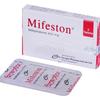
MIF 200 mg
Mifepristone
Category: Tablet
Manufacturer: Renata Limited

Allopathic
MFG. Licence No. Biological
045
MFG. Licence No. Non-Biological
197
Address
Plot No. 1, Sec-7, Milk Vita Road, Mirpur, Dhaka.
Price: 473.76 ৳
Box
3's pack
piece

Medicine Selling service is not available yet.
Related Medicines

Uses of MIF:
- Medical abortion
Termination of pregnancy, Labour induction, Cervical softening and dilatation, Postcoital contraception.
Confirmed or suspected ectopic pregnancy, chronic adrenal failure, concurrent long-term corticosteroid therapy, history of allergy to mifepristone, misoprostol or other prostaglandin, haemorrhagic disorders or concurrent anticoagulant therapy, porphyria, hepatic or renal impairment; pregnancy and lactation; IUD in place; undiagnosed adnexal mass.
Drugs acting on the Uterus
Mifepristone is a synthetic steroid which blocks the effects of progesterone by competitively binding to the intracellular progesterone receptor. It sensitises the myometrium to the contraction-inducing action of prostaglandin. At higher doses, it blocks the effect of cortisol at the glucocorticoid receptor while increasing circulating cortisol concentrations.
How to use
Mifepristone:
Take this medicine in the dose and duration as advised by your doctor. Swallow it as a whole. Do not chew, crush or break it.
Mifepristone is to be taken with food.
Administration:
May be taken with or without food.
200 mg PO once given by a healthcare provider in a clinic, medical office, or hospital followed 24-48 hr later by misoprostol buccal administration
Buccal administration (misoprostol)
Because most women will expel the pregnancy within 2-24 hr of taking misoprostol, discuss with the patient an appropriate location for her to be when she takes the misoprostol, taking into account that expulsion could begin within 2 hr of administration
Administer misoprostol 800 mcg buccally within 24-48 hr after taking Mifeprex
The effectiveness of the regimen may be lower if misoprostol is administered <24 hr or >48 hr after mifepristone administration
Tell the patient to place two 200 mcg misoprostol tablets in each cheek pouch (the area between the cheek and gums) for 30 minutes and then swallow any remnants with water or another liquid
During the period immediately following the administration of misoprostol, the patient may need medication for cramps or GI symptoms
Adult Dose:
Pregnancy Termination
Mifepristone: Indicated for the medical termination of intrauterine pregnancy through 70 days gestation in combination with misoprostol
Day 1: 200 mg of mifepristone PO as a single dose under physician supervision
Days 2-3: 800 mcg of MISOPROSTOL buccally once as a single dose; must be administered a minimum of 24-hr and a maximum of 48-hr following mifeprostone dose on day 1
Days 7-14
Must return for follow-up visit to confirm complete termination has occurred by medical history, clinical examination, hCG testing, or ultrasonographic scan
If complete expulsion has not occurred, but the pregnancy is not ongoing, women may be treated with another dose of misoprostol 800 mcg buccally with follow-up in ~7 days
Lack of bleeding following treatment usually indicates failure; however, prolonged or heavy bleeding is not proof of a complete abortion
Surgical evacuation is recommended to manage ongoing pregnancies after medical abortion
Increased serum levels w/ CYP3A4 inhibitors (e.g. ketoconazole, itraconazole, erythromycin). Decreased serum levels w/ CYP3A4 inducers (e.g. dexamethasone, rifampicin, phenytoin).
Potentially Fatal: Increased risk of adverse effects w/ simvastatin, lovastatin and CYP3A4 substrates w/ narrow therapeutic range (e.g. ciclosporin, pimozide, ergotamine). Antagonises the effect of glucocorticoids. Increased risk of vag bleeding w/ anticoagulants.
Confirmed or suspected ectopic pregnancy, chronic adrenal failure, concurrent long-term corticosteroid therapy, history of allergy to mifepristone, misoprostol or other prostaglandin, haemorrhagic disorders or concurrent anticoagulant therapy, porphyria, hepatic or renal impairment; pregnancy and lactation; IUD in place; undiagnosed adnexal mass.
Common
- Nausea
- Vomiting
- Uterine cramps
- Diarrhea
- Infection following abortion
- Uterine bleeding
>10%
Abdominal pain, cramping (96%),Uterine cramping (83%),Nausea (43-61%),Headache (2-31%),Vomiting (1-26%),Diarrhea (12-20%),Dizziness (1-12%)
1-10% (Mifeprex)
Fatigue (10%),Back pain (9%),Decreased hemoglobin >2 g/dL (6%),Uterine hemorrhage (5%),Viral infection (4%).Dyspepsia (3%),Insomnia (3%),Rigors (3%),Vaginitis (3%),Anemia (2%),Anxiety (2%),Fainting (2%),Leg pain (2%),Leukorrhea (2%),Pelvic pain (2%),Sinusitis (2%),Weakness (2%)
Pregnancy: Mifepristone is indicated for use in the termination of pregnancy (through 49 days’ pregnancy) and has no other approved indication for use during pregnancy.Lactation: It is not known whether Mifepristone is excreted in human milk. Many hormones with a similar chemical structure, however, are excreted in breast milk. Since the effects of Mifepristone on infants are unknown, breast-feeding women should consult with their health care provider to decide if they should discard their breast milk for a few days following administration of the medications.
Precaution:
Patient w/ haemostatic disorders or anaemia; malnutrition. Patients taking strong CYP3A4 inhibitors (when used in the treatment of Cushing's syndrome). Hepatic and renal impairment. Lactation. Monitoring Parameters Termination of pregnancy: Monitor Hb, haematocrit and RBC count in cases of heavy bleeding; CBC in patients who show signs of infection. Conduct clinical exam and/or ultrasound to confirm complete termination of pregnancy. Cushing's syndrome: Monitor thyroid function, serum glucose, psychiatric symptoms, signs/symptoms of adrenal insufficiency; cushingoid appearance.
Lactation
Distributed in human milk; because of the potential for serious adverse reactions in nursing infants from mifepristone, a decision should be made whether to discontinue nursing or to discontinue the drug, taking into account the importance of the drug to the mother
Single doses of Mifepristone up to 2 gm caused no unwanted reaction. In the event of massive ingestion, signs of adrenal failure might occur. Acute intoxication may require admission to hospital and if relevant treatment with dexamethasone.
Store at 25° C.
Drugs acting on the Uterus
Mifepristone is a progesterone antagonist with antiglucocorticoid activity. It binds to the intracellular progesterone receptor where it competitively inhibits progesterone attachment. It is also a partial progesterone agonist.
Pregnancy: Mifepristone is indicated for use in the termination of pregnancy (through 49 days’ pregnancy) and has no other approved indication for use during pregnancy.Lactation: It is not known whether Mifepristone is excreted in human milk. Many hormones with a similar chemical structure, however, are excreted in breast milk. Since the effects of Mifepristone on infants are unknown, breast-feeding women should consult with their health care provider to decide if they should discard their breast milk for a few days following administration of the medications.


Samm Care