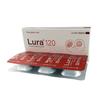
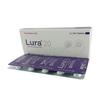
Uses of Luramax 40:
- Schizophrenia
Psychotic Disorder, Schizophrenia, bipolar depression.
Hypersensitivity. Concurrent administration of strong CYP3A4 inhibitors (eg, Ketoconazole). Concurrent administration of strong CYP3A4 inducers (eg, Rifampin).
Dementia-related psychosis.
Therapeutic Class
Atypical neuroleptic drugs
Pharmacology
The efficacy of Lurasidone in schizophrenia could be mediated through a combination of central Dopamine D2 and Serotonin 5HT2A receptor antagonism.
Dosage and Administration
How to use Lurasidone Hydrochloride:
Take this medicine in the dose and duration as advised by your doctor. Swallow it as a whole. Do not chew, crush or break it. Lurasidone Hydrochloride is to be taken with food.
Administration:
Should be taken with food
Adult Dose:
Schizophrenia
40 mg PO once daily initially; may increase to 80 mg/day if needed; not to exceed 160 mg/day
Bipolar Depression
Indicated for major depressive episodes associated with bipolar I disorder; may be used as either monotherapy or adjunctive therapy with lithium or valproate
20 mg PO once daily initially; may increase dose if needed, not to exceed 120 mg/day
Hepatic impairment
Mild (Child-Pugh class A): Dosage adjustment may not be necessary; use caution
Moderate (Child-Pugh class B): 20 mg/day initially; not to exceed 80 mg/day
Severe (Child-Pugh class C): 20 mg/day initially; not to exceed 40 mg/day
Child Dose:
Safety and efficacy not established
Renal Dose:
Renal impairment
CrCl 50 mL/min or greater: Dosage adjustment not required
CrCl <50 mL/min: 20 mg/day initially; not to exceed 80 mg/day
Interaction
The Lurasidone dose should be reduced to half of the original level when used concomitantly with moderate inhibitors of CYP3A4 (e.g., Diltiazem, Atazanavir, Erythromycin, Fluconazole, Verapamil, etc.). If Lurasidone is used concomitantly with a moderate CYP3A4 inducer, it may be necessary to increase the Lurasidone dose. Grapefruit: Grapefruit and grapefruit juice should be avoided in patients taking Lurasidone, since these may inhibit CYP3A4 and alter Lurasidone concentrations.
Contraindications
Hypersensitivity. Concurrent administration of strong CYP3A4 inhibitors (eg, Ketoconazole). Concurrent administration of strong CYP3A4 inducers (eg, Rifampin).
Dementia-related psychosis.
Side Effects
Common
- Nausea
- Vomiting
- Weight gain
- Sleepiness
- Dryness in mouth
- Indigestion
- Parkinsonism
- Akathisia (inability to stay still)
- Anxiety
- Stomach discomfort
- Restlessness
- Upper abdominal pain
- Agitation
- Insomnia (difficulty in sleeping)
- Increased saliva production
>10%
Somnolence, dose related (22%),Akathisia, dose related (15%),Fasting glucose increased (10-14%),Nausea (12%),Parkinsonism (11%)
1-10%
Vomiting (8%),Dyspepsia (8%),Anxiety (8%),Agitation (6%),Anxiety (6%),Dystonia (5%),Dizziness (5%),Fatigue (4%),Back pain (4%),Restlessness (3%),Salivary hypersecretion (2%)
Pregnancy And Lactation
Pregnancy Category B. Lurasidone should be used during pregnancy only if the potential benefit justifies the potential risk to the fetus. Patient should be advised not to breast-feed an infant if they are taking Lurasidone.
Precautions And Warnings
Precaution:
Increased risk of suicidal thinking and behavior in children, adolescents, and young adults taking antidepressants
Cerebrovascular adverse reactions in elderly patients with dementia-related psychosis: Increased incidence of cerebrovascular adverse events (e.g., stroke, transient ischemic attack).
Neuroleptic malignant syndrome: Manage with immediate discontinuation and close monitoring.
Tardive dyskinesia: Discontinue if clinically appropriate.
Metabolic changes: Atypical antipsychotic drugs have been associated with metabolic changes that may
increase cardiovascular/cerebrovascular risk. These metabolic changes include hyperglycemia, dyslipidemia, and weight gain.
Hyperglycemia and diabetes mellitus: Monitor patients for symptoms of hyperglycemia including polydipsia,
polyuria, polyphagia, and weakness. Monitor glucose regularly in patients with diabetes or at risk for diabetes.
Dyslipidemia: Undesirable alterations have been observed in patients treated with atypical antipsychotics.
Weight Gain: Gain in body weight has been observed. Monitor weight.
Hyperprolactinemia: Prolactin elevations may occur.
Leukopenia, neutropenia and agranulocytosis: Perform complete blood counts (CBC) in patients with a
pre-existing low white blood cell count (WBC) or a history of leukopenia or neutropenia. Consider discontinuing Lurasidone if a clinically significant decline in WBC occurs in the absence of other causative factors.
Orthostatic hypotension and syncope: Dizziness, tachycardia or bradycardia, and syncope may occur, especially early in treatment. In patients with known cardiovascularor cerebrovascular disease, and in antipsychotic-naïve patients, consider a lower starting dose and slower titration.
Lactation: Unknown whether drug is distributed in breast milk; use caution
Storage Conditions
Protect from light and moisture, store below 30° C. Keep out of the reach of children.
Drug Classes
Atypical neuroleptic drugs
Mode of Action
The mechanism of action of Lurasidone in the treatment of schizophrenia and bipolar depression is unknown. However, its efficacy in schizophrenia and bipolar depression could be mediated through a combination of central dopamine Type 2 (D2) and serotonin Type 2 (5HT2A) receptor antagonism.
Pregnancy Category
Pregnancy Category B. Lurasidone should be used during pregnancy only if the potential benefit justifies the potential risk to the fetus. Patient should be advised not to breast-feed an infant if they are taking Lurasidone.