
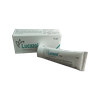
Lulitop 20 gm
Luliconazole
Category: Cream
Manufacturer: Square Pharmaceuticals Ltd.

Price: 180.0 ৳
20 gm Tube

Medicine Selling service is not available yet.
Related Medicines

Uses of Lulitop:
- Fungal skin infections
Indicated for the topical treatment of, tinea corporis (ring worm), tinea cruris (jock itch), interdigital tinea pedis (athelet's foot)
None
Miscellaneous topical agents
Luliconazole is an antifungal that belongs to the azole class. Although the exact mechanism of action against dermatophytes is unknown, luliconazole appears to inhibitergosterol synthesis by inhibiting the enzyme lanosterol demethylase. Inhibition of this enzyme’s activity by azoles results in decreased amounts of ergosterol, a constituent of fungal cell membranes, and a corresponding accumulation of lanosterol.
How to use Luliconazole:
Use this medicine in the dose and duration as advised by your doctor. Check the label for directions before use.
Administration:
Apply cream to the affected area and 1 inch surrounding area(s).
Adult Dose:
Topical cream
Adult:
Interdigital Tinea Pedis: Cream, 1% should be applied to the affected and immediate surrounding area(s) once a day for two weeks.
Tinea Cruris and Tinea Corporis: Cream, 1% should be applied to the affected skin and immediate surrounding area(s) once a day for one week.
Child Dose:
Topical cream
Child:
Tinea Corporis, Tinea Cruris
<12 years: Safety and efficacy not established
12-18 years: Apply cream to affected area once a day for 1 week
Tinea Pedis
<2 years: Safety and efficacy not established
2-18 years: Apply cream to affected area once a day for 2 weeks
The potential of luliconazole to inhibit cytochrome P-450 (CYP) enzymes 1A2, 2C9, 2C19, 2D6, and 3A4 was evaluated in vitro. Based on in vitro assessment, luliconazole at therapeutic doses, particularly when applied to patients with moderate to severe tinea cruris, may inhibit the activity of CYP2C19 and CYP3A4.However, no in vivo drug interaction trials have been conducted to evaluate the effect of luliconazole on other drugs that are substrates of CYP2C19 and CYP3A4. Luliconazole is not expected to inhibit CYPs 1A2, 2C9 and 2D6 based on in vitro assessment. The induction potential of luliconazole on CYP enzymes has not been evaluated.
None
Common
- Application site reactions (burning, irritation, itching and redness)
<1%
Application site reactions
Pregnancy Category C. There are no adequate and well-controlled studies of Luliconazole Cream, 1% in pregnant women. Luliconazole Cream, 1% should be used during pregnancy only if the potential benefit justifies the potential risk to the fetus.Nursing Mothers: It is not known whether luliconazole is excreted in human milk. Because many drugs are excreted in human milk, caution should be exercised when luliconazole Cream, 1% is administered to women who are breastfeeding.
Precaution:
For topical use only; not for ophthalmic or intravaginal administration
Lactation
There is no information available on presence in human milk, effects of drug on breastfed infant, or effects of drug on milk production after topical application to women who are breastfeeding;
Do not store above 30°C. Keep away from light and out of the reach of children.
Miscellaneous topical agents
Imidazole antifungal that alters the fungal cell membrane; interacts with 14-alpha demethylase (an enzyme necessary for conversion of lanosterol to ergosterol), inhibiting the synthesis of ergosterol which is an essential component of the membrane; increases cell permeability causing leakage of cellular contents
There are no adequate and well-controlled studies of Luliconazole cream in pregnant women. Luliconazole cream should be used during pregnancy only if the potential benefit justifies the potential risk to the fetus. It is not known whether Luliconazole is excreted in human milk. Because many drugs are excreted in human milk, caution should be exercised when Luliconazole cream is applied to women who are breastfeeding.


Samm Care