
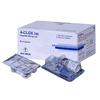
Loxcin 500 mg
Cloxacillin
Category: Capsule
Manufacturer: Nipa Pharmaceuticals Ltd.

Allopathic
MFG. Licence No. Biological
094
MFG. Licence No. Non-Biological
338
Address
I/5, Rupnagar, Mirpur, Dhaka.

Medicine Selling service is not available yet.
Related Medicines




Uses of Loxcin:
- Bacterial infections
Staphylococcal infections resistant to benzylpenicillin
Hypersensitivity to cloxacillin and other penicillins.
Penicillinase-resistant penicillins
Cloxacillin inhibits bacterial cell wall synthesis by binding to 1 or more of the penicillin-binding proteins (PBPs) which in turn inhibit the final transpeptidation step of peptidoglycan synthesis in bacterial cell walls. Bacteria eventually lyse due to ongoing activity of cell wall autolytic enzymes (autolysins and murein hydrolases) while cell wall assembly is arrested.
How to use
Cloxacillin:
Take this medicine in the dose and duration as advised by your doctor. Swallow it as a whole. Do not chew, crush or break it.
Cloxacillin is to be taken empty stomach.
Administration:
Should be taken on an empty stomach. Take on an empty stomach 1 hr before or 2 hr after meals.
Reconstitution: IM: The contents of each vial should be dissolved in 1.5 mL of water for inj.
IV: 500 mg to be dissolved in 10-20 mL of water for inj, added to suitable IV fluids if given for i
Adult Dose:
Oral
Adult: 250-500 mg 4 times/day.
Parenteral
Adult: 1-2 g 6 hrly. For more severe infections (e.g. meningitis, endocarditis), 2 g 4 hrly.
Child Dose:
Oral
Child: 50-100 mg/kg in divided doses every 6 hr.
May diminish the effect of BCG and typhoid vaccine. May increase risk of methotrexate toxicity. May diminish the therapeutic effect of Na picosulfate. May decrease serum concentrations of mycophenolate. May prolong bleeding time w/ anticoagulants. Increased serum concentrations w/ probenecid. Tetracycline may antagonise the bactericidal effect of cloxacillin.
Hypersensitivity to cloxacillin and other penicillins.
Common
- Rash
- Vomiting
- Allergic reaction
- Nausea
- Diarrhea
Hypotension, confusion, fever, lethargy, seizure, pruritus, rash, urticaria, abdominal pain, black or hairy tongue, diarrhoea, flatulence, nausea, oral candidiasis, pseudomembranous colitis, stomatitis, vomiting, agranulocytosis, bone marrow depression, eosinophilia, granulocytopenia, haemolytic anaemia, leucopenia, neutropenia, thrombocytopenia, increased alkaline phosphatase, ALT and AST, hepatotoxicity, thrombophlebitis, arthralgia, myalgia, myoclonus, hematuria, interstitial nephritis, proteinuria, renal insufficiency, renal tubular damage, bronchospasm, laryngeal oedema, laryngospasm, sneezing, wheezing, angioedema, allergic reaction, serum sickness-like reaction.
Potentially Fatal: Anaphylaxis.
Pregnancy Category B. Either animal-reproduction studies have not demonstrated a foetal risk but there are no controlled studies in pregnant women or animal-reproduction studies have shown an adverse effect (other than a decrease in fertility) that was not confirmed in controlled studies in women in the 1st trimester (and there is no evidence of a risk in later trimesters).
Precaution:
Patient w/ allergies esp β-lactam allergy, asthma, history of seizure disorder. Renal impairment. Pregnancy and lactation. Monitoring Parameters Observe for signs and symptoms of anaphylaxis during 1st dose. Monitor CBC w/ differential (prior to initiating therapy and wkly thereafter), periodic BUN, creatinine, hepatic function.
Dry powder: Store below 25° C. Reconstituted solution: Store between 2-8° C (stable for 4 days); 23° C (stable for 24 hr).
Cloxacillin inhibits bacterial cell wall synthesis by binding to 1 or more of the penicillin-binding proteins (PBPs) which in turn inhibit the final transpeptidation step of peptidoglycan synthesis in bacterial cell walls. Bacteria eventually lyse due to ongoing activity of cell wall autolytic enzymes (autolysins and murein hydrolases) while cell wall assembly is arrested.


Samm Care