
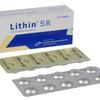
Lithin 400 mg
Generic: Lithium Carbonate
Category: Tablet
Manufacturer: Incepta Pharmaceuticals Ltd.

Allopathic
MFG. Licence No. Biological
193
MFG. Licence No. Non-Biological
108
Address
Zirabo, Savar, Dhaka Dewan Idris Road, Bara Rangamatia
Price: 5.0 ৳
30 in Blister Pack

Medicine Selling service is not available yet.
Alternative Brands & Related Medicines

Indications
Uses of Lithin:
- Mania
- Bipolar disoder
Bipolar disorder, Mania, Recurrent unipolar depression
Renal insufficiency, cardiovascular insufficiency, Addison\'s disease and untreated hypothyroidism are all contraindications to lithium therapy.
Therapeutic Class
Anti-manic drugs
Pharmacology
Although lithium has been used for over 50 years in treatment of bipolar disorder, the mechanism of action is still unknown. Lithium's therapeutic action may be due to a number of effects, ranging from inhibition of enzymes such as glycogen synthase kinase 3, inositol phosphatases, or modulation of glutamate receptors. Lithium Carbonate alters intraneuronal metabolism of catecholamines and sodium transport in neurons and muscle cells.
Dosage and Administration
How to use
Lithium Carbonate:
Use it as advised by your doctor or check the label for directions before use.
Lithium Carbonate is to be taken with food.
Administration:
Should be taken with food.
Adult Dose:
Oral
Mania; Bipolar disorder; Recurrent unipolar depression
Adult: Treatment and prevention: Initially, 400-1,200 mg daily in 1-2 divided doses.
Serum lithium should be monitored 12 hours after dose, twice weekly until serum concentration and clinical condition stabilize, and every other month thereafter
Desirable range for serum lithium: 0.6-1.2 mEq/L; although higher serum concentrations may be needed, not to exceed 1.5 mEq/L
Renal Dose:
Renal impairment:
CrCl (ml/min) Dosage Recommendation
10-50 50-75% of normal dose.
<10 25-50% of normal dose.
Interaction
Reduced serum levels with carbonic anhydrase inhibitors, chlorpromazine, sodium-containing preparations, theophylline, urea. Enhanced hypothyroid effects with iodine salts. Enhanced effects of neuromuscular-blocking agents. Reduced pressor response to sympathomimetics.
Potentially Fatal: Increased risk of lithium toxicity with ACE inhibitors, angiotensin receptor antagonists, loop diuretics, metronidazole, phenytoin. Increased risk of neurotoxicity with carbamazepine, calcium-channel blockers, haloperidol, methyldopa, phenothiazines, SSRIs, TCAs. Increased serum levels with COX-2 inhibitors, NSAIDs (except sulindac, aspirin), tetracyclines, thiazide diuretics. Increased risk of encephalopathy with haloperidol. Increased risk of serotonin syndrome with sibutramine. Fatal malignant hyperpyrexia may occur when used with MAOIs.
Contraindications
Renal insufficiency, cardiovascular insufficiency, Addison\'s disease and untreated hypothyroidism are all contraindications to lithium therapy.
Side Effects
Common
- Tremor
- Slurred speech
- Uncoordinated body movements
- Nausea
- Acne
- Increased white blood cell count
- Memory impairment
- Hair loss
- Goiter (enlarged thyroid gland)
- Skin rash
- Increased thirst
- Weight gain
- Polyuria
- Diarrhea
>10%
Leukocytosis (most patients),Polyuria/polydypsia (30-50%),Dry mouth (20-50%),Hand tremor (45% initially, 10% after 1 year of treatment),Confusion (40%),Decreased memory (40%),Headache (40%),Muscle weakness (30% initially, 1% after 1 year of treatment),Electrocardiographic (ECG) changes (20-30%),Nausea, vomiting, diarrhea (10-30% initially, 1-10% after 1-2 years of treatment),Hyperreflexia (15%),Muscle twitch (15%),Vertigo (15%)
1-10%
Extrapyramidal symptoms, goiter (5%),Hypothyroidism (1-4%),Acne (1%),Hair thinning (1%)
Frequency Not Defined
Coma,Lethargy,Seizures,Renal toxicity
Pregnancy And Lactation
Pregnancy Category D. An increased incidence of cardiovascular abnormality has been noted in infants of women given lithium during the first 3 months of pregnancy, such use should be avoided unless essential. Breast feeding is not advised unless the benefits of lithium use outweigh the advantages.
Precautions And Warnings
Precaution:
Decreased tolerance to lithium has been reported to ensue from protracted sweating or diarrhoea and, if such occur, supplemental fluid and salt should be administered under careful medical supervision and lithium intake reduced or suspended until the condition is resolved.
Lactation: Drug is excreted in breast milk; use not recommended
Overdose Effects
In the event of accumulation, lithium should be stopped and serum estimations should be carried out every six hours.Under no circumstances should a diuretic be used. Osmotic diuresis (mannitol or urea infusion) or alkalinisation of the urine (sodium lactate or sodium bicarbonate infusion) should be initiated. If the serum lithium level is over 4.0 mmol/L, or if there is a deterioration in the patient's condition, or if the serum lithium concentration is not falling at a rate corresponding to a half-life of under 30 hours, peritoneal or haemodialysis should be instituted promptly. This should be continued until there is no lithium in the serum or dialysis fluid. Serum lithium levels should be monitored for at least a further week to take account of any possible rebound in serum lithium levels as a result of delayed diffusion from body tissues.
Storage Conditions
Store at 25° C
Drug Classes
Anti-manic drugs
Mode of Action
Inhibits postsynaptic D2 receptor supersensitivity. Alters cation transport in nerve and muscle cells and influences reuptake of serotonin or norepinephrine. Inhibits phosphatidylinositol cycle second messenger systems.
Pregnancy Category
Pregnancy Category D. An increased incidence of cardiovascular abnormality has been noted in infants of women given lithium during the first 3 months of pregnancy, such use should be avoided unless essential. Breast feeding is not advised unless the benefits of lithium use outweigh the advantages.

Samm Care