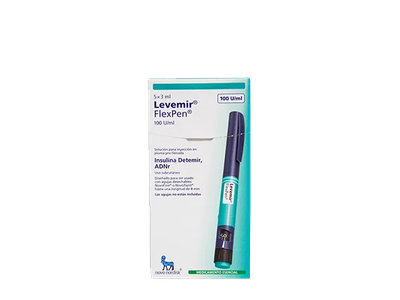
Levemir Flexpen 100 IU/ml
Generic: Insulin Detemir
Category: SC Injection
Manufacturer: Novo Nordisk

Price: 1527.12 ৳
3ml Pen
5's pack
3 ml flexpen

Medicine Selling service is not available yet.
Alternative Brands & Related Medicines
Levemir FlexPen 100 IU/ml
Insulin Detemir
Levemir Penfill 100 IU/ml
Insulin Detemir
Levemir(R) FlexPen(R) 100U=2400nmol (approx.14.2mg)
Insulin Detemir
Levemir(R) Penfill 100U=2400nmol (approx.14.2mg)
Insulin Detemir
Actemra 162 mg/0.9 ml
Tocilizumab
৳ 14950.0
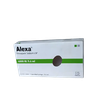
Alexa 6000 Anti-Xa IU/0.6 ml
Enoxaparin Sodium
৳ 600.0
Indications
Uses of Levemir Flexpen:
- Diabetes mellitus (Type 1 & Type 2)
Diabetes mellitus
Do not admin by IV, IM or via insulin infusion pump.
Therapeutic Class
Long Acting Insulin
Pharmacology
The primary activity of insulin detemir is the regulation of glucose metabolism. Insulins, including insulin detemir, exert their specific action through binding to insulin receptors. Receptor-bound insulin lowers blood glucose by facilitating cellular uptake of glucose into skeletal muscle and adipose tissue and by inhibiting the output of glucose from the liver. Insulin inhibits lipolysis in the adipocyte, inhibits proteolysis, and enhances protein synthesis.
Dosage and Administration
How to use
Insulin Detemir:
Your doctor or nurse will guide you how to use this medicine.
Administration:
Administer subcutaneously in the upper arm, thigh or abdominal wall. A subcutaneous injection into the abdominal wall results in a faster absorption than from other injection sites.
May be taken with or without food. For patients treated w/ once daily regimen, administer w/ evening meal or at bedtime. For patients who need twice daily dosing, the evening dose can be administered either w/ the evening meal or at bedtime or 12 hr after the morning dose.
Adult Dose:
Subcutaneous
Type I or II Diabetes Mellitus
Once daily dosage: Administer SC with evening meal or at bedtime
Twice daily dosage: Administer SC with morning meal and either with evening meal, at bedtime, or 12 hr after the morning dose
Initial dose
Type 1 diabetes: Approximately one third of the total daily insulin requirements SC; rapid-acting or short-acting, premeal insulin should be used to satisfy the remainder of the daily insulin requirements; usual daily maintenance range is 0.5-1 unit/kg/day in divided doses; nonobese may require 0.4-0.6 unit/kg/day; obese may require 0.6-1.2 units/kg/day
Type 2 diabetes inadequately controlled on oral medication: 10 units/day SC (or 0.1-0.2 unit/kg/day) in evening or divided q12hr
Type 2 diabetes inadequately controlled on GLP-1 receptor agonist: 10 units/day SC given once daily in evening
Subsequently adjust dose based on blood glucose measurements
Conversion from other insulins
If converting from insulin glargine: Change can be accomplished on a unit-to-unit basis
If converting from NPH insulin: Change can be accomplished on a unit-to-unit basis; however, some patients with type 2 diabetes may require more insulin detemir than NPH insulin
Closely monitor blood glucose during transition and in the initial weeks thereafter; concurrent rapid-acting or short-acting insulins or other concomitant antidiabetic treatment may require dose adjustment
Dosing Considerations
Dosage of human insulin, , must be based on the results of blood and urine glucose tests and must be carefully individualized to optimal effect
Dose adjustments should be based on regular blood glucose testing
Adjust to achieve appropriate glucose control
Dose adjustments
Look for consistent pattern in blood sugars for >3 days
Child Dose:
Subcutaneous
Type 1 Diabetes Mellitus
<2 years: Safety and efficacy not established
>2 years: Approximately one-third of the total daily insulin requirements SC; rapid-acting or short-acting, premeal insulin should be used to satisfy the remainder of the daily insulin requirements; usual daily maintenance range in adolescents is <1.2 units/kg/day during growth spurts
Renal Dose:
Renal impairment: Dose adjustments may be needed.
Interaction
Possible absence of hypoglycaemic warning symptoms with beta-blockers. Increased blood sugar with thiazide diuretics, corticosteriods, chlorpromazine, tibolone, isoniazid, niacin, some calcium-channel blockers such as diltiazem or nifedipine, diazoxide, lithium and thyroid hormones. Increased risk of hypoglycemia with disopyramide, larges doses of aspirin, gatifloxacin, MAOIs, mebanazine, nandrolone, pegvisomant, testosterone. Decreased insulin resistance with octreotide and lanreotide. Increased risk of wt gain and peripheral oedema with pioglitazone, rosiglitazone. Decreased effect of sermorelin.
Contraindications
Do not admin by IV, IM or via insulin infusion pump.
Side Effects
Common
- Hypoglycemia (low blood glucose level)
- Injection site allergic reaction
- Lipodystrophy (skin thickening or pits at the injection site)
Hypoglycaemia, lipodystrophy, pruritus, rash, wt gain, sodium retention and oedema. Inj site reactions e.g. pain, itching, hives, swelling and inflammation. Influenza-like symptoms, Pallor, Palpitation, Tachycardia, Mental confusion, Weakness, Blurred vision, Itching, Hunger, Nausea.
Pregnancy And Lactation
Pregnancy Category B. Animal reproduction studies have failed to demonstrate a risk to the fetus and there are no adequate and well-controlled studies in pregnant women OR Animal studies have shown an adverse effect, but adequate and well-controlled studies in pregnant women have failed to demonstrate a risk to the fetus in any trimester.Nursing Mothers: It is unknown whether Insulin detemir is excreted in human milk. Because many drugs, including human insulin, are excreted in human milk, use caution when administering Insulin detemir to a nursing woman. Women with diabetes who are lactating may require adjustments of their insulin doses.
Precautions And Warnings
Precaution:
Renal or hepatic impairment. Regular monitoring of blood glucose and HbA1c. Continuous rotation of the inj site within a given area to reduce inj site reactions. Pregnancy, lactation
Lactation: Safe
Overdose Effects
An excess of insulin relative to food intake, energy expenditure, or both may lead to severe and sometimes prolonged and life-threatening hypoglycemia. Mild episodes of hypoglycemia usually can be treated with oral glucose. Adjustments in drug dosage, meal patterns, or exercise may be needed. More severe episodes with coma, seizure, or neurologic impairment may be treated with intramuscular/subcutaneous glucagon or concentrated intravenous glucose. After apparent clinical recovery from hypoglycemia, continued observation and additional carbohydrate intake may be necessary to avoid recurrence of hypoglycemia
Storage Conditions
Unused (unopened) Insulin Detemir should be stored in the refrigerator between 2° and 8°C. Do not store in the freezer or directly adjacent to the refrigerator cooling element. Do not freeze. Do not use Insulin Detemir if it has been frozen. Unused (unopened) Insulin Detemir can be kept until the expiration date printed on the label if it is stored in a refrigerator. Keep unused Insulin Detemir in the carton so that it stays clean and protected from light.If refrigeration is not possible, unused (unopened) Insulin Detemir can be kept unrefrigerated at room temperature, below 30°C as long as it is kept as cool as possible and away from direct heat and light. Unrefrigerated Insulin Detemir should be discarded 42 days after it is first kept out of the refrigerator, even if the FlexPen or vial still contains insulin.
Drug Classes
Long Acting Insulin
Mode of Action
Insulin detemir is a recombinant human insulin analogue which is long-acting. It is prepared using recombinant DNA technology and genetically modified cultures of Saccharomyces cerevisiae. Slow systemic absorption and reversible binding to albumin may account for the prolonged duration of action of insulin detemir.
Pregnancy Category
Pregnancy Category B. Animal reproduction studies have failed to demonstrate a risk to the fetus and there are no adequate and well-controlled studies in pregnant women OR Animal studies have shown an adverse effect, but adequate and well-controlled studies in pregnant women have failed to demonstrate a risk to the fetus in any trimester.Nursing Mothers: It is unknown whether Insulin detemir is excreted in human milk. Because many drugs, including human insulin, are excreted in human milk, use caution when administering Insulin detemir to a nursing woman. Women with diabetes who are lactating may require adjustments of their insulin doses.


Samm Care