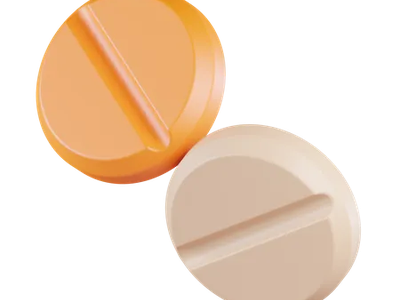
Leukeran 2 mg
Chlorambucil
Category: Tablet
Manufacturer: Excella, Germany

Price: 2000.0 ৳
25's pack

Medicine Selling service is not available yet.
Related Medicines

Uses of Leukeran:
- Blood cancer
- Hodgkin’s disease
Lymphocytic leukemia, non-Hodgkin lymphoma, Waldenstrm macroglobulinemia, polycythemia vera, trophoblastic neoplasms, ovarian carcinoma, nephrotic syndrome, Hodgkin's disease
Hypersensitivity. Pregnancy and lactation. Porphyria.
Cytotoxic Chemotherapy
Chlorambucil produces its anti-cancer effects by interfering with DNA replication and damaging the DNA in a cell. The DNA damage induces cell cycle arrest and cellular apoptosis via the accumulation of cytosolic p53 and subsequent activation of Bax, an apoptosis promoter.Chlorambucil alkylates and cross-links DNA during all phases of the cell cycle, inducing DNA damage via three different methods of covalent adduct generation with double-helical DNA:
Attachment of alkyl groups to DNA bases, resulting in the DNA being fragmented by repair enzymes in their attempts to replace the alkylated bases, preventing DNA synthesis and RNA transcription from the affected DNA.
DNA damage via the formation of cross-links which prevents DNA from being separated for synthesis or transcription.
Induction of mispairing of the nucleotides leading to mutations.
The precise mechanisms by which Chlorambucil acts to kill tumor cells are not yet completely understood.
How to use Chlorambucil:
Take this medicine in the dose and duration as advised by your doctor. Swallow it as a whole. Do not chew, crush or break it. Chlorambucil is to be taken empty stomach.
Administration:
Should be taken on an empty stomach. Take on an empty stomach. Ensure adequate hydration. Swallow whole, do not chew/crush.
Adult Dose:
Chronic Lymphatic (Lymphocytic) Leukemia
0.1 mg/kg/day for 3-6 weeks or
0.4 mg/kg (increased by 0.1 mg/kg/dose until response/toxicity observed) biweekly or
0.4 mg/kg (increased by 0.1 mg/kg/dose until response observed) monthly or
0.03-0.1 mg/kg/day continuously
Reduce initial dose if administered within 4 weeks after a full course of radiation/myelosuppressive therapy or patients with bone marrow disease
Not to exceed 0.1 mg/kg/day if bone marrow infiltrated with lymphocytes
Hodgkin's Lymphoma
0.2 mg/kg/day for 3-6 weeks or
0.4 mg/kg (increased by 0.1 mg/kg/dose until response/toxicity observed) biweekly or
0.4 mg/kg (increased by 0.1 mg/kg/dose until response or toxicity observed) monthly or
0.03-0.1 mg/kg/day continuously
Reduce initial dose if administered within 4 weeks after a full course of radiation/myelosuppressive therapy or patients with bone marrow disease
Not to exceed 0.1 mg/kg/day if bone marrow infiltrated with lymphocytes
Hepatic Impairment
Primarily metabolized in liver; dose reduction may be required
Renal Dose:
Renal Impairment
<1% (including metabolites) excreted in urine; no dose adjustment required
Impairs immune response to vaccines, possible infection after admin of live vaccines.
Hypersensitivity. Pregnancy and lactation. Porphyria.
Common
- Anemia (low number of red blood cells)
- Decreased blood cells (red cells, white cells, and platelets)
- Decreased white blood cell count (neutrophils)
- Decreased white blood cell count
- Bone marrow suppression
- Nausea
- Vomiting
- Diarrhea
- Mouth ulcer
>10%
Neutropenia (25-33%),Anemia,Leukopenia,Thrombocytopenia
Frequency Not Defined
Seizures,Hallucinations,Peripheral neuropathy,Nausea,Vomiting,Pulmonary fibrosis,GI effects,Leukemia,Myelosuppression,Hyperuricemia,Infertility,Hepatotoxicity & jaundice,Type I hypersensitivity,Rash,Stevens-Johnson syndrome (rare),Toxic epidermal necrosis (rare),Urticaria,Erythema multiforme (rare),Secondary malignancies
Potentially Fatal: Severe bone marrow suppression, carcinogenic and human infertility.
Pregnancy Category D. There is positive evidence of human foetal risk, but the benefits from use in pregnant women may be acceptable despite the risk (e.g., if the drug is needed in a life-threatening situation or for a serious disease for which safer drugs cannot be used or are ineffective).
Precaution:
Renal or hepatic dysfunction. Perform blood counts regularly. Seizure disorder, bone marrow suppression. Patient who has received radiation therapy, myelosuppressive drugs or has a depressed baseline leukocyte/platelet count within the previous 4 wk. Increased incidence of acute leukaemias and other secondary malignancies.
Lactation: not known if excreted in breast milk; do not nurse
Cytotoxic Chemotherapy
Chlorambucil interferes with DNA replication and RNA transcription by alkylation and cross-linking cellular DNA strands, thus leading to disruption of the nucleic acid function.
Pregnancy Category: D
Lactation: not known if excreted in breast milk; do not nurse

Samm Care