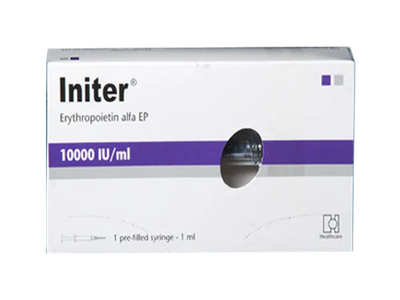
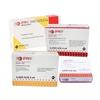
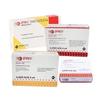
Uses of Initer:
- Anemia due to chronic kidney disease
- Anemia due to cancer chemotherapy
Anaemia of chronic renal failure, Anaemia in zidovudine-treated HIV-infected patients, Anemia related to non-myeloid malignant disease chemotherapy, To reduce the need for allogenic blood tranfusion, Anaemia of prematurity.
Hypersensitivity to albumin (human) or mammalian cell-derived products; uncontrolled hypertension.
How to use
Epoetin alfa (Recombinant Human Erythropoietin):
Your doctor or nurse will give you this medicine. Kindly do not self administer.
Adult Dose:
Chronic Kidney Disease-Associated Anemia
Reduction of need for red blood cell (RBC) transfusion in patients with chronic kidney disease (CKD)
Patient not on dialysis: 50-100 units/kg IV/SC 3 times weekly initially
Initiate only when (1) hemoglobin level <10 g/dL, (2) rate of hemoglobin decline indicates likely necessity of RBC transfusion, and (3) reducing risk of alloimmunization or other risks related to RBC transfusion is goal; if hemoglobin level >10 g/dL, reduce or interrupt dose and use lowest dose sufficient to reduce need for RBC transfusion
Patient on dialysis: 50-100 units/kg IV 3 times weekly initially
Initiate when hemoglobin level <10 g/dL; if hemoglobin level approaches or exceeds 11 g/dL, reduce or interrupt dose
Zidovudine-Related Anemia
Treatment of anemia due to zidovudine administered at <4200 mg/week in HIV-infected patients with endogenous serum erythropoietin levels of <500 milliunits/mL
100 units/kg IV/SC 3 times weekly initially
Chemotherapy-Related Anemia
Treatment of anemia in patients with nonmyeloid malignancies where anemia is due to effect of concomitant myelosuppressive chemotherapy for >2 months
150 units/kg IV/SC 3 times weekly initially; alternatively, 40,000 units SC once weekly until completion of chemotherapy course
Preparation for Surgery With High Risk of Blood Loss
Reduction of need for allogeneic RBC transfusions in patients with perioperative hemoglobin >10 g/dL but ?13 g/dL who are at high risk for perioperative blood loss from elective, noncardiac, nonvascular surgery
300 units/kg SC once daily for 15 consecutive days (10 days preceding surgery, day of surgery, 4 days following surgery); alternatively, 600 units/kg SC in 4 doses administered 21, 14, and 7 days before surgery and on day of surgery
Child Dose:
Chronic Kidney Disease-Associated Anemia
<1 month: Safety and efficacy not established
>1 month: 50 units/kg IV/SC 3 times weekly initially; if patient on dialysis, IV route recommended
Initiate when hemoglobin level <10 g/dL; if hemoglobin level approaches or exceeds 11 g/dL, reduce or interrupt dose
Prematurity-Related Anemia
25-100 units/kg SC 3 times weekly or 200-400 units/kg SC/IV q24-48hr for 2-6 weeks
Zidovudine-Related Anemia
<8 months: Safety and efficacy not established
8 months-17 years: 50-400 units/kg SC/IV 2-3 times weekly
Chemotherapy-Related Anemia
<5 years: Safety and efficacy not established
5-18 years: 600 units/kg IV once weekly; not to exceed 40,000 units
Cyclosporine, hematinic agents, drugs that decrease erythropoiesis. Potentiated by hematinic agents.
Hypersensitivity to albumin (human) or mammalian cell-derived products; uncontrolled hypertension.
Precaution:
Hypertension; history of seizures; thrombocytosis; chronic liver failure; poor renal function; ischaemic vascular disease; malignant tumours. Increased risk of thrombotic events. Monitor BP during treatment. Regularly monitor platelet counts and serum-potassium concentration. Iron deficiency, infection or inflammatory disorders, haemolysis, or aluminium intoxication will reduce efficacy. Proper dosage control is required to prevent to rapid increase in the haematocrit and haemoglobin levels. Pregnancy; lactation.
Lactation: Unknown whether drug is excreted in breast milk; use with caution; avoid administering multidose vials
Epoetin alfa stimulates the differentiation and proliferation of erythroid precursors, release of reticulocytes into the circulation and synthesis of cellular Hb thus regulating erythropoiesis.
Pregnancy
Limited data available on epoetin alfa use in pregnant women are insufficient to determine a drug-associated risk of adverse developmental outcomes
Animal data
In animal reproductive and developmental toxicity studies, adverse fetal effects including embryo-fetal death, skeletal anomalies, and growth defects occurred when pregnant rats received epoetin alfa at doses approximating the clinical recommended starting doses
Consider the benefits and risks of epoetin alfa for the mother and possible risks to the fetus when prescribing epoetin alfa to a pregnant woman
Lactation
There is no information regarding the presence of epoetin alfa products in human milk, the effects on the breastfed infant, or the effects on milk production
However, endogenous erythropoietin is present in human milk
Because many drugs are present in human milk, exercise caution when epoetin alfa is administered to a lactating woman