
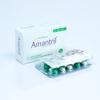
Influ 100mg
Amantadine Hydrochloride
Category: Capsule
Manufacturer: Peoples Pharma Ltd.

Allopathic
MFG. Licence No. Biological
126
MFG. Licence No. Non-Biological
386
Address
105-106, Tongi I/A, Gazipur.
Price: 81.0 ৳
Box
Capsule

Medicine Selling service is not available yet.
Related Medicines

Adult: PO Influenza A 100 mg/day for 5 days. Prophylaxis of influenza A 100 mg/day for up to 6 wk. W/ influenza vaccination: up to 3 wk after vaccination.
Elderly: >65 yr: Daily dose of <100 mg or 100 mg given at intervals >1 day.
Herpes zoster 100 mg twice daily for 14 days, may continue for another 14 days if pain persists.
Parkinson's disease100 mg/day, up to 100 mg twice daily 1 wk or more. Max: 400 mg/day.
Oral
Influenza A treatment
Child: 1-9 years or <40 kg (any age): 5 mg/kg/day PO in single dose or divided q12 hr; not to exceed 150 mg/day
>10 years and <40 kg: 5 mg/kg/day PO divided q12hr
>10 years and >40 kg: 100 mg PO q12hr
NOTE: Because of resistance, amantadine is no longer recommended for prophylaxis or treatment of influenza A
Respiratory viral infections (Influenza)
The mechanism by which amantadine exerts its antiviral activity is not clearly understood. It appears to mainly prevent the release of infectious viral nucleic acid into the host cell by interfering with the function of the transmembrane domain of the viral M2 protein. In certain cases, amantadine is also known to prevent virus assembly during virus replication. It does not appear to interfere with the immunogenicity of inactivated influenza A virus vaccine.Amantadine inhibits the replication of influenza A virus isolates from each of the subtypes, i.e., H1N1, H2N2 and H3N2. It has very little or no activity against influenza B virus isolates. A quantitative relationship between the in vitrosusceptibility of influenza A virus to amantadine and the clinical response to therapy has not been established in man. Sensitivity test results, expressed as the concentration of amantadine required to inhibit by 50% the growth of virus (ED50) in tissue culture vary greatly (from 0.1 µg/mL to 25.0 µg/mL) depending upon the assay protocol used, size of virus inoculum, isolates of influenza A virus strains tested, and the cell type used. Host cells in tissue culture readily tolerated amantadine up to a concentration of 100 µg/mL.
Administration:
Enhances the adverse effects of antimuscarinics and levodopa. CNS stimulants, drugs that raise urinary pH.
The concurrent use of Amantadine hydrochloride with live attenuated influenza vaccine (LAIV) intranasal has not been evaluated.
Adult Dose:
Patients with CV or liver disease, impaired renal function, recurrent eczema. Elderly. Withdrawal of the drug should be gradual.
Lactation: Drug enters breast milk; not recommended
Renal Dose:
Amantadine is a weak dopamine agonist possessing antimuscarinic properties. It alters dopamine release and re-uptake. It also noncompetitively antagonises N-methyl-D-aspartate. As an antiviral drug, it inhibits replication of influenza type A virus.
Hypersensitivity. Pregnancy and lactation. Epilepsy or other seizure disorders, severe renal impairment and gastric ulceration.
Oral
Influenza A treatment
Child: 1-9 years or <40 kg (any age): 5 mg/kg/day PO in single dose or divided q12 hr; not to exceed 150 mg/day
>10 years and <40 kg: 5 mg/kg/day PO divided q12hr
>10 years and >40 kg: 100 mg PO q12hr
NOTE: Because of resistance, amantadine is no longer recommended for prophylaxis or treatment of influenza A
Renal impairment:
CrCl (ml/min)
>35 100 mg daily.
15-35 100 mg every 2-3 days.
<15 Not recommended.
Pregnancy category C. No well-controlled studies have been done in pregnant women to evaluate Amantadine's safety. Amantadine may be used during pregnancy when the potential benefits outweigh the potential but unknown risks to the fetus.Amantadine is excreted into breast milk in low concentrations. As no information is available on the effects in infants, therefore amantadine should be used cautiously in women who are breastfeeding.
Precaution:
Parkinson's disease, Influenza, herpes zoster, drug-induced extrapyramidal reactions
Store at 20-25°C in dry place. Protect from light.
Respiratory viral infections (Influenza)
Should be taken with food.
1-10%
Agitation,Anorexia,Anxiety,Ataxia,Confusion,Constipation,Depression,Diarrhea,Dizziness,Dream abnormality,Dry nose,Fatigue,Hallucinations,Headache,Insomnia,Irritability,Livedo reticularis,Nausea,Nervousness,Orthostatic hypotension,Peripheral edema,Somnolence,Xerostomia
<1%
Amnesia,CHF,Decreased libido,Dyspnea,Eczematoid dermatitis,Euphoria,Hyperkinesis,Hypertension,Instances of convulsions,Leukopenia,Neutropenia,Oculogyric episodes,Psychosis,Rash,Slurred speech,Urinary retention,Visual disturbances,Vomiting,Weakness
Potentially Fatal: Congestive heart failure, convulsions.


Samm Care