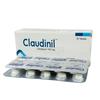
Inclaud 100 mg
Cilostazol
Category: Tablet
Manufacturer: ACI Limited

Price: 10.06 ৳
Tablet
10 in Blister Pack
20's pack
piece

Medicine Selling service is not available yet.
Related Medicines

Uses of Inclaud:
- Intermittent claudication
Peripheral vascular disease, Intermittent claudication
Heart failure; known predisposition to bleeding; history of ventricular arrhythmias; QT interval prolongation; severe renal impairment; moderate to severe hepatic impairment.
Peripheral Vasodilator drugs: Intermittent Claudication
Cilostazol is a preparation of Cilostazol which is a quinolinone derivative. The mechanism of action is to specifically inhibit cellular phosphodiesterase III (PDE III) and suppress cAMP degradation with a resultant increase in cAMP in platelets and blood vessels, leading to inhibition of platelet aggregation and vasodilation.
How to use
Cilostazol:
Take this medicine in the dose and duration as advised by your doctor. Swallow it as a whole. Do not chew, crush or break it.
Cilostazol is to be taken empty stomach.
Administration:
Should be taken on an empty stomach. Take at least ½ hr before or 2 hr after meals.
Adult Dose:
Oral
Peripheral vascular disease
Adult: 100 mg bid.
May reduce dose in patients taking enzyme inhibitors concurrently.
Hepatic Impairment
Moderate to severe: Use caution
Renal Dose:
Renal Impairment
CrCl< 25 mL/min: Use caution
Co-admin with drugs that affect CYP3A4 (erythromycin, other macrolides, diltiazem) or CYP2C19 (omeprazole) may influence the pharmacokinetics of cilostazol.
Heart failure; known predisposition to bleeding; history of ventricular arrhythmias; QT interval prolongation; severe renal impairment; moderate to severe hepatic impairment.
Common
- Headache
- Palpitations
- Abnormal stool
- Diarrhea
- Dizziness
- Chest pain
- Loss of appetite
- Bleeding
- Rash
>10%
Headache (27-34%),Diarrhea (12-19%),Abnormal stools (12-15%),Infection (10-14%),Rhinitis (7-12%),Pharyngitis (7-10%)
1-10%
Dizziness (9-10%),Palpitations (5-10%),Peripheral edema (7-9%),Back pain (6-7%),Dyspepsia (6%),Abdominal pain (4-5%),Tachycardia (4%),Increased cough (3-4%),Myalgia (2-3%),Atrial fibrillation (<2%),CHF (<2%),MI (<2%),Hematemesis (<2%),Ecchymosis (<2%),Blood in eye (<2%),Epistaxis (<2%),Hemoptysis (<2%),Nausea
Frequency Not Defined
Decreased platelet aggregation,Agranulocytosis,Aplastic anemia,Leukopenia,Thrombocytopenia,Stevens-Johnson syndrome
There are no adequate and well controlled studies in pregnant women. Transfer of Cilostazol into milk has been reported in experimental animals. Because of the potential risk to nursing infants, a decision should be made to discontinue nursing or to discontinue Cilostazol.
Precaution:
Congestive heart disease. Concurrent therapy with clopidogrel has not been studied for safety or efficacy. Pregnancy and lactation.
Lactation: Excretion in milk unknown; not recommended
Severe headache, diarrhoea, hypotension, tachycardia, and possibly cardiac arrhythmias. Careful observation and supportive treatment are recommended.
Store in a cool & dry place, protected from light and moisture.
Peripheral Vasodilator drugs: Intermittent Claudication
Cilostazol is a reversible, selective inhibitor of phosphodiesterase-III (PDE-III), thereby suppressing cyclic adenosine monophosphate (cAMP) degradation. Increase in cAMP in platelets and blood vessels leads to inhibition of platelet aggregation and vasodilation. Cilostazol also inhibits adenosine uptake into cells, which augments the cAMP-elevating effect of PDE-III inhibition.
Pregnancy category: C
Lactation: Excretion in milk unknown; not recommended

Samm Care