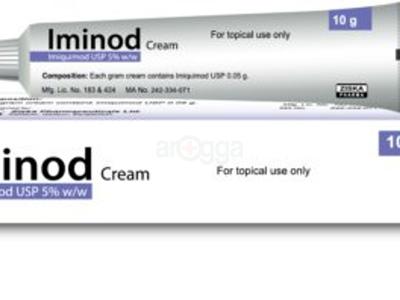
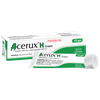
Iminod 5 gm/100 gm
Imiquimod
Category: Cream
Manufacturer: Ziska Pharmaceuticals Ltd.

Allopathic
MFG. Licence No. Biological
183
MFG. Licence No. Non-Biological
424
Address
Karol Surichala, Shafipur, Kaliakoir, Gazipur
Price: 247.5 ৳
10gm tube

Medicine Selling service is not available yet.
Related Medicines
Uses of Iminod:
- Genital warts (Skin bumps on or around the genital or anal area)
- Actinic keratosis
- Basal cell cancer
External genital warts, perianal warts/condyloma acuminata
Hypersensitivity
Immunosuppressant, Miscellaneous topical agents
Imiquimod is a toll-like receptor-7 agonist enhancing both the innate and acquired immune response. It activates the production of numerous compounds, including IFN-α, IL-1, -6, -8, -10, -12, and TNF-α, stimulates natural killer cells and the proliferation of B-cells. It also activates Langerhans cells and promotes their migration to the regional lymph nodes. Imiquimod stimulates TH-1 cells to produce IFN-g, which in turn can activate cytotoxic T lymphocytes. These cells provide long-term immune memory, which can offer future protection against the previously encountered virus or tumor.
How to use Imiquimod:
This medicine is for external use only. Use it in the dose and duration as advised by your doctor. Check the label for directions before use. Clean and dry the affected area and apply the cream. Wash your hands after applying, unless hands are the affected area.
Administration:
Apply prior to normal sleeping hours and leave on skin for approximately 8 hr; then wash with mild soap and water; non-occlusive dressings such as cotton gauze/underwear may be used in management of skin reactions
Adult Dose:
Topical/Cutaneous
Anogenital warts
Adult: As 3.75% cream: Apply thinly onto affected area once daily until total clearance or for a Max duration of 8 weeks.
As 5% cream: Apply 3 times weekly (non-consecutive days) for up to 16 weeks.
Perianal warts
Adult: As 3.75% cream: Apply thinly onto affected area once daily until total clearance or for a Max duration of 8 weeks.
As 5% cream: Apply 3 times weekly (non-consecutive days) for up to 16 weeks.
Superficial basal cell carcinoma
Adult: As 5% cream: Apply 5 times weekly (on consecutive days) before bedtime for 6 weeks, assess response 12 weeks after completing treatment.
Actinic keratoses
Adult: As 2.5% or 3.75% cream: Apply unto face or scalp once daily before bedtime for 2 weeks, repeat course after a 2 weeks treatment-free interval, assess response 8 weeks after 2nd course.
As 5% cream: Apply 3 times weekly before bedtime for 4 weeks, repeat for further 4 weeks with a 4-week interval, if necessary; or alternatively, apply 2 times weekly for 16 weeks.
Child Dose:
<12 years: Safety and efficacy not established
No interaction studies have been performed. This includes studies with immunosuppressive drugs. Interactions with systemic drugs would be limited by the minimal percutaneous absorption of Imiquimod cream. Due to its immunostimulating properties, Imiquimod cream should be used with caution in patients who are receiving immunosuppressive medication.
Hypersensitivity
Common
- Dry skin
>10%
Application site reaction (33%)
URTI (15%)
Erythema (54-61%)
Erosion (29-31%)
Excoriation/flaking (18-25%)
Edema (12-17%)
Itching (20%)
1-10%
Sinusitis (7%)
Burning (6%)
Headache (5%)
Carcinoma squamous (4%)
Diarrhea (3%)
Bleeding (3%)
Stinging (3%)
Pain (3%)
Eczema (2%)
Induration (2%)
Tenderness (2%)
Irritation (2%)
Back pain (1%)
Fatigue (1%)
Atrial fibrillation (1%)
Viral infection (1%)
Dizziness (1%)
Vomiting (1%)
UTI (1%)
Fever (1%)
Rigor (1%)
Alopecia (1%)
Frequency Not Defined
Headache
Flu-like symptoms
Myalgia
Use in Pregnancy B1. No human study is available. Imiquimod cream should only be used during pregnancy, if the potential benefit justifies the potential risk of fetus. No human study is available. Imiquimod cream should only be used during lactation if the potential benefit justifies the potential risk to the new-born baby.
Precaution:
Patient with pre-existing autoimmune conditions, reduced haematologic reserve. Organ transplant patients. Not indicated for urethral, intravaginal, cervical, rectal, or intra-anal human papilloma viral disease. Pregnancy and lactation. Patient Counselling Avoid contact with eyes, lips, nostrils and broken skin. Avoid use of occlusive dressing. Avoid exposure to direct sunlight, UV lights, and tanning beds. Monitoring Parameters Assess for reduction in lesion size. Monitor for local skin reactions and signs and symptoms of hypersensitivity.
Lactation: Unknown if distributed in breast milk; use caution
When applied topically, systemic overdosage with Imiquimod cream is unlikely due to minimal percutaneous absorption. Persistent dermal overdosing of Imiquimod cream could result in severe local skin reactions. Following accidental ingestion, nausea, emesis, headache, myalgia and fever could occur after a single dose of 200 mg Imiquimod which corresponds to the content of approximately 16 sachets. The most clinically serious adverse event reported following multiple oral doses of ≥ 200 mg was hypotension which resolved following oral or intravenous fluid administration.
Store in a cool & dry place, protected from light. Store at 4°-25°C.
Immunosuppressant, Miscellaneous topical agents
Imiquimod, an immune response modifier, is a Toll-like receptor 7 agonist that activates immune cells. The exact mechanism of action is not yet elucidated. It has no direct viral activity, however, it is effective against viral infection and acts as antitumour agent by induction of interferon-α (IFN-α) and other cytokines.
Use in Pregnancy B1. No human study is available. Imiquimod cream should only be used during pregnancy, if the potential benefit justifies the potential risk of fetus. No human study is available. Imiquimod cream should only be used during lactation if the potential benefit justifies the potential risk to the new-born baby.


Samm Care