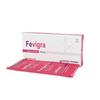
Feelex 100 mg
Flibanserin
Category: Tablet
Manufacturer: Renata Limited

Allopathic
MFG. Licence No. Biological
045
MFG. Licence No. Non-Biological
197
Address
Plot No. 1, Sec-7, Milk Vita Road, Mirpur, Dhaka.
Price: 50.0 ৳
1 x 1 in Blister Pack

Medicine Selling service is not available yet.
Related Medicines
Indicated for premenopausal women with acquired, generalized, hypoactive sexual desire disorder (HSDD), as characterized by low sexual desire that causes marked distress or interpersonal difficulty and is not caused by a coexisting medical or psychiatric condition, problems within the relationship, or the effects of a medication or other drug substance,
Use with alcohol
Co-administration with moderate or strong CYP3A4 inhibitors
Any degree of hepatic impairment
Adult Dose:
Hypoactive Sexual Desire Disorder
Indicated for premenopausal women with acquired, generalized hypoactive sexual desire disorder (HSDD) as characterized by low sexual desire that causes marked distress or interpersonal difficulty and is not caused by a coexisting medical or psychiatric condition, problems within the relationship, or the effects of a medication or other drug substance
100 mg PO once daily at bedtime
Dosed at bedtime because administration during waking hours increases risks of hypotension, syncope, accidental injury, and CNS depression
Discontinued after 8 weeks if no improvement
Oral Contraceptives and Other Weak CYP3A4 Inhibitors: Increases flibanserin exposures and incidence of adverse reactions.
Strong CYP2C19 Inhibitors: Increases flibanserin exposure which may increase risk of hypotension, syncope, and CNS depression.
CYP3A4 Inducers: Use of flibanserin not recommended; flibanserin concentrations substantially reduced.
Digoxin: Increases digoxin concentrations, which may lead to digoxin toxicity. Increase monitoring of digoxin concentrations.
Use with alcohol
Co-administration with moderate or strong CYP3A4 inhibitors
Any degree of hepatic impairment
>10%
Dizziness (11.4%)
Somnolence (11.2%)
Nausea (10.4%)
1-10%
Fatigue (9.2%)
Insomnia (4.9%)
Dry mouth (2.4%)
Anxiety (1.8%)
Constipation (1.6%)
Abdominal pain (1.5%)
Metrorrhagia (1.4%)
Rash (1.3%)
Sedation (1.3%)
Vertigo (1%)
Precaution:
Coadministration with alcohol increases the risk of severe hypotension and syncope (also see Contraindications and Black Box Warnings)
Coadministration with moderate or strong CYP3A4 inhibitors is significantly increases flibanserin concentrations, which can lead to hypotension and syncope (also see Contraindications, Black Box Warnings, and Dosing)
Concomitant use of multiple weak CYP3A4 inhibitors that may include herbal supplements (eg, ginkgo, resveratrol) or nonprescription drugs (eg, cimetidine) could also lead to clinically relevant increases in flibanserin concentrations that may increase the risk of hypotension and syncope
Causes CNS depression (eg, somnolence, sedation); risk of CNS depression is increased if taken during waking hours, or with alcohol or other CNS depressants, or with medications that increase flibanserin concentrations (eg, CYP3A4 inhibitors)
Hypotension and syncope can also occur with flibanserin taken alone
Lactation
Unknown if distributed in human breast milk
Excreted in rat milk
Unknown whether flibanserin has effects on the breastfed infant or if it affects milk production
Because of the potential for serious adverse reactions, including sedation, in a breastfed infant, breastfeeding is not recommended during treatment
Keep below 30°C temperature, away from light & moisture. Keep out of the reach of children.
Serotonin-norepinephrine reuptake inhibitor (SNRI)
Postsynaptic serotonin-1A (5HT-1A) receptor agonist and 5HT-2A receptor antagonist; also elicits moderate antagonist activities at the 5-HT2B, 5-HT2C, and dopamine D4 receptors
The mechanism of action HSDD is not known; may work by restoring prefrontal cortex control over the brain's motivation/rewards structures, enabling sexual desire to manifest; this may occur by increasing dopamine and norepinephrine while transiently decreasing serotonin in the brain's prefrontal cortex, which may be accomplished by reduced glutamate transmission
Pregnancy
There are no studies in pregnant women to inform whether there is a drug-associated risk in humans
Animal data
In animals, fetal toxicity only occurred in the presence of significant maternal toxicity, including reductions in weight gain and sedation
Adverse reproductive and developmental effects consisted of decreased fetal weight, structural anomalies, and increases in fetal loss at exposures greater than 15 times exposures achieved with the recommended human dosage
Lactation
Unknown if distributed in human breast milk
Excreted in rat milk
Unknown whether flibanserin has effects on the breastfed infant or if it affects milk production
Because of the potential for serious adverse reactions, including sedation, in a breastfed infant, breastfeeding is not recommended during treatment

Samm Care