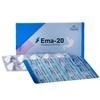
Uses of Esotor:
- Gastroesophageal reflux disease (Acid reflux)
- Peptic ulcer disease
Heartburn, Acid Related Dyspepsia, Peptic ulcer disease, Zollinger-Ellison syndrome, Gastroesophageal reflux disease (GERD), Helicobacter pylori infection, Erosive Esophagitis, Gouty arthritis, Duodenal and Gastric Ulcer.
Esomeprazole is contraindicated in patients with known hypersensitivity to any component of the formulation or to substituted Benzimidazoles.
How to use
Esomeprazole Magnesium Trihydrate:
Take this medicine in the dose and duration as advised by your doctor. Swallow it as a whole. Do not chew, crush or break it.
Esomeprazole Magnesium Trihydrate is to be taken empty stomach.
Administration:
Delayed-release cap: Should be taken on an empty stomach. Take on an empty stomach 1 hr before meals.
Tab: May be taken with or without food.
Adult Dose:
GERD Without Erosive Esophagitis
20 mg PO qDay for 4 weeks; consider an additional 4 weeks of treatment if symptoms do not resolve completely in the first 4 weeks
GERD With Erosive Esophagitis
20-40 mg PO qDay for 4-8 weeks
If oral therapy inappropriate or not possible: 20-40 mg qDay IV up to 10 days; switch to PO once patient able to swallow
Maintenance: 20 mg PO qDay for up to 6 months
Risk Reduction of NSAID-Associated Gastric Ulcer
20-40 mg PO qDay for up to 6 months
NSAID-Induced Gastric Ulcer
20 mg PO qDay for 4-8 weeks
Zollinger-Ellison Syndrome
80 mg PO divided q12hr (initial); adjust regimen to efficacy; up to 240 mg PO qDay, OR
120 mg PO q12hr administered to patients
Elderly: No dosage adjustment needed.
Hepatic Impairment
Oral administration
Mild to moderate (Child-Pugh A/B): No dosage adjustment required
Severe (Child-Pugh C): Not to exceed 20 mg/day
Child Dose:
GERD Without Erosive Esophagitis
Oral
<1 year: Safety and efficacy not established
1-12 years: 10-20 mg PO qDay for up to 8 weeks
>12 years: 20-40 mg PO qDay for up to 8 weeks
GERD With Erosive Esophagitis (Healing)
<1 month: Safety and efficacy not established
1 month to 1 year
3.5 kg: 2.5 mg PO qDay for up to 6 weeks
>3.5-7.5 kg: 5 mg PO qDay for up to 6 weeks
>7.5 kg: 10 mg PO qDay for up to 6 weeks
1-12 years
<20 kg: 10 mg PO qDay for 8 weeks
>20 kg: 10-20 mg qDay for 8 weeks
>12 years
20-40 mg PO qDay for 4-8 weeks
Maintenance: 20 mg PO qDay up to 6 months
Renal Dose:
Renal impairment: No dosage adjustment needed.
Increased risk of digoxin-induced cardiotoxic effects. Increased risk of hypomagnesaemia w/ diuretics. May increase INR and prothrombin time w/ warfarin. May increase serum concentration of tacrolimus, saquinavir, methotrexate. May interfere the elimination of drugs metabolised by CYP2C19 (e.g. diazepam). May decrease the bioavailability of ketoconazole, erlotinib and Fe salts.
Potentially Fatal: May decrease serum concentration and pharmacological effects of rilpivirine, atazanavir and nelfinavir. May decrease the antiplatelet effects of clopidogrel.
Esomeprazole is contraindicated in patients with known hypersensitivity to any component of the formulation or to substituted Benzimidazoles.
Common
- Headache
- Dizziness
- Dryness in mouth
- Nausea
- Abdominal pain
- Constipation
- Flatulence
- Diarrhea
>10%
Headache (2-11%)
1-10%
Flatulence (10%),Indigestion (6%),Nausea (6%),Abdominal pain (1-6%),Diarrhea (2-4%),Xerostomia (3-4%),Dizziness (2-3%),Constipation (2-3%),Somnolence (1-2%),Pruritus (1%)
<1%
Blood and lymphatic system disorders: Agranulocytosis, pancytopenia
Blurred vision,
GI disorders: Pancreatitis, stomatitis, microscopic colitis
Hepatobiliary disorders: Hepatic failure, hepatitis with or without jaundice
Anaphylactic reaction/shock
GI candidiasis
Hypomagnesemia
Musculoskeletal disorders: Muscular weakness, myalgia, bone fracture
Nervous system disorders: Hepatic encephalopathy, taste disturbance
Psychiatric disorders: Aggression, agitation, depression, hallucination
Interstitial nephritis
Gynecomastia
Bronchospasm
Skin and subcutaneous tissue disorders: Alopecia, erythema multiforme, hyperhidrosis, photosensitivity, Stevens-Johnson syndrome, toxic epidermal necrolysis (sometimes fatal fatal)
Precaution:
Paediatric; pregnancy, lactation. Malignancy and hepatic impairment. Increased risk of developing certain infections such as community-acquired pneumonia. For patients with severe liver impairment, a dose of 20 mg should not be exceeded.
Lactation
Risk Summary
Esomeprazole is the S-isomer of omeprazole and limited data suggest that omeprazole may be present in human milk. There are no clinical data on the effects of esomeprazole on the breastfed infant or on milk production. The developmental and health benefits of breastfeeding should be considered along with the mother’s clinical need for Esomeprazole and any potential adverse effects on the breastfed infant from Esomeprazole or from the underlying maternal condition.
Esomeprazole Magnesium Trihydrate has been shown to be deadly in rats at a single oral dose of 510 mg/kg, or nearly 103 times the human dose on the basis of body surface area. The main symptoms of acute poisoning are decreased motor activity, changes in breathing frequency, tremors, ataxia, and sporadic clonic convulsions. Esomeprazole overdoses are not known to have occurred. Esomeprazole has no known particular countermeasure. Dialysis isn't expected to remove esomeprazole because of how widely it is protein bound. If an overdose occurs, symptomatic and supportive care should be provided. The possibility of ingesting numerous drugs needs to be taken into account, just like with any overdose.
Keep in a dry area at a temperature that does not go above 30°C. shield from moisture and light. Keep out of children's reach.
Esomeprazole is a PPI that suppresses gastric acid secretion by inhibiting H+/K+ ATPase in the gastric parietal cell. It is the S-isomer of omeprazole.
Pregnancy
There are no adequate and well-controlled studies in pregnant women; esomeprazole is the S-isomer of omeprazole; available epidemiologic data fail to demonstrate an increased risk of major congenital malformations or other adverse pregnancy outcomes with first trimester omeprazole use; reproduction studies in rats and rabbits resulted in dose-dependent embryo-lethality at omeprazole doses that were approximately 3.4 to 34 times an oral human dose of 40 mg (based on a body surface area for a 60 kg person)
Lactation
Esomeprazole is the S-isomer of omeprazole and limited data suggest that omeprazole may be present in human milk; there are no clinical data on effects of esomeprazole on breastfed infant or on milk production; developmental and health benefits of breastfeeding should be considered along with mother’s clinical need for therapy and any potential adverse effects on breastfed infant from treatment or from underlying maternal condition