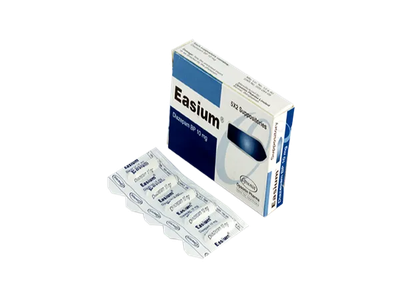
Easium 10 mg
Diazepam
Category: Suppository
Manufacturer: Opsonin Pharma Limited

Allopathic
MFG. Licence No. Biological
012
MFG. Licence No. Non-Biological
080
Address
Rupatali,
Price: 30.1 ৳
10's pack
piece

Medicine Selling service is not available yet.
Related Medicines


Diazepam is indicated for the short-term treatment of mild to moderate anxiety, excitation, agitation, fear, aggressiveness, etc. Anxiety reactions caused by stressed conditions, anxiety states with somatic expression, acute alcohol withdrawal, status epilepticus, premedication for surgical procedures, febrile convulsions, insomnia of hospitalized patients.
Benzodiazepine sedatives, Centrally acting Skeletal Muscle Relaxants, Primary anti-epileptic drugs
Diazepam, like other members of the benzodiazepine family, binds to receptors in various regions of the brain, such as the spinal cord, brain stem, cerebellum, limbic system and cerebral cortex. Binding of diazepam to the benzodiazepine receptor potentiates the inhibitory actions of gamma-aminobutyric acid (GABA) mediated through chloride channel, thereby enhancing GABA-facilitated, inhibitory synaptic transmission.
Dosage should be individualized for maximum beneficial effect. While the usual daily dosages given below will meet the needs of most patients, there will be some who may require higher doses. In such cases dosage should be increased cautiously to avoid adverse effects.
ADULTS:
Management of Anxiety Disorders and Relief of Symptoms of Anxiety: Depending upon severity of symptoms 2 mg to 10 mg, 2 to 4 times dailySymptomatic Relief in Acute Alcohol Withdrawal: 10 mg, 3 or 4 times during the first 24 hours, reducing to 5 mg, 3 or 4 times daily as neededAdjunctively for Relief of Skeletal Muscle Spasm: 2 mg to 10 mg, 3 or 4 times dailyAdjunctively in Convulsive Disorders: 2 mg to 10 mg, 2 to 4 times dailyGeriatric Patients, or in the presence of debilitating disease: 2 mg to 2.5 mg, 1 or 2 times daily initially; increase gradually as needed and tolerated
PEDIATRIC PATIENTS:
Because of varied responses to CNS-acting drugs, initiate therapy with lowest dose and increase as required. Not for use in pediatric patients under 6 months: 1 mg to 2.5 mg, 3 or 4 times daily initially; increase gradually as needed and tolerated
Concomitant intake with alcohol is not recommended. Sedation may be increased due to concomitant use of neuroleptics (antipsychotics), hypnotics, sedative antihistamines and CNS depressants e.g., general anesthetics, narcotic analgesics or antidepressants. Diazepam clearance is increased by concomitant administration of phonobarbitone and is decreased by administration of cimetidine. Omeprazole and isoniazide inhibit diazepam metabolism.
Diazepam is contraindicated in myasthenia gravis, pulmonary insufficiency, respiratory depression and hypersensitivity to bezodiazepine.
Diazepam is generally well tolerated. Higher doses may cause somnolence, dizziness, light headedness, confusion and ataxia.
Category D: The use of Diazepam during the first trimester of pregnancy should almost always be avoided as it bears a risk of congenital malformation.Diazepam has been detected in breast milk. If possible the use of diazepam should be avoided during lactation.
Prolonged use and abrupt withdrawal should be avoided. Diazepam should be used with caution in respiratory disease, muscle weakness, history of drug or alcohol abuse, in hepatic or renal impairment.
Sedation, muscle weakness, profound sleep or paradoxical excitation. In more severe cases symptoms may include ataxia, hypotonia, hypotension, respiratory depression and rarely coma and death.
Store in a cool (below 25˚C temperature) and dry place protected from light.
Benzodiazepine sedatives, Centrally acting Skeletal Muscle Relaxants, Primary anti-epileptic drugs
Diazepam attaches to the specific site on the GABA receptor and potentiates the effect of GABA, which acts by opening chloride ion channels into cells.Diazepam is absorbed rapidly and completely after oral administration. Peak Plasma concentration reaches within 15-90 minutes. Mean plasma half-life is 30 hours. Plasma protein binding is 98-99%. Diazepam is metabolized in the liver with only traces of the unchanged drug excreted in urine. A very small proportion of the metabolites is excreted through the bile into the intestine and eliminated with the feces. After rectal administration in suppository form diazepam is significantly absorbed and peak concentration reaches within 1.5-2 hours.
Diazepam and its active metabolites cross the placental barrier and also pass into breast milk. So, it should be avoided if possible during pregnancy and lactation. US FDA pregnancy category D.


Samm Care