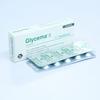
Dialozin 5 mg
Dapagliflozin propanediol
Category: Tablet
Manufacturer: Julphar Bangladesh Ltd.

Price: 14.72 ৳
Tablet
2 x 10 in Blister Pack
30's pack
piece

Medicine Selling service is not available yet.
Related Medicines

Uses of Dialozin:
- Type 2 diabetes mellitus
Type 2 diabetes mellitus
Hypersensitivity to dapagliflozin propanediol or to any of the excipients. Moderate to severe renal impairment; end-stage renal disease; active bladder cancer. Pregnancy (2nd & 3rd trimester) & lactation.
Sodium-glucose Cotransporter-2 (SGLT2) Inhibitors
Dapagliflozin is a highly potent, selective, and reversible inhibitor of sodium-glucose cotransporter 2 (SGLT2) that improves glycemic control in patients with type 2 diabetes mellitus by reducing renal glucose reabsorption leading to urinary excretion of excess glucose (glucuresis).
How to use
Dapagliflozin propanediol:
Take this medicine in the dose and duration as advised by your doctor. Swallow it as a whole. Do not chew, crush or break it.
Dapagliflozin propanediol may be taken with or without food, but it is better to take it at a fixed time.
Adult Dose:
Diabetes Mellitus Type 2
Selective sodium-glucose transporter-2 (SGLT2) inhibitor indicated as an adjunct to diet and exercise to improve glycemic control with type 2 diabetes mellitus
Initial: 5 mg PO qDay; take in am with or without food
May increase to 10 mg qDay in patients tolerating 5 mg/day who have an eGFR ?60 mL/min/1.73 m² and require additional glycemic control
Indicated as monotherapy, as initial therapy with metformin, or as an add-on to other oral glucose-lowering agents, including metformin, glimepiride, sitagliptin, and insulin
Hepatic impairment
Mild or moderate: No dosage adjustment required
Severe: Not studied
Renal Dose:
Renal impairment
eGFR ?60 mL/min/1.73 m²: No dosage adjustment required
eGFR <60 mL/min/1.73 m²: Do not initiate
Not recommended with eGFR that declines persistently between 30 to <60 mL/min/1.73 m²
eGFR <30 mL/min/1.73 m²: Contraindicated
Hypoglycemia may occur w/ concomitant use w/ insulin & insulin secretagogues eg sulfonylureas. Decrease in Cmax & AUC w/ rifampin. Increase in Cmax & AUC w/ mefenamic acid. Increased thiazide & loop diuretic effects; may increase risk of dehydration & hypotension. Pioglitazone.
Hypersensitivity to dapagliflozin propanediol or to any of the excipients. Moderate to severe renal impairment; end-stage renal disease; active bladder cancer. Pregnancy (2nd & 3rd trimester) & lactation.
Common
- Nausea
- Frequent urge to urinate
- Genital fungal infection
- Increased thirst
- Urinary tract infection
>10%
Renal impairment
1-10%
Female genital mycotic infections (6.9-8.4%),Urinary tract infection (4.3-5.7%),Increased urination (2.9-3.8%),Male genital mycotic infections (2.7-2.8%),Dyslipidemia (2.1-2.5%),Constipation (1.9-2.2%),Discomfort with urination (2.6-2.1%),Extremity pain (1.7-2%),Volume depletion
<1%
Hypersensitivity (0.3%)
Pregnancy Category-C. Animal reproduction studies have shown an adverse effect on the fetus and there are no adequate and well-controlled studies in humans, but potential benefits may warrant use of the drug in pregnant women despite potential risks
Precaution:
CV disease; history of hypotension. Monitor vol status & electrolytes. UTI. Childn. Elderly.
Lactation: Unknown whether distributed in human breast milk; breast feeding women should discontinue dapagliflozin or nursing taking into account the importance of the drug to the mother
Sodium-glucose Cotransporter-2 (SGLT2) Inhibitors
Dapagliflozin is a highly potent, selective, and reversible inhibitor of sodium-glucose cotransporter 2 (SGLT2) that improves glycemic control in patients with type 2 diabetes mellitus by reducing renal glucose reabsorption leading to urinary excretion of excess glucose (glucuresis).
Pregnancy
Based on animal data showing adverse renal effects drug is not recommended during second and third trimesters of pregnancy
Limited data in pregnant women are not sufficient to determine drug-associated risk for major birth defects or miscarriage; there are risks to mother and fetus associated with poorly controlled diabetes in pregnancy
In animal studies, adverse renal pelvic and tubule dilatations, that were not fully reversible, were observed in rats when administered during a period of renal development corresponding to late second and third trimesters of human pregnancy, at all doses tested
Clinical considerations
Poorly controlled diabetes in pregnancy increases maternal risk for diabetic ketoacidosis, preeclampsia, spontaneous abortions, preterm delivery, still birth and delivery complications; poorly controlled diabetes increases fetal risk for major birth defects, stillbirth, and macrosomia related morbidity
Lactation
There is no information regarding presence of dapagliflozin in human milk, effects on breastfed infant, or on milk production; drug is present in milk of lactating rats; however, due to species-specific differences in lactation physiology, clinical relevance of these data are not clear
Since human kidney maturation occurs in utero and during first 2 years of life when lactational exposure may occur, there may be risk to developing human kidney; because of potential for serious adverse reactions in breastfed infants, advise women that therapy is not recommended while breastfeeding

Samm Care