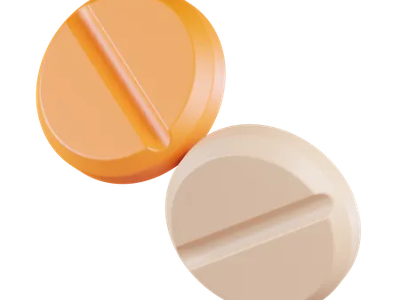
Darifenacin 15 mg
Darifenacin
Category: Pr Tablet
Manufacturer: Incepta Pharmaceuticals Ltd.

Allopathic
MFG. Licence No. Biological
193
MFG. Licence No. Non-Biological
108
Address
Zirabo, Savar, Dhaka Dewan Idris Road, Bara Rangamatia
Price: 40.0 ৳
5 in Blister Pack

Medicine Selling service is not available yet.
Related Medicines
Uses of Darifenacin:
- Overactive bladder (OAB) symptoms
Urge incontinence, Urinary frequency and urgency, Overactive bladder
Patient with urinary retention, gastric retention, uncontrolled narrow-angle glaucoma, and in patients who are at risk for these conditions.
BPH/ Urinary retention/ Urinary incontinence
Darifenacin is a potent, competitive and selective muscarinic receptor antagonist which has greater binding affinity for muscarinic M3 receptors. M3 receptors are involved in the contraction of the detrusor muscle of the bladder, GI smooth muscle, saliva production, and iris sphincter function. Darifenacin may increase volume threshold in patients with involuntary detrusor contraction, thus increase bladder capacity.
How to use
Darifenacin:
Use it as advised by your doctor or check the label for directions before use.
Darifenacin may be taken with or without food, but it is better to take it at a fixed time.
Administration:
May be taken with or without food. Swallow whole, do not chew/crush/divide.
Adult Dose:
Oral
Overactive bladder
Adult: For symptomatic treatment of urge incontinence, urinary frequency and urgency. Initial: 7.5 mg once daily; may increase dose to 15 mg once daily if no adequate response after 2 wk of therapy.
Hepatic impairment: Moderate hepatic impairment (Child Pugh B): Maximum daily dose is 7.5 mg. Severe hepatic impairment (Child Pugh C): Not recommended.
Concurrent use of CYP3A4 inhibitors (e.g. ketoconazole, itraconazole, clarithromycin, nefazodone, troleandomycin, ritonavir, nelfinavir) or CYP2D6 inhibitors (e.g. quinidine, paroxetine) may increase serum levels of Darifenacin. CYP3A4 inducers (e.g. barbiturates, phenytoin, rifampicin) may likely decrease Darifenacin serum concentrations. Darifenacin may act as a moderate inhibitor of CYP2D6, caution when used concomitantly with CYP2D6 substrates that have narrow therapeutic index (e.g. flecainide, thioridazine, imipramine). Concurrent use of another agent with antimuscarinic properties may potentiate the side effects of Darifenacin.
Patient with urinary retention, gastric retention, uncontrolled narrow-angle glaucoma, and in patients who are at risk for these conditions.
Common
- Blurred vision
- Constipation
- Dryness in mouth
- Indigestion
- Headache
- Nausea
>10%
Dry mouth (19-35%),Constipation (15-21%)
1-10%
Abdominal pain (2-4%),Dizziness (2%),Dry eyes (2%),Dyspepsia (3-8%),Nausea (2-4%),UTI (4-5%),Vaginitis (>1%),Back pain (>1%),Rhinitis (>1%),Abnormal vision (>2%),Vomiting (>1%),Weight gain (>1%),Flu-like syndrome (1-3%),Peripheral edema (>1%)
Potentially Fatal: Hypersensitivity reactions, including angioedema.
Pregnancy Category C. Darifenacin should be used during pregnancy only if the benefit to the mother outweighs the potential risk to the fetus.Lactation: It is not known whether Darifenacin is excreted into human milk and therefore caution should be exercised before Darifenacin is administered to a nursing woman.
Precaution:
Anticholinergic agents including Darifenacin, may cause urinary retention and decreased GI motility. Caution when used in patients with clinically significant bladder outflow obstruction, GI obstructive disorder (e.g. pyloric stenosis), severe constipation, ulcerative colitis, and myasthenia gravis. For patients being treated for narrow-angle glaucoma, caution and only use where potential benefits outweigh the risks. May cause heat prostration when used in a hot environment. May cause dizziness and blurred vision; caution when operating machinery or driving vehicle. Not recommended in severe hepatic impairment. Safety and efficacy have not been established in paediatric patients. Pregnancy and lactation.
Lactation: Excretion in milk unknown; use caution
Overdosage with antimuscarinic agents can result in severe antimuscarinic effects. ECG monitoring is recommended when event of overdosage is occurred. Darifenacin has been administered in clinical trials at doses up to 75 mg (five times the maximum therapeutic dose) and signs of overdose were limited to abnormal vision.
Store at 25° C. Protect from light.
BPH/ Urinary retention/ Urinary incontinence
Darifenacin is a potent, competitive and selective muscarinic receptor antagonist which has greater binding affinity for muscarinic M3 receptors. M3 receptors are involved in the contraction of the detrusor muscle of the bladder, GI smooth muscle, saliva production, and iris sphincter function. Darifenacin may increase volume threshold in patients with involuntary detrusor contraction, thus increase bladder capacity.
Pregnancy Category: C
Lactation: Excretion in milk unknown; use caution


Samm Care