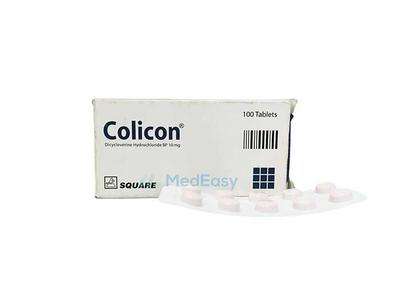
Colicon 10 mg
Generic: Dicycloverine Hydrochloride
Category: Tablet
Manufacturer: Square Pharmaceuticals Ltd.

Price: 18.1 ৳
Strip
30 in Blister Pack
100's pack
piece

Medicine Selling service is not available yet.
Alternative Brands & Related Medicines





Indications
Gastrointestinal tract spasm, Intestinal hypermotility, Irritable bowel syndrome (IBS)
Intestinal obstruction; intestinal atony; myasthenia gravis; glaucoma; reflux oesophagitis; infants <6 mth; lactation.
Therapeutic Class
Anticholinergics (antimuscarinics)/ Anti-spasmodics
Pharmacology
Dicycloverine Hydrochloride is an antispasmodic and anticholinergic (antimuscarinic) agent. Dicycloverine relieves smooth muscle spasm of the gastrointestinal tract, urinary bladder & ureter. It works at specific receptors, called cholinergic (or muscarinic) receptors, located on the involuntary muscle in the walls of the gut. As antispasmodic drug Dicycloverine causes the gut muscle to relax, relieving the pain of colic produced by gut muscle contraction and spasm. Also it has direct musculotropic action.
Dosage and Administration
Administration:
May be taken with or without food. May be taken before or after meals.
Adult Dose:
Oral
Tablet/Syrup
Gastrointestinal tract spasm
Adult: 10-20 mg tid.
Intramuscular
Gastrointestinal tract spasm
Adult: 20 mg 4 times a day given only for 1-2 days. Replace with oral therapy as soon as possible.
Child Dose:
Oral
Tablet/Syrup
Gastrointestinal tract spasm
Child: 2-12 yr: 10 mg tid;
6 mth-2 yr: 5-10 mg 3-4 times daily.
Interaction
Antagonise the effect of drugs that affect GI motility e.g. metoclopramide. Absorption affected by concurrent admin with antacids.
Contraindications
Intestinal obstruction; intestinal atony; myasthenia gravis; glaucoma; reflux oesophagitis; infants <6 mth; lactation.
Side Effects
Difficulty in accommodation, exacerbation of glaucoma; tachycardia, palpitations, arrhythmias; urinary retention; restlessness; confusion, excitement, hallucination and delirium.
Potentially Fatal: Respiratory arrest in infants <10 wk.
Pregnancy And Lactation
Dicycloverine should be used during pregnancy only if clearly needed. No teratogenic effect was shown in animal study. Since Dicycloverine hydrochloride has been reported to be secreted in human milk. So, Dicycloverine is contraindicated in lactating mother.
Precautions And Warnings
Precaution:
Hepatic or renal disease, urinary retention, paralytic ileus, hyperthyroidism, hypertension, congestive heart failure, cardiac tachyarrhythmia, children, elderly, pregnancy.
Overdose Effects
Toxic reaction seldom occurs with dicycloverine. The signs and symptoms of overdosage are headache; nausea; vomiting; blurred vision; dilated pupils; hot, dry skin; dizziness; dryness of the mouth; difficulty in swallowing; and CNS stimulation.
Storage Conditions
Keep below 30°C temperature, away from light & moisture. Keep out of the reach of children.
Drug Classes
Anticholinergics (antimuscarinics)/ Anti-spasmodics
Mode of Action
Dicycloverine HCl relieves smooth muscle spasm in the GI and urinary tract. This effect is partly due to antimuscarinic action and partly direct action on the smooth muscle.
Pregnancy Category
Pregnancy Category B. Dicycloverine was neither teratogenic nor embryocidal in animal trial. It, like other drugs should be used during pregnancy only if clearly needed. There are no data on the secretion of this drug into breast milk. Dicycloverine should be used cautiously in case of lactating mother.


Samm Care