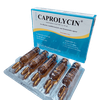
Caprolycin 1 gm/5ml
Aminocaproic Acid
Category: Injection
Manufacturer: Pacific Pharmaceuticals Ltd.

Allopathic
MFG. Licence No. Biological
206
MFG. Licence No. Non-Biological
354
Address
Narayangonj. Kanchpur, Sonargaon Plot No. B-11/12, BSCIC I/A
Price: 50.0 ৳
10 ml Ampoule

Medicine Selling service is not available yet.
Related Medicines
Uses of Caprolycin:
- Bleeding
Intravenous
Treatment and prophylaxis of haemorrhage
Adult: Initially, 4-5 g as a 2% solution over 1 hr followed by a 1 g/hr infusion continued for up to 8 hr or until bleeding has been controlled. Max: 24 g in 24 hr.
Oral
Treatment and prophylaxis of haemorrhage
Adult: Initially, 4-5 g, followed by 1-1.25 g every hr for about 8 hr or until bleeding has been controlled. Max: 24 g in 24 hr.
Patients with haemophilia undergoing dental extraction
Adult: Initially, 6 g immediately after the procedure, followed by 6 g every 6 hr for up to 10 days.
Anti-fibrinolytic drugs, Haemostatic drugs
The fibrinolysis-inhibitory effects of Aminocaproic acid appear to be exerted principally via inhibition of plasminogen activators and to a lesser degree through antiplasmin activity.
How to use
Aminocaproic Acid:
Your doctor or nurse will give you this medicine. Kindly do not self administer.
Administration:
Increased risk of hypercoagulability with OC and oestrogens.
Adult Dose:
Renal or cardiac disorders. Urinary tract bleeding, haematuria of upper urinary tract origin; veno-occlusive hepatic disease, skeletal myopathy, neonates. Monitor creatinine phosphokinase. Avoid admin with factor IX complex concentrates. Pregnancy and lactation.
Lactation: not known whether excreted in breast milk, use caution
Renal Dose:
Aminocaproic acid inhibits the action of plasminogen activators and, to a lesser extent, it also has some antiplasmin activity.
Bleeding due to disseminated intravascular coagulation. Rapid IV administration.
Aminocaproic acid should not be used when there is evidence of an active intravascular clotting process.
When there is uncertainty as to whether the cause of bleeding is primary fibrinolysis or disseminated intravascular coagulation (DIC), this distinction must be made before administering Aminocaproic acid Injection.
The following tests can be applied to differentiate the two conditions:
Platelet count is usually decreased in DIC but normal in primary fibrinolysis.
Protamine paracoagulation test is positive in DIC; a precipitate forms when protamine sulfate is dropped into citrated plasma. The test is negative in the presence of primary fibrinolysis.
The euglobulin clot lyses test is abnormal in primary fibrinolysis but normal in DIC.
Aminocaproic acid Injection must not be used in the presence of DIC without concomitant heparin.
Common
- Nasal congestion (stuffy nose)
- Tiredness
- Musculoskeletal (bone, muscle or joint) pain
- Injection site reactions (pain, swelling, redness)
Renal impairment: Dosage reduction may be required.
Pregnancy Category C. Animal reproduction studies have not been conducted with aminocaproic acid. It is also not known whether aminocaproic acid can cause fetal harm when administered to a pregnant woman or can affect reproduction capacity. Aminocaproic Acid Injection should be given to a pregnant woman only if clearly needed.
Precaution:
Haemorrhage, Missed abortion, Hereditary hemorrhagic telangiectasia,Traumatic hyphema, Dental bleeding, Hemophilia A, Postoperative bleeding, Systemic hyperfibrinolysis
Store in a cool, dry place, protected from light. Store the suspension below 30° C. Keep out of reach of children.
Anti-fibrinolytic drugs, Haemostatic drugs
IV Administration
Initial 5 g in 250 mL over 1 hr, each subsequent gram in 50-100 mL at 1 g/hr
Rapid injection undiluted into a vein is not recommended
Continue for about 8 hr or until bleeding has been controlled
Oral
May be taken with or without food. May be taken w/ meals to prevent GI upset.
Oedema, headache, malaise, allergic and anaphylactic reactions, anaphylaxis, bradycardia, hypotension, peripheral ischaemia, thrombosis, abdominal pain, diarrhoea, nausea, vomiting, agranulocytosis, coagulation disorder, leukopaenia, thrombocytopaenia, increased CPK, muscle damage, myalgia, myopathy, myositis, rhabdomyolysis, confusion, convulsions, delirium, dizziness, hallucinations, intracranial hypertension, stroke, syncope, dyspnoea, nasal congestion, pulmonary embolism, pruritus, rash, tinnitus, decreased vision, watery eyes, increased BUN, dry ejaculation.
Potentially Fatal: Cardiac and hepatic damage.

Samm Care