
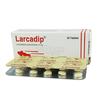
Canider 10 mg
Lercanidipine Hydrochloride
Category: Tablet
Manufacturer: Advanced Chemical Industries Limited

Advanced Chemical Industries Limited
Allopathic
MFG. Licence No. Biological
051
MFG. Licence No. Non-Biological
213
Address
Godnail, Narayangonj 7, Haziganj Road
Price: 5.04 ৳
1 x 10 in Container

Medicine Selling service is not available yet.
Related Medicines

Uses of Canider:
- Hypertension (high blood pressure)
Mild to moderate essential hypertension, Stroke prevention.
Severe hepatic or renal impairment; aortic stenosis, unstable angina, uncontrolled heart failure, within 1 mth of MI; and known hypersensitivity to any dihydropyridine. Lercanidipine should not be taken with grapefruit juice. lactation, pregnancy.
Calcium-channel blockers
Lercanidipine is a dihydropyridine calcium-channel blocker which acts by inhibiting the influx of calcium ions through the slow channels of the vascular smooth muscle and myocardium during depolarization. Its main effect is vasodilatation because it has greater selectivity for vascular smooth muscle than cardiac smooth muscle.
How to use
Lercanidipine Hydrochloride:
Take this medicine in the dose and duration as advised by your doctor. Swallow it as a whole. Do not chew, crush or break it.
Lercanidipine Hydrochloride is to be taken empty stomach.
Administration:
Should be taken on an empty stomach. Take on an empty stomach at least 15 min before meals.
Adult Dose:
Oral
Hypertension
Adult: As hydrochloride: 10 mg once daily, increased after 2 wk to 20 mg daily if necessary.
Elderly: The recommended dosage is 10 mg orally once a day at least 15 minutes before meals; the dose may be increased to 20 mg depending on the individual patient's response.
Hepatic impairment: Special care should be exercised in patients with mild to moderate renal or hepatic dysfunction.
Dosage above 20 mg daily must be approached with caution. Lercanidipine is not recommended for use in patients with severe hepatic dysfunction.
Renal Dose:
Renal impairment: Dosage may need to be reduced in mild to moderate renal impairment. Avoid in patients with CrCl <12 ml/min.
Plasma concentration reduced by inducers of CYP3A4 eg rifampicin, phenytoin, carbamazepine. Bioavailability also reduced by metoprolol and possibly propranolol. Plasma concentrations increased by inhibitors of CYP3A4 eg imidazole antifungals, erythromycin, ritonavir, fluoxetine. Alcohol may potentiate vasodilating effect.
Potentially Fatal: Significantly increased plasma levels of both lercanidipine and ciclosporin when administered together.
Severe hepatic or renal impairment; aortic stenosis, unstable angina, uncontrolled heart failure, within 1 mth of MI; and known hypersensitivity to any dihydropyridine. Lercanidipine should not be taken with grapefruit juice. lactation, pregnancy.
Common
- Dizziness
- Edema (swelling)
- Fatigue
- Flushing (sense of warmth in the face, ears, neck and trunk)
- Headache
- Palpitations
Tachycardia, oedema, flushing, headache, dizziness, asthenia, rash, diarrhoea, polyuria, palpitations, hypotension, drowsiness, myalgia.
Pregnancy Category C. There is no clinical experience with lercanidipine in pregnancy, but other dihydropyridine compounds have been found to cause irreversible malformations in animals. Therefore, lercanidipine should not be administered during pregnancy or to women with child-bearing potential unless effective contraception is used.Use in lactation: There is no clinical experience with lercanidipine in lactation. Distribution into milk may be expected, due to the high lipophilicity of lercanidipine. Therefore, lercanidipine should not be administered to lactating women.
Precaution:
Left ventricular dysfunction, sick sinus syndrome (if pacemaker not fitted), left ventricular dysfunction and ischaemic heart disease.
There is no data with Lercanidipine overdosage. As with other dihydropyridines, overdosage might be expected to cause excessive peripheral vasodilation with marked hypotension and reflex tachycardia. Since the drug is highly lipophilic, it is most probable that plasma levels are no guide to the duration of the period of risk and dialysis may not be effective.
Keep below 30°C temperature, away from light & moisture. Keep out of the reach of children.
Calcium-channel blockers
Lercanidipine is a dihydropyridine calcium-channel blocker which acts by inhibiting the influx of calcium ions through the slow channels of the vascular smooth muscle and myocardium during depolarization. Its main effect is vasodilatation because it has greater selectivity for vascular smooth muscle than cardiac smooth muscle.
Since there is no clinical data with Lercanidipine in pregnancy, it should not be administered during pregnancy or to woman with child bearing potential unless effective contraception is used. Lercanidipine is highly lipophilic and distribution in milk may be expected. Therefore, it should not be administered to nursing mother.

Samm Care